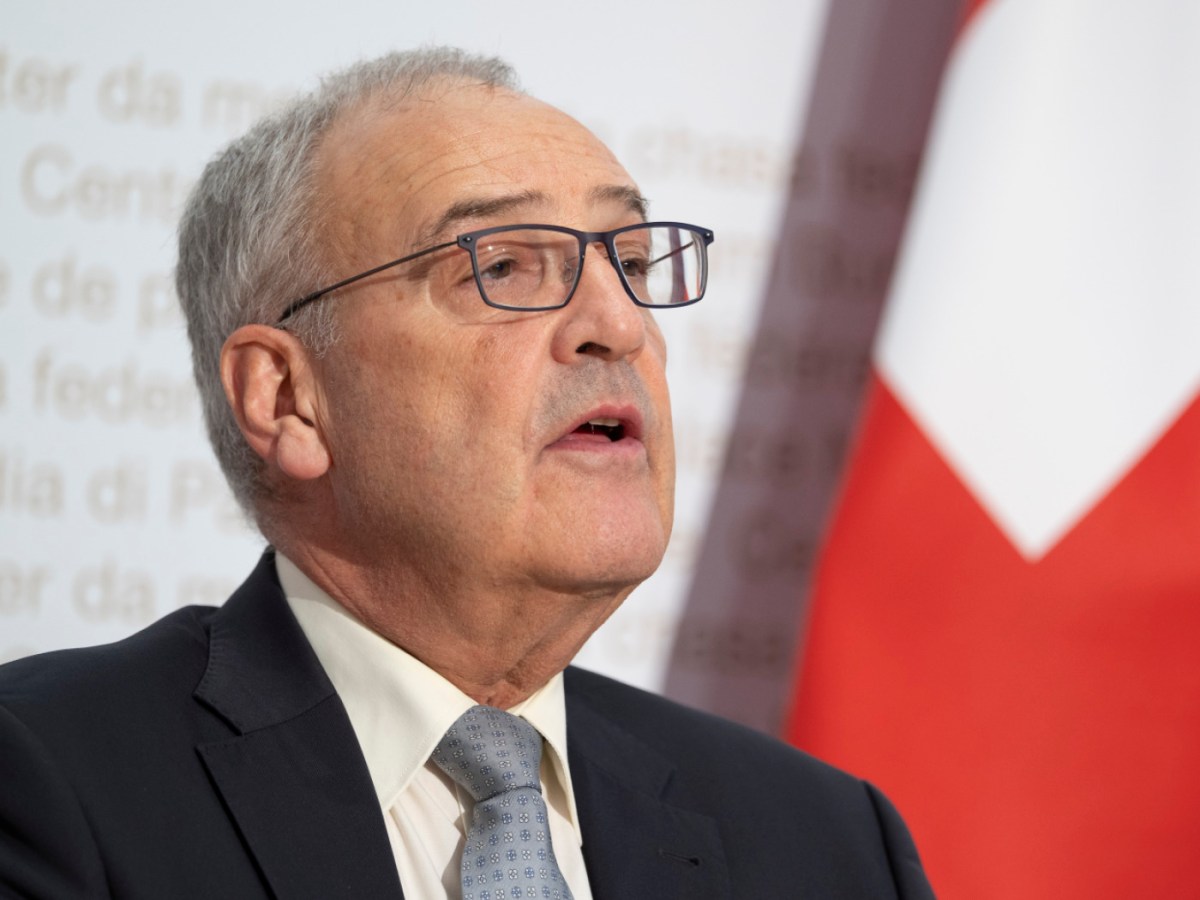

Swiss Agriculture Minister Guy Parmelin says existing laws provide sufficient tools to support farmers and that there is no need to declare a state of emergency.
Keystone-SDA
With drought-related losses in agriculture expected to reach record levels, Swiss Agriculture Minister Guy Parmelin has defended the government’s response. He argues that existing laws provide sufficient tools to support farmers and that there is no need to declare a state of emergency.
Listen to the article
Listening the article
Toggle language selector
English (US)
English (British)
Generated with artificial intelligence.
This content was published on
August 15, 2026 – 11:29
Harvests of crops in Switzerland including potatoes, sugar beet and maize are expected to be poor, while livestock farmers face shortages of fodder. The drought is adding to pressures already weighing on the sector and could lead to higher food prices.
Speaking to Swiss public radio RTS on Friday, on the sidelines of the inauguration of a new Agroscope building in Posieux, canton Fribourg, Parmelin said the government had been preparing measures since June.
“We have put in place everything possible under current legislation to ease the burden on farmers,” he said, warning that many would face liquidity problems.
“We have abolished customs duties on hay and fodder imports,” and then on corn starting Saturday. He also pointed to “interest-free loans and accelerating direct payments to help farmers get through this difficult period”.
More

More
Swiss farmers fear worse drought losses than 2003
This content was published on
Aug 14, 2026
Farmers estimates higher heatwave losses this year than the CHF500 million of 2003.
Read more: Swiss farmers fear worse drought losses than 2003
Importing fodder
Importing animal feed is “one of the concerns,” said Parmelin as drought conditions are affecting all of Europe. He added: “We’ll have to see how we can bridge the gap until winter and, above all, hope that the situation improves and that we don’t have a dry winter; otherwise, we risk having even bigger problems next spring.”
But there is no question of declaring a state of emergency, because “the situation can be managed within the current legal framework. Which doesn’t mean we’re doing nothing.” He highlighted the army’s efforts to supply water to Alpine pastures in canton Fribourg.
More

More
Climate adaptation
Swiss farmers call for financial support during drought
This content was published on
Aug 7, 2026
Business community and politicians asked to help farmers cope with the drought.
Read more: Swiss farmers call for financial support during drought
A strategy for water
Looking ahead, the minister said water management would be a key challenge for Swiss agriculture in the coming years. He underlined that infrastructure support has already been developed and will be further expanded. “There is a whole water strategy that has been in preparation for some time now by my colleague [Environment Minister Albert] Rösti.
Parmelin also highlighted the need to modernise ageing water supply networks and stressed that water policy should take a holistic approach rather than prioritising any single sector.
+ Swiss agriculture adapts to climate change
“We’ve been seeing this climate change for several years now,” he said. As a former winegrower, he noted that grape varieties such as Merlot and Malbec can now be grown in parts of the country. Adaptation is under way through investment in drought-resistant crops, while agricultural research remains essential to preparing the sector for future challenges.
+ How we produce English news
Translated from French, reviewed by an English Department journalist.
Articles in this story