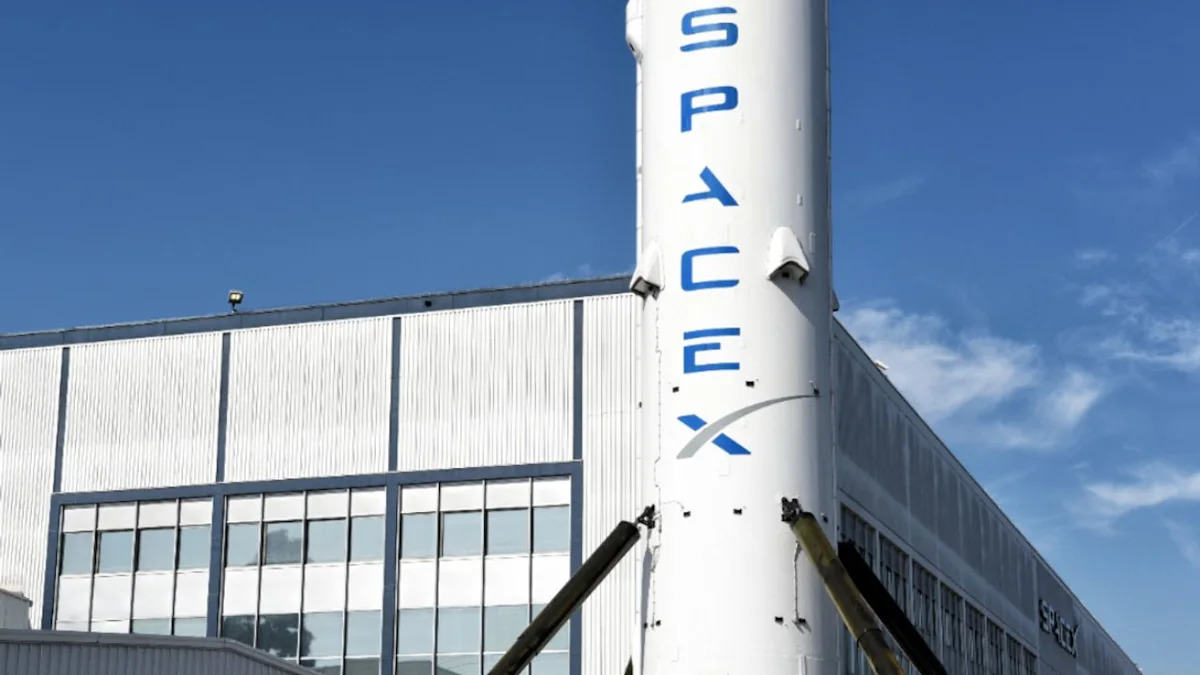
 SpaceX seen on cusp of Starlink growth surge as UBS highlights V3 satellite opportunity Proactive uses images sourced from Shutterstock
SpaceX Corp (NASDAQ:SPCX) could be on the cusp of a major growth inflection for its Starlink satellite broadband business, with UBS arguing that the company’s next-generation satellites and an unconventional ground-network strategy could significantly expand its reach.
Analysts expect SpaceX shares to continue trading on demand for tokens, reflecting the leverage it sees in the company as both a major cloud provider and a frontier-model player.
Over the medium term, however, the investment bank believes Starship’s ability to accelerate Starlink’s expansion could become an important source of value.
Shares of SpaceX gained 5.6% on Monday.
UBS expects Starlink growth to accelerate once SpaceX reaches critical mass with its V3 fixed broadband satellites, which it expects to happen sometime next year.
The picture is more complicated for mobile services. SpaceX’s V2 mobile low-Earth-orbit constellation cannot provide coverage in some of the most challenging environments, including dense urban locations and the interiors of office buildings and multi-dwelling units.
SpaceX has said it plans to address those gaps by incorporating small terrestrial radios, known as femtocells, into its next-generation Starlink terminals.
UBS said SpaceX’s femtocell strategy hinges on securing low-band spectrum and achieving sufficient deployment density.
Frequencies below 1GHz are attractive for their broad coverage, with potential sources including spectrum held by EchoStar, NextNav and Anterix, while UHF spectrum could offer a longer-term opportunity. However, reallocating broadcast spectrum would likely take years.
Femtocells typically cover 10 to 50 metres, with range dependent on spectrum, power and antenna gain. Their effectiveness will ultimately depend on the number and geographic distribution of Starlink subscribers, as the devices would be built into next-generation terminals.
UBS currently models around 3 million US Starlink subscribers, rising to 6 million by the end of 2027 and 20 million by the end of 2031.
UBS continues to believe SpaceX’s preferred route for US mobile services would be an MVNO agreement with an existing wireless carrier. If such a deal does not materialize, however, the bank expects SpaceX could pursue a hybrid network combining Starlink satellites with ground infrastructure, including towers where femtocells cannot provide sufficient coverage.