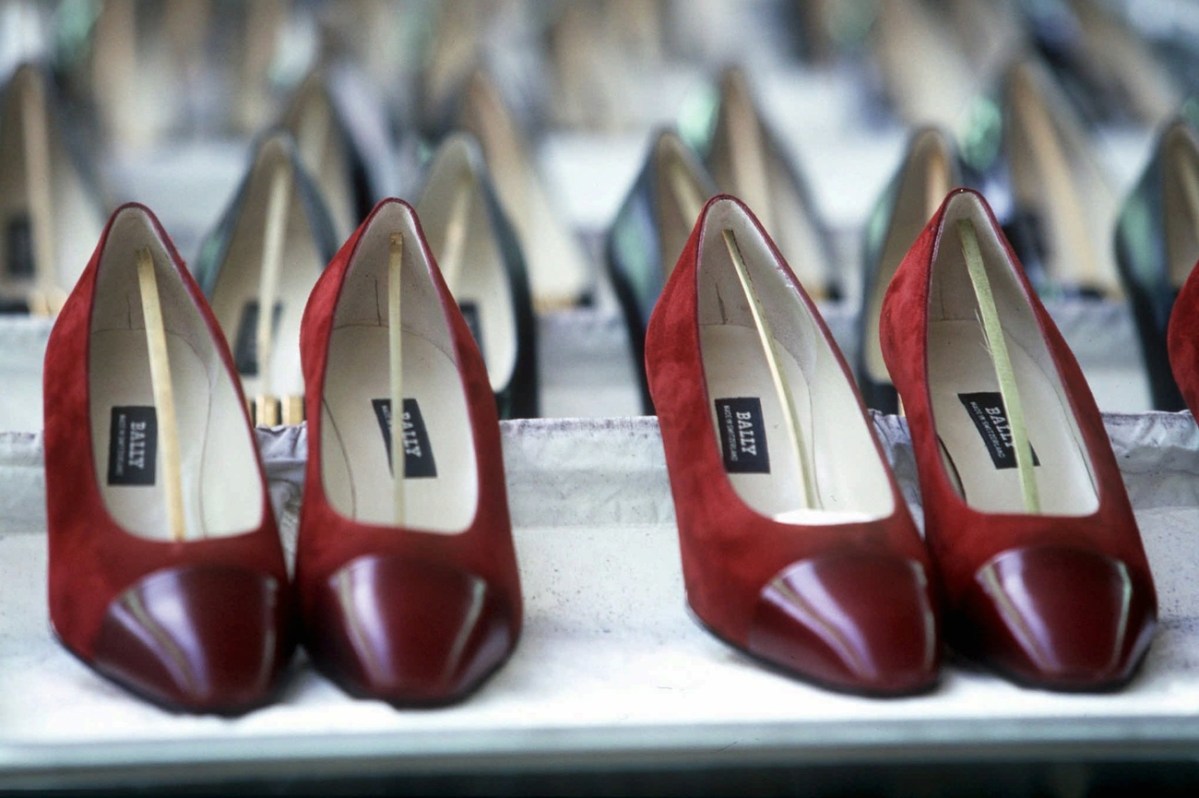

Bally’s hand-crafted shoes have a global reputation for quality
Martin Ruetschi / Keystone
The iconic Swiss shoe brand Bally is in deep crisis. If the company ultimately goes bankrupt, its significant historic collection is also at risk. Can 40,000 shoes from the Bally archive be saved?
Listen to the article
Listening the article
Toggle language selector
English (US)
English (British)
Generated with artificial intelligence.
This content was published on
August 21, 2026 – 08:38
At the train station in Schönenwerd, in the canton of Solothurn, northwest Switzerland, stands a huge outlet centre. Beyond that, there isn’t much: small housing estates for workers, modern apartment buildings, and a Coop supermarket. Just over 5,000 people live here – a typical suburban commuter town.
There’s usually not much going on here, but when it comes to the impending bankruptcy of Bally, this is the place to come to learn something.
On the site of a former Bally factory, in building 7, the Ballyana Foundation has set up an exhibition space. Displayed here are a sole-stitching machine from 1870, colourful Bally advertising posters hanging on the walls, and a small selection from the extensive Bally archive.
More

More
Bally keeps in step with the times
This content was published on
Oct 12, 2019
A region in northern Switzerland lived and worked in harmony with the Bally shoe factory. The rest as they say is history.
Read more: Bally keeps in step with the times
The owners and staff have collected a great deal, says Philipp Abegg, foundation president and himself a descendant of the Bally family: letters, company magazines, photographs, films, and of course, shoes. But these are missing from the exhibition.
Around 40,000 pairs of exclusive Bally shoes are stored right next door. Ladies’ ankle boots with the famous elastic band from 1875 or snakeskin pumps from 1928 are carefully arranged in glass cabinets, completely isolated from the outside world.
Bally future uncertain
The dedicated archivist is not allowed to give the media more information. The valuable collection and extensive archive are company property. But the future of the heavily indebted shoe store is uncertain.
In the 1970s, Bally experienced countless identity crises. CEOs came and went, and the company alternately positioned itself as a luxury brand and a streetwear label. The only constant was its new shoe collections, which appeared year after year.
More

More
Culture
The final interview with Swiss textile designer Erich Biehle: ‘Paris was the world!’
This content was published on
Aug 26, 2024
Swiss textile designer Erich Biehle died in June aged 83. Just before his death he spoke to SWI swissinfo.ch and reflected on his career and life.
Read more: The final interview with Swiss textile designer Erich Biehle: ‘Paris was the world!’
According to Abegg, the Bally company archive is one of the “largest and most beautiful industrial history collections in central Europe.” The foundation has established a financial “war chest” to ensure that funding for the archive is available if needed.
The canton of Solothurn has also launched a rescue operation by placing the collection under protection for a year. During this period the shoes cannot be moved or sold. This is made possible by a law unique to Solothurn that protects movable cultural assets such as archives.
Abegg, a lawyer, is in favour of establishing a new foundation run by both the canton and the company. Bally would retain ownership of the trademark and design rights, with the archive and shoe collection being transferred to the foundation.
Preserving a legacy
The intention is to share responsibility for the company’s legacy and a slice of Swiss industrial history. “As an industrial museum, we have not yet managed to achieve the status of a recognised cultural asset. We lack the support of the federal authorities and the public,” said Abegg.
More

More
The luxury industry looks to private equity for a reboot
This content was published on
Aug 16, 2024
The recent purchase of Swiss shoe brand Bally by American investment firm Regent is a symbol of the acquisition and consolidation trend in the luxury industry.
Read more: The luxury industry looks to private equity for a reboot
The Bally shoe collection is not just about design legacy. It also tells stories of harsh factory life, especially for the women who worked on the assembly line, of the questionable purchase of a Jewish subsidiary in Vienna in 1938, and of a trade union that was under attack.
How can this legacy be preserved for future generations? Perhaps the outcry over the impending end of Bally also presents an opportunity to imprint a piece of Swiss industrial history more prominently into the public consciousness. Just like the old company slogan: Bally for all – all for Bally.
The iconic Bally brand
The Bally luxury shoe brand was created in 1851 in the town of Schönenwerd, canton Solothurn, by brothers Carl Franz and Fritz Bally.
Carl Franz decided to pivot the family ribbon-making business into shoe manufacturing after visiting Paris.
The company stayed in family hands until 1977, with the business facing intensified competition from abroad.
Between 1851 and 2000, Bally factories produced around 150 million pairs of shoes.
But the business ran into difficulties, changing owners several times, including US investment firm Texas Pacific and Chinese textile group Shandong Ruyi.
Following a wave of store closures and lay-offs, the company was placed under the supervision of the Lugano bankruptcy office in July 2026 after a Swiss court blocked another proposed takeover.
Translated from German, sub-edited by Matthew Allen/gw
Articles in this story