
At the end of the first day of the Ecole Mont-Olivet Deaf Judo Masters Top 18, Damien Antoine, President of the Deaf International Judo Federation, could hardly hide his emotion. Following the adapted judo competition on the opening day of the Ecole Mont-Olivet Lausanne Grand Slam 2026, deaf judoka were now taking their place alongside the World Judo Tour athletes, competing in the same arena and under the same spotlight.
For him, the importance of this moment reached far beyond sport. “It is very important for everyone, not only for deaf people, to understand who we are and what we do,” he said. “I am very happy about this exchange, which goes beyond all borders and all differences, turning them into real strengths.”
The inaugural event brought together athletes from fourteen nations for two days of competition, on Saturday and Sunday. It offered a powerful illustration of a judo community in which every athlete is recognised, respected and given the opportunity to perform at their best.
“Thanks to everyone’s efforts, everything has been perfectly highlighted here in Lausanne, especially for the athletes,” Antoine explained. “The organisation is very good. The referees were exceptional during this first day of competition for us; they adapted to every situation. I have spoken with many judoka and they are very happy. If they are moved, then so am I.”
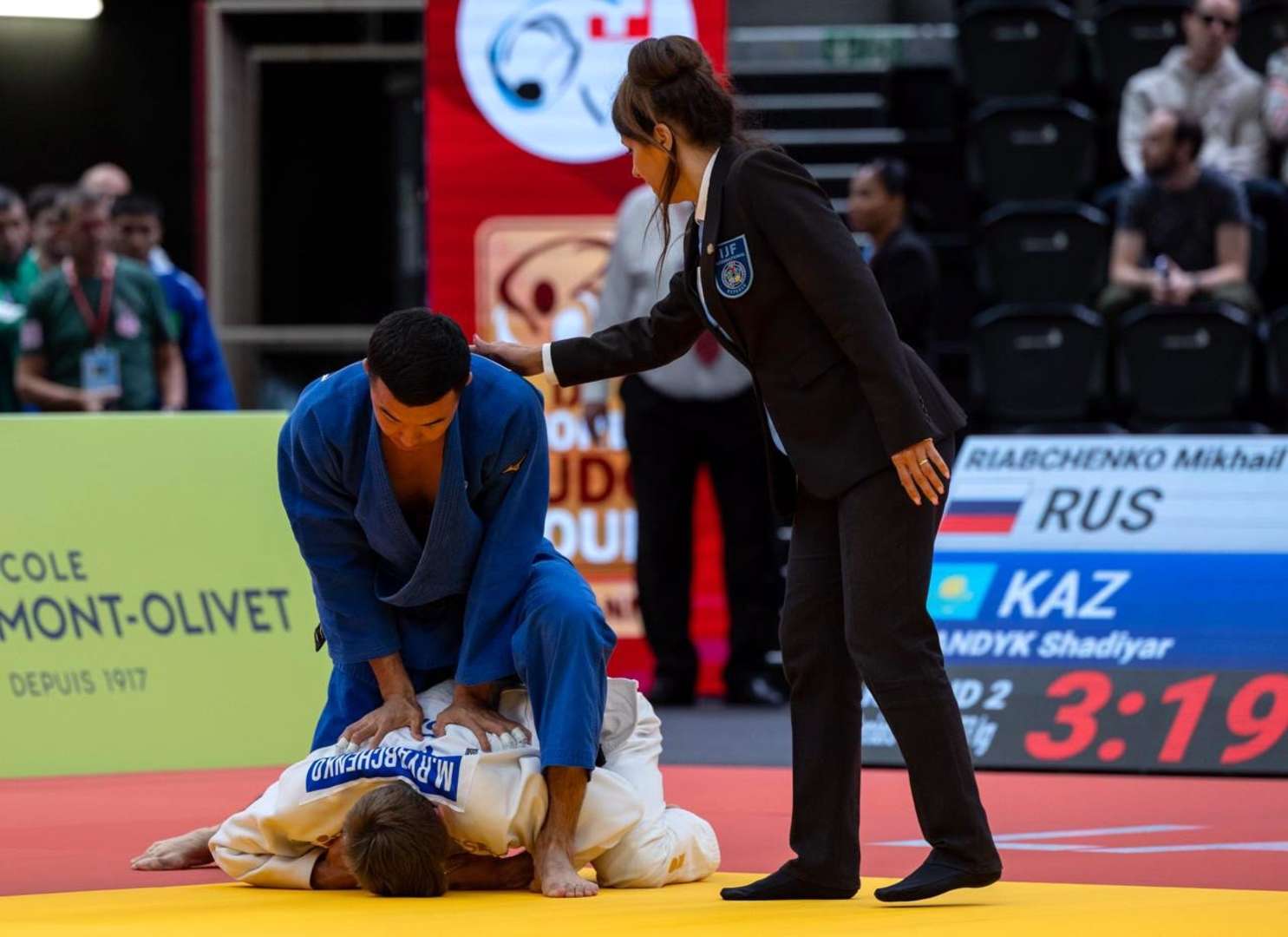
Deaf judo has its own particularities. Communication must be visual and physical, requiring athletes, coaches and referees to be attentive to one another at every moment. Referees do not only announce decisions: they demonstrate them and, when necessary, use touch to ensure that the information has been understood. Eye contact and gesture become essential channels of communication.
“In deaf judo, the interaction between athletes and referees is greater,” said Antoine. “Otherwise, for everything else, it is the same. We do judo.”
Deafness is often described as an invisible disability, yet its consequences can be profound. In judo, athletes with hearing loss of at least 55 decibels are eligible to compete in the deaf category. The discipline therefore creates the adapted conditions needed for everyone to engage fully, while preserving the very essence of judo: the same rules, the same techniques, the same mutual respect.
“This is a first edition in this format and it is already a success,” concluded Antoine. “It allows us to see how things work, with complete transparency. The competitors feel valued. I sincerely hope that we will continue this work of cooperation.”