
A discreet yet unmistakable figure moved through the first Ecole Mont-Olivet Lausanne Grand Slam: Joshiro Maruyama of Japan. Away from the spotlight that once followed him around the World Judo Tour, the double world champion has now made Switzerland his home with his family and has become a central presence at Ecole Mont-Olivet.
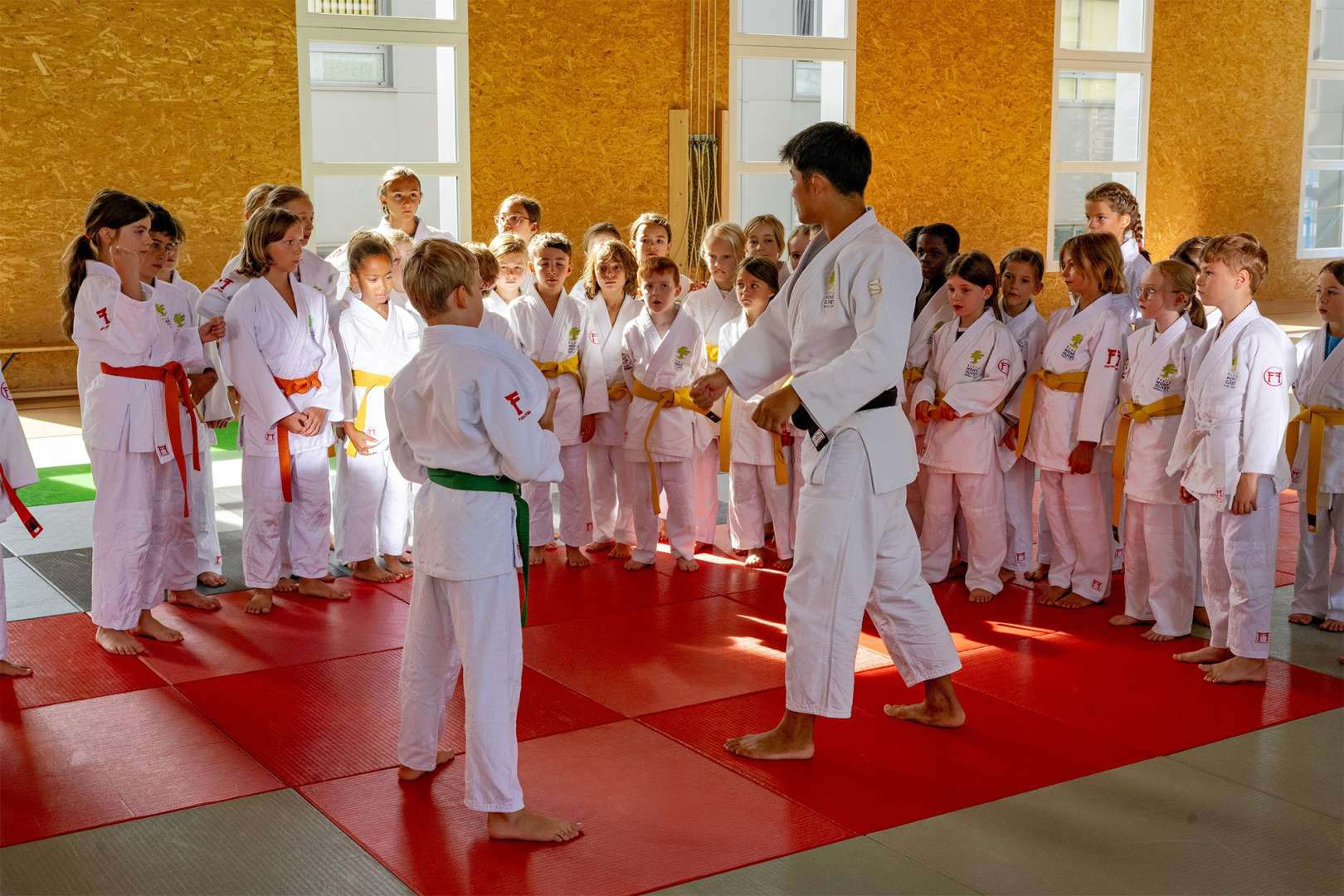
His path may appear surprising. A two-time world champion, with four world championship medals in total, a World Judo Masters title and numerous medals on the World Judo Tour, Maruyama could easily have remained within the celebrated Tenri University system that helped shape him, or joined the staff of the Japanese national team. Instead, at 33, he has chosen a different horizon: the shores of Lake Geneva and an educational project in which judo is used to help young people grow.
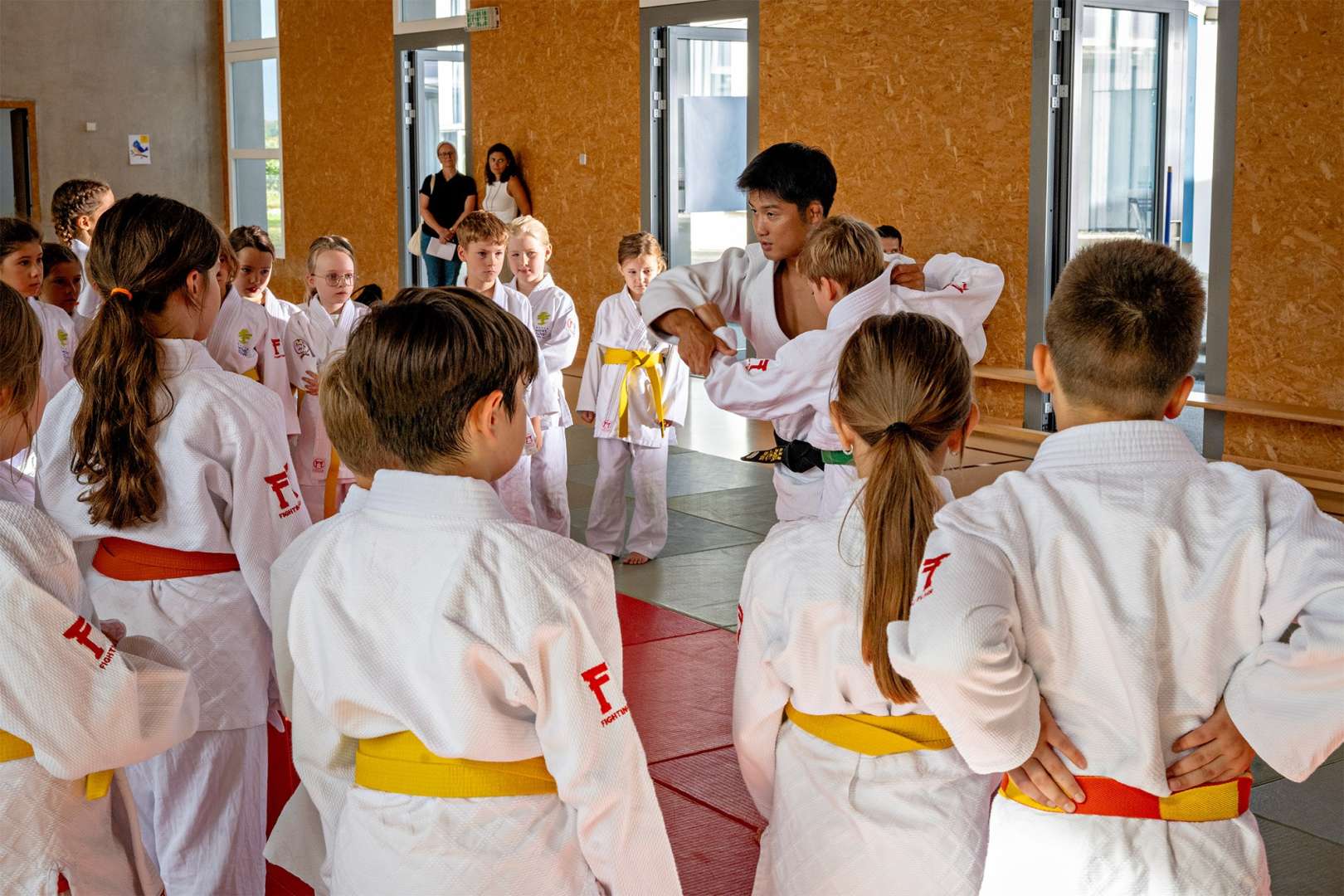
On Wednesday 26th August, the choice became visible in the school dojo in Vich, where Maruyama’, during the IJF president and Swiss President’s visit, led a masterclass for the pupils of Ecole Mont-Olivet. There was no need for a lengthy introduction. The children knew they were standing in front of one of the most gifted judoka of his generation, a man whose uchi-mata and technical precision had thrilled judo audiences around the world for years.
Yet there was no sense of distance. Maruyama demonstrated, observed, corrected and encouraged with the same care for detail that had carried him to world titles in 2019 and 2021. His presence gave tangible meaning to the school’s educational project in which judo is not simply an activity alongside academic life but a means to develop confidence, respect, discipline and perseverance.
There may be an earlier Tenri story behind the path now taken by Maruyama, that of Shinji Hosokawa. Olympic champion in Los Angeles in 1984 and world champion the following year, Hosokawa was already an extraordinary judoka when, in 1989, he spent a year in France as part of a mission supported by the Japanese Ministry of Education and the Japanese Olympic Committee. It was an experience away from the familiar environment of Japanese high performance, an opportunity to observe, teach, exchange and continue learning on the ground.
Hosokawa later returned to a central role within Japanese judo, notably through Tenri University, where he has formed generations of athletes and coaches. Today, he remains a major figure in the Japanese and international judo landscape, combining responsibilities within the All Japan Judo Federation and the International Judo Federation. He is also one of the mentors who has helped guide Maruyama’s journey.
The parallel is not a coincidence. Both men belong to the Tenri tradition, a tradition that values exceptional technical standards but understands that knowledge only truly matters when it is passed on. Both have chosen, at different times in their lives, to step beyond the most obvious path in order to learn from another environment and give something back to it.
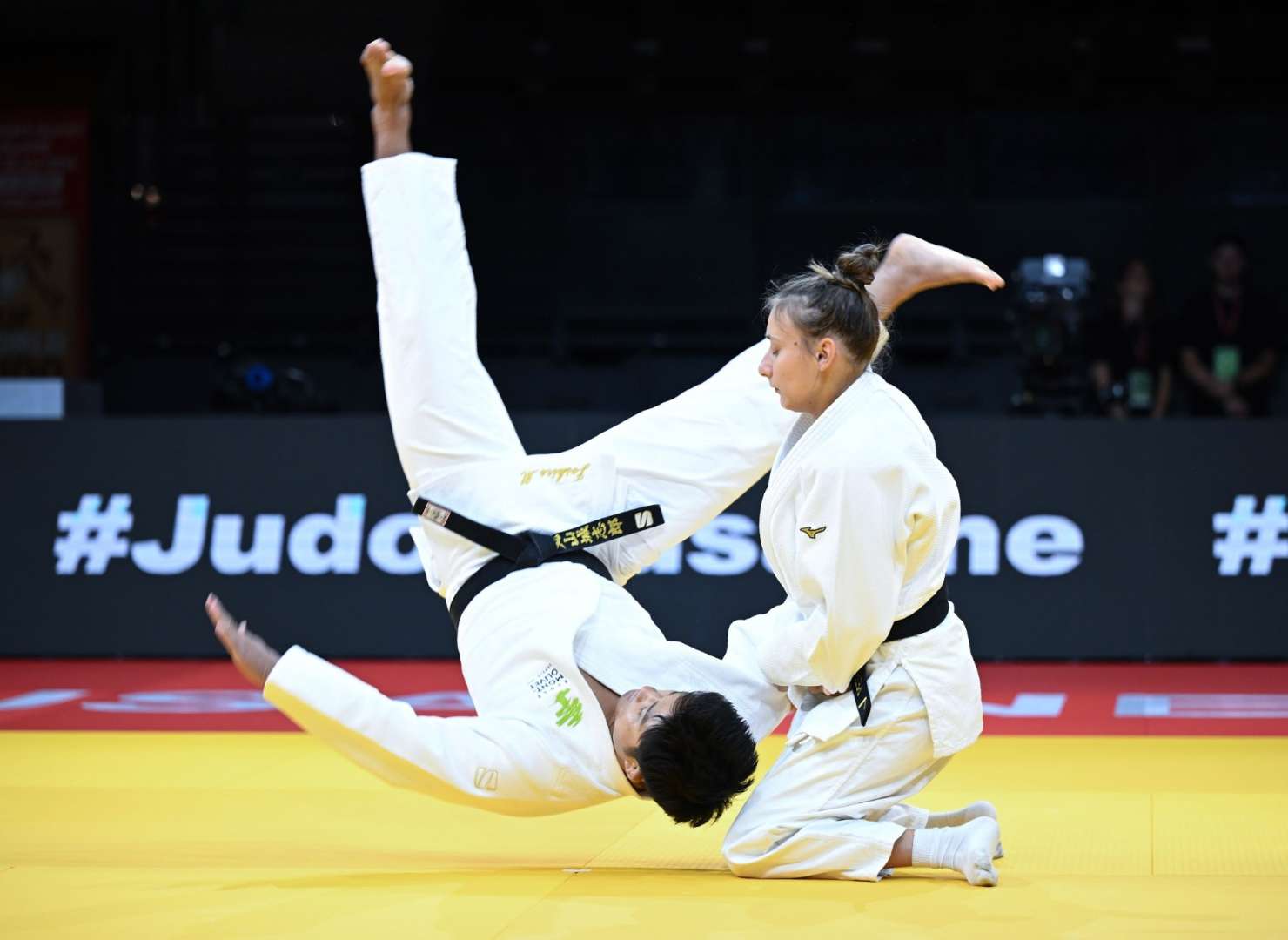
Throughout his career, Maruyama has projected the image of a judoka of extraordinary technical ability, but also of a deeply human competitor, attached to the values at the heart of the discipline. His need to transmit appears to have been stronger than the attraction of more obvious destinations. With his pupils, he does not appear as an untouchable master who already knows everything. He remains attentive, curious and open to learning himself. In only a few months, he has already developed a growing command of French, allowing him to engage more directly with the children around him.
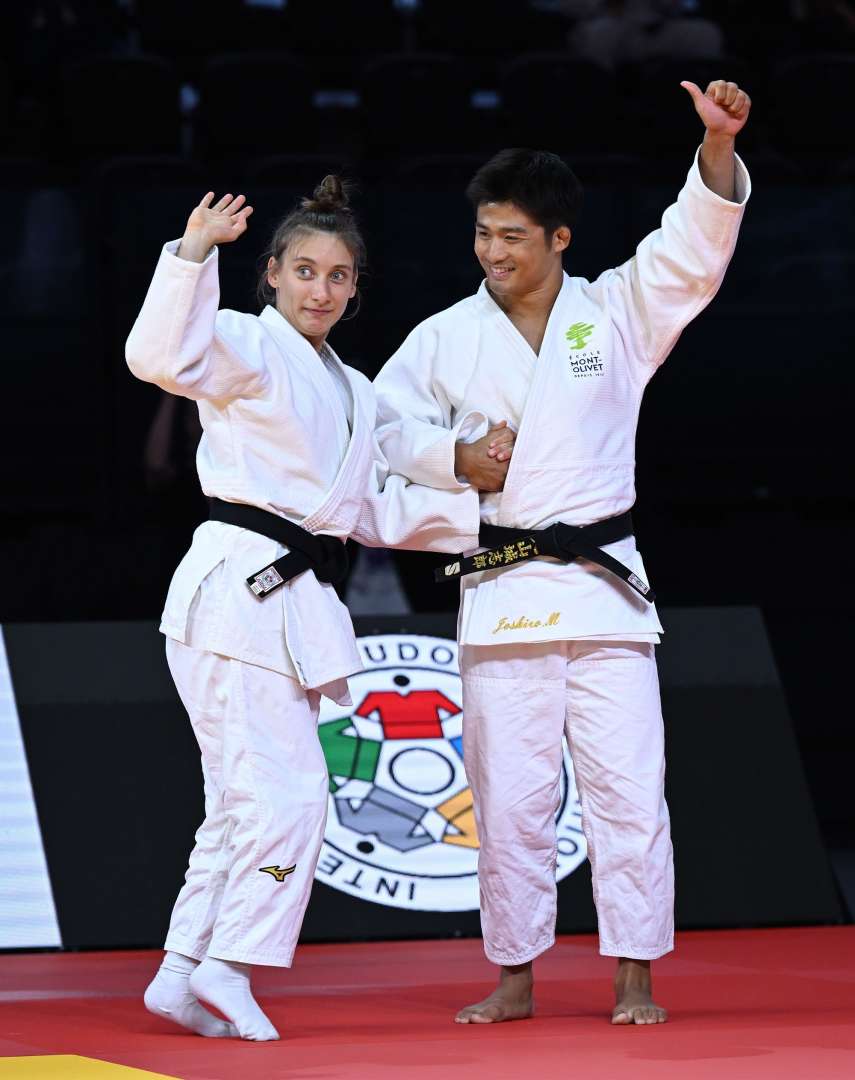
A few days later, that same humanity was visible again during the opening ceremony of the Ecole Mont-Olivet Lausanne Grand Slam. Maruyama stepped onto the tatami of the Vaudoise Arena alongside Petra Orešković of Croatia for an inclusive kata demonstration.
Orešković, the first athlete with cerebral palsy, who cannot walk, to obtain a black belt, and Maruyama offered far more than a performance. The double world champion did not stand above his partner, nor did he diminish himself beside her. They met as judoka, sharing the rhythm, trusting and responsibility that kata demands. Together, they gave powerful expression to the message of an event that brought elite athletes, adapted judoka and deaf judoka together in the same arena; judo belongs to everyone.
Joshiro Maruyama remains a great champion, of course, but his new life in Switzerland reveals something equally valuable. He is a man continuing his journey, still learning and now passing on what he has received, in the spirit imagined by Jigoro Kano Shihan, using judo not only to become stronger, but to become better.