
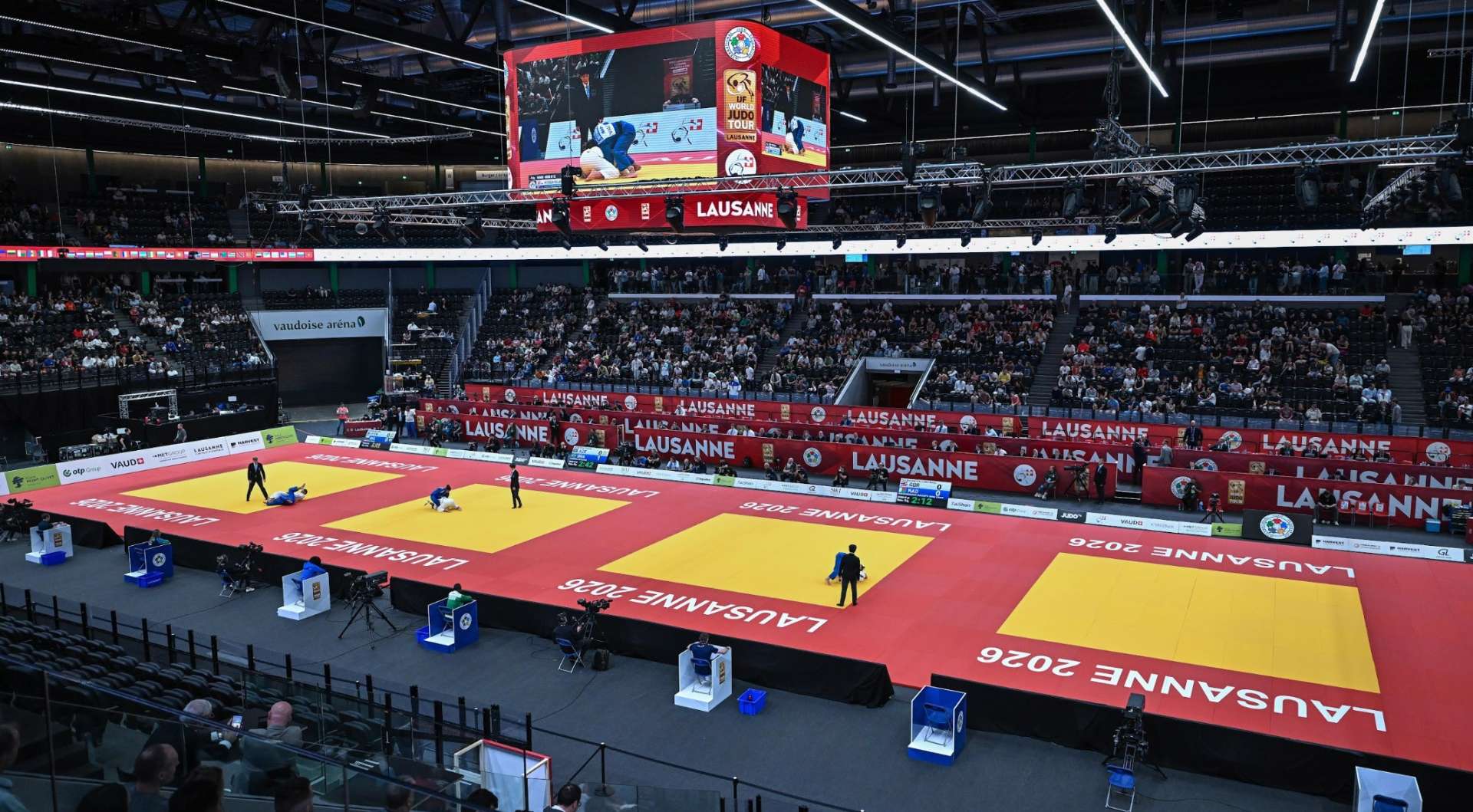
The curtain came down on the first Ecole Mont-Olivet Lausanne Grand Slam with the feeling that something important had begun in the Olympic Capital. For three days, the Vaudoise Arena was not only the stage for world-class judo; it became a meeting place for three events, three communities and one shared ambition. The grand slam, adapted judo and deaf judo competed within the same environment and under the same values.
With 513 judoka representing 77 nations, the grand slam brought depth, intensity and an international field worthy of a new stop on the World Judo Tour. Russia finished at the top of the medal table, ahead of Japan and Germany, while Georgia, France, Uzbekistan, Brazil, Israel, Kazakhstan and Poland all celebrated gold medals. Beyond the results, the event showed that Lausanne had immediately found its place on the international judo calendar.
The competition also came at a decisive moment in the season. With the World Judo Championships in Baku only weeks away, Lausanne offered leading athletes an important opportunity to test their preparations, build confidence and make a final statement before the year’s major individual event.
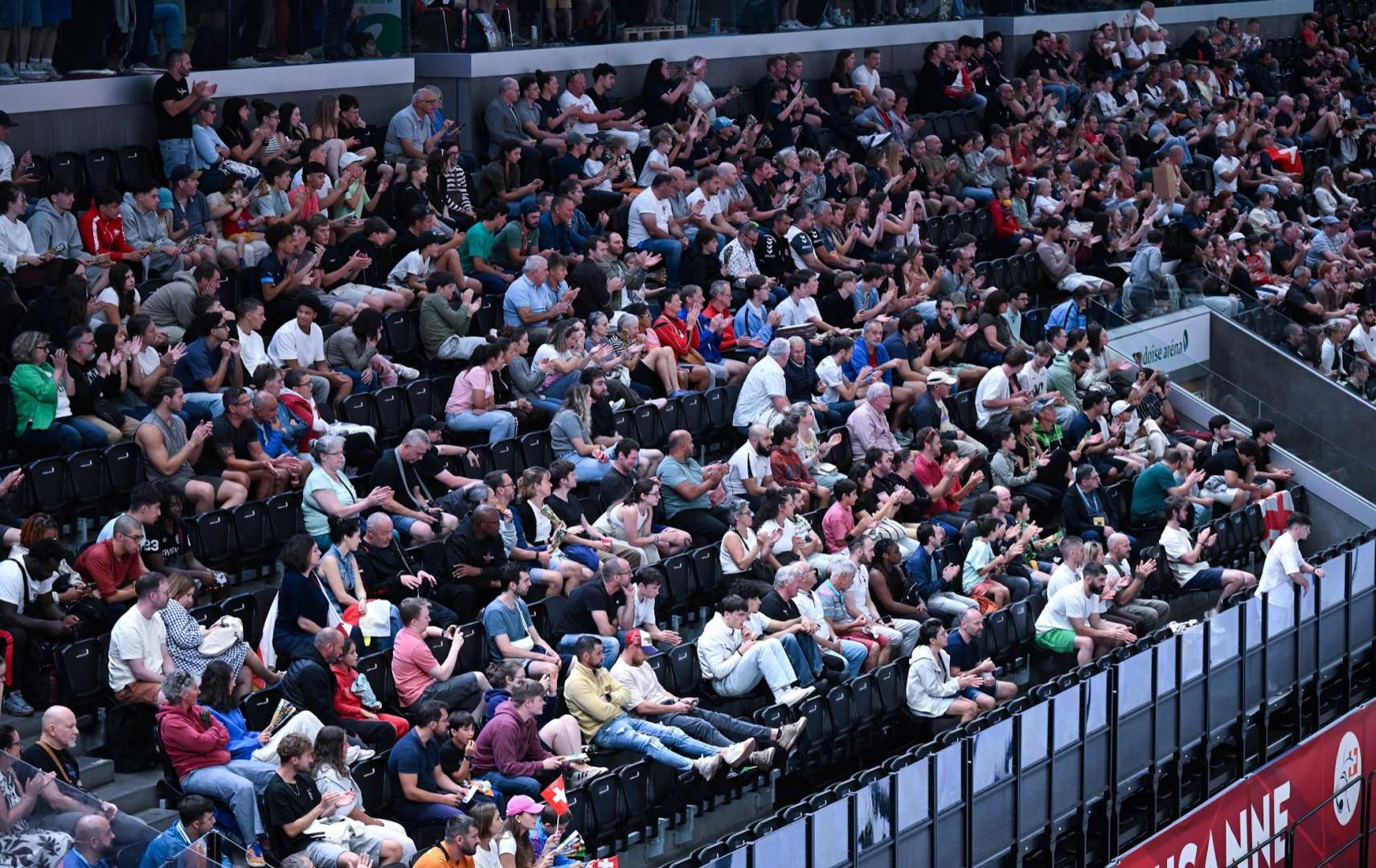
For Swiss Judo President Sergei Aschwanden, one of the driving forces behind the project, the assessment was clear, “I am really satisfied with this first edition. Overall, it was a real success. We delivered!” More than 12,500 of the 15,000 available tickets were sold, a highly encouraging figure for a first edition, while the event attracted strong international and local media attention.
The success belonged to a much wider team. Volunteers, the authorities of the Canton of Vaud and the City of Lausanne, partners and the Ecole Mont-Olivet all played their part in bringing a demanding project to life. The support and daily involvement of the International Judo Federation were equally central throughout the preparation phase.
The opening ceremony offered one of the most powerful moments of the three days. Its messages of inclusion, transmission and mutual respect set the tone for an event in which elite mainstream athletes, adapted judoka and deaf judoka were all given their place. In Lausanne, judo did not simply present three competitions; it gave tangible form to one family, united by the same tatami.
The first Ecole Mont-Olivet Lausanne Grand Slam has therefore closed but it has also revealed a new horizon. In 2028, Lausanne will host the World Judo Championships, 55 years after it last welcomed the event, in 1973. The journey towards that major milestone has begun, with the Olympic Capital confirming that it can offer judo a home of its own: ambitious, welcoming and firmly focused on the future.