After two decades of work, a treaty could see the light of day next year, sketching out the rules for how countries help each other when disaster strikes. But they still have to overcome old divides over its implications for sovereignty and human rights.
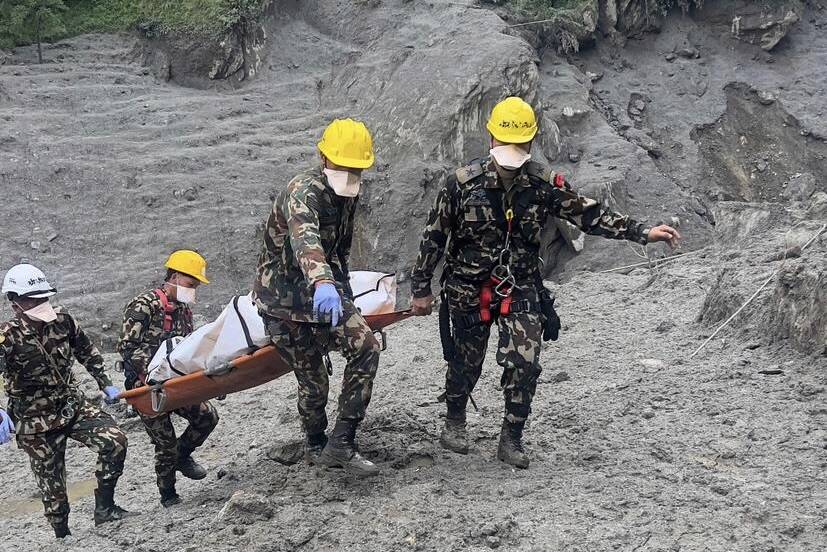
Last week, mud and floodwater tore down the Bhote Koshi-Trishuli river corridor in Nepal, flattening villages, roads and bridges in their path. More than 4,200 people are still unaccounted for while more than 1,200 have been confirmed dead. In the months before, the earth shook with violent force under Venezuela and Colombia, trapping scores of people under the rubble.
Each time, rescue efforts quickly got underway – the first hours and days are critical for survivors. Proposals for assistance from states, NGOs and diaspora communities poured in just as fast. These latest events are a stark reminder that when disaster strikes, international coordination is critical. Yet, there are no global rules on how countries should work together before, during and after a natural or man-made disaster.
States are hoping to change that, with a new UN treaty expected to be adopted as soon as next year. “There are many instruments at the regional or sector level that provide for disaster response and cooperation, but there is no overarching comprehensive international legal framework, and this really will fill that gap,” said Isabelle Granger, global lead for disaster law and auxiliary role at the International Federation of Red Cross and Red Crescent Societies (IFRC), speaking from preparatory meetings this week in New York.
The network of humanitarian national branches, often at the frontline of disasters, has been pushing for the initiative for years and is now providing technical assistance.
Two decades in the making
The idea of a treaty grew out of the 2004 Indian Ocean tsunami that swept through 14 countries, killing 300,000 people. The International Law Commission, a UN body of independent legal experts tasked with developing and codifying international law, took up the issue. After nearly two decades, the expert group, which typically meets in Geneva, produced a draft set of rules on protecting people affected by disasters, and recommended that states consider turning them into a legally binding instrument. States finally agreed to move forward in 2024.
The case for action keeps growing. According to the Belgium-based Centre for Research on the Epidemiology of Disasters (CRED), the number of disasters per year has increased from 100 in the 1970s to roughly 400 annually in the last two decades.
A patchwork of initiatives like the Sendai Network for Disaster Risk Reduction and early warning systems has tried to improve the response, but coordination remains fragmented and often inefficient. And when it comes to rescue efforts, every minute counts. “When there’s a major disaster, the capacity of affected states is overwhelmed. That state then places a request for international assistance, and other states provide it,” said Granger. “This treaty would clarify that mechanism so it’s not only based on goodwill, but it would be a clear set of rules and obligations between states that apply to all.”
When red tape costs lives
Even as governments and rescue actors have grown more experienced, people still die due to logistical and administrative failures. Getting life-saving aid through borders can be costly, lengthy and chaotic. IFRC analysis found that blankets, tents and other essential relief items face import tariffs of around 17 per cent on average without exemptions in place, while customs clearance in many regions prone to disasters typically takes 11 days in normal times.
Another challenge is the arrival of uncoordinated aid, with up to 60 per cent of aid sent to large disasters being “non-priority items that should not have been sent”, according to the IFRC. Food and medicines can expire or spoil in transit. Poor tracking can make items unusable, burdening logistics systems. All of this diverts precious time, personnel, storage and transport away from the response itself.
“States are often not legally prepared to face major disasters,” said Granger. “In the absence of a legal framework for managing international disaster response, states fall back on those that apply to all situations, and this is what creates bottlenecks.”
One of the aims of the treaties is to strip as many of these hurdles as possible. “We’re talking about simplified procedures for customs clearance or visas for humanitarian workers, priority for landing humanitarian flights or recognising the professional qualification of humanitarian workers such as doctors,” said Granger.
Other areas still need to be fleshed out, according to Granger, such as tax and tariff exemptions meant to ease cooperation.
How far the treaty should go on risk reduction is still an unresolved matter. Measures in the draft so far include conducting risk assessments, collecting and disseminating information about risk and losses, and putting early warning systems in place. Some states, including Syria, have said any risk-reduction obligations should account for countries’ different capacities – and come with international support, including financial.
Where politics gets in the way
While the initiative received broad support and the resolution was adopted by consensus at the General Assembly in 2024, states don’t agree on all the details. African countries, often hit hardest by disasters, want the treaty to focus on response. Nordic and European countries want a prominent focus on human rights, arguing that a state overwhelmed by disaster has a duty to seek international help to safeguard its population’s rights.
They have also stressed the importance of the independence of aid, in line with humanitarian principles, and have argued that the treaty doesn’t give states the right to interfere in the work of independent aid actors.
Russia, China, Syria, Argentina and others have raised sovereignty concerns, insisting that the affected state decides what offers of aid to accept, and that the treaty shouldn’t become a pretext for foreign intervention.
While these contentious debates may seem abstract, politics have often interfered with real rescue efforts. Recent earthquakes in Colombia and Venezuela prompted accusations that both governments refused or delayed offers of aid for political reasons. After the 2023 Turkey-Syria earthquakes, the Assad regime initially blocked foreign aid from reaching opposition‑held areas of northwest Syria, insisting all assistance be routed through Damascus.
These and many more issues have yet to even be ironed out, starting with the very definition of a disaster to the type of agreement countries want, to the money that will help them implement it.
All of this is expected to be thrashed out at a plenipotentiary conference expected to take place between January and February and originally planned for Manila, though countries are now considering other locations, including Bangkok. Setting aside the legal and political wrangling over the details, Granger is sure of one thing: “This treaty will save lives.”