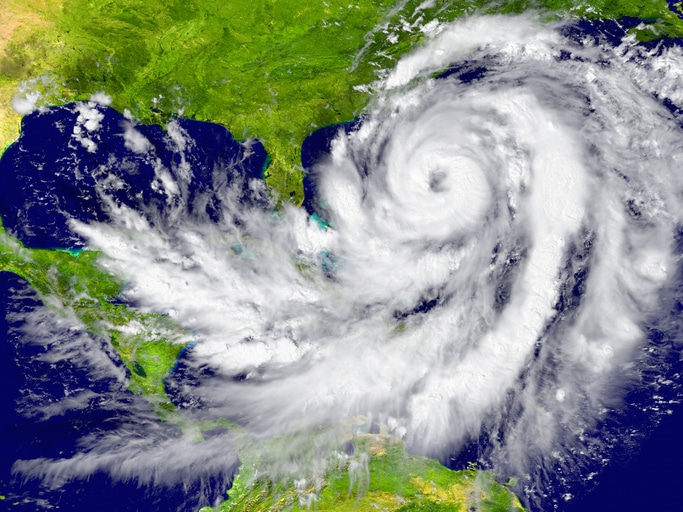
A Category 5 hurricane striking Miami or Tampa Bay could generate insured losses of $300 billion or more, according to new analysis from Swiss Re Institute. Such losses would exceed those from any recorded single insured event to date.
Swiss Re released the analysis ahead of the 100th anniversary of the Great Miami Hurricane, which made landfall in South Florida on Sept. 18, 1926. The Category 4 storm struck what was then a young and rapidly developing Miami.
According to Swiss Re Institute, a repeat of the 1926 hurricane today could cause approximately $200 billion in insured losses.
Florida Exposure Has Increased
Population and property growth have significantly changed the potential impact of a hurricane striking Miami-Dade County.
Just over 100,000 people lived in the county when the Great Miami Hurricane arrived in 1926. Today, Miami-Dade has approximately 2.8 million residents.
In addition, more than 2 million homes in the Miami metropolitan area are at moderate or greater risk of hurricane wind damage. Those properties have a combined reconstruction cost exceeding $600 billion.
Swiss Re said population growth and the accumulation of assets in areas exposed to natural catastrophes are contributing to higher insured natural catastrophe losses globally.
Landfall Location Changes Losses
Swiss Re’s analysis also illustrates how relatively small differences in a hurricane’s track can significantly affect insured losses.
Hurricane Andrew made landfall about 20 miles south of Miami as a Category 5 storm in 1992. Its path largely spared Miami’s larger concentration of insured property.
Swiss Re Institute estimates that a hurricane following Andrew’s 1992 track today would generate close to $100 billion in insured losses. In comparison, a Category 5 hurricane making landfall in Miami or Tampa Bay could produce insured losses of $300 billion or more.
Balz Grollimund, head of catastrophe perils at Swiss Re, said the Atlantic hurricane season has been relatively quiet so far in 2026. However, he noted that a single major hurricane making landfall in a highly exposed area can produce substantial losses.
Building Standards Support Resilience
Swiss Re also highlighted measures designed to reduce hurricane losses and manage catastrophe exposure.
Stronger building codes and wind-resistant construction can reduce property vulnerability. According to Swiss Re, updated standards helped newer Florida homes withstand Hurricane Ian in 2022. Replaced and storm-proofed roofs also reduced vulnerability.
Traditional and alternative reinsurance capacity can support resilience when combined with catastrophe modeling, disciplined accumulation management, and mitigation.
Monica Ningen, CEO of U.S. P&C Reinsurance at Swiss Re, said Florida’s population and property growth have transformed the state’s risk landscape. She added that stronger building standards have improved resilience, while mitigation, risk modeling, and reinsurance can help manage severe-event risk and volatility.
Get the latest insurance market updates and discover exclusive program opportunities at ProgramBusiness.com.