

Want to bookmark your favourite articles and stories to read or reference later? Start your Independent Membership today.
Already a member?
Log in
One of the first moves made by Sir Jim Ratcliffe’s petrochemicals company Ineos after it bought the historic Swiss football club FC Lausanne-Sport in 2017 was to order a rebrand of the club’s crest. The new image would feature some subtle changes, with the “O” in “Sport” redrawn to replicate the distinctive ‘O’ in Ineos and a new orange trim pulled from Ineos’s branding.
Lausanne’s colours are traditionally blue and white and certainly not orange, so supporters weren’t enamoured with the idea, and their vehement protests eventually forced the redesign to be scrapped. Yet the fact that the plan ever came to fruition seemed at odds with the messaging from Ratcliffe, a billionaire who professed to be a lifelong football fan. Sprucing up the crest of a century-old football club with corporate imagery did not suggest an understanding of the game.
Ineos ran into several difficulties at Lausanne, and the club were soon relegated, but the experience didn’t dissuade Ratcliffe from venturing further into the world of sport. In the nine years since, Ineos has bought or significantly invested in OGC Nice, Manchester United, the Team Sky cycling team, Britain’s America’s Cup team and Mercedes F1, as well as entering sponsorship agreements with the All Blacks and Tottenham Hotspur.
 Sir Jim Ratcliffe, top, watches on beside Manchester United CEO Omar Barrada (PA)
There have been two recurring themes within this bold sporting empire. The first is acrimony. You can see it in the protests of Nice fans against the ownership, in the legal wrangling with the All Blacks and Spurs after Ineos terminated deals, in the fallout with Ben Ainslie as Ineos withdrew from the America’s Cup, prompting an argument over who owned a £180m boat.
In court documents, Ainslie claimed that the chairman of Ineos Sport, Rob Nevin, told him: “‘We have a phrase at Ineos: scorched earth. It means that if you don’t give Jim what he wants, he will burn your house down,’ or words to that effect.”
A personal favourite was Ratcliffe’s dispute with the British Olympic Association (BOA) over the name of his America’s Cup team, which he wanted to call “Team GB”, a name owned by the BOA. He said he would be promoting Team GB’s name in a “patriotic light”, but after he was refused the right to use it, he wrote to the BOA inviting them to “take a long walk off a short plank” and declaring he had changed the name to “Team UK, which I much prefer”.
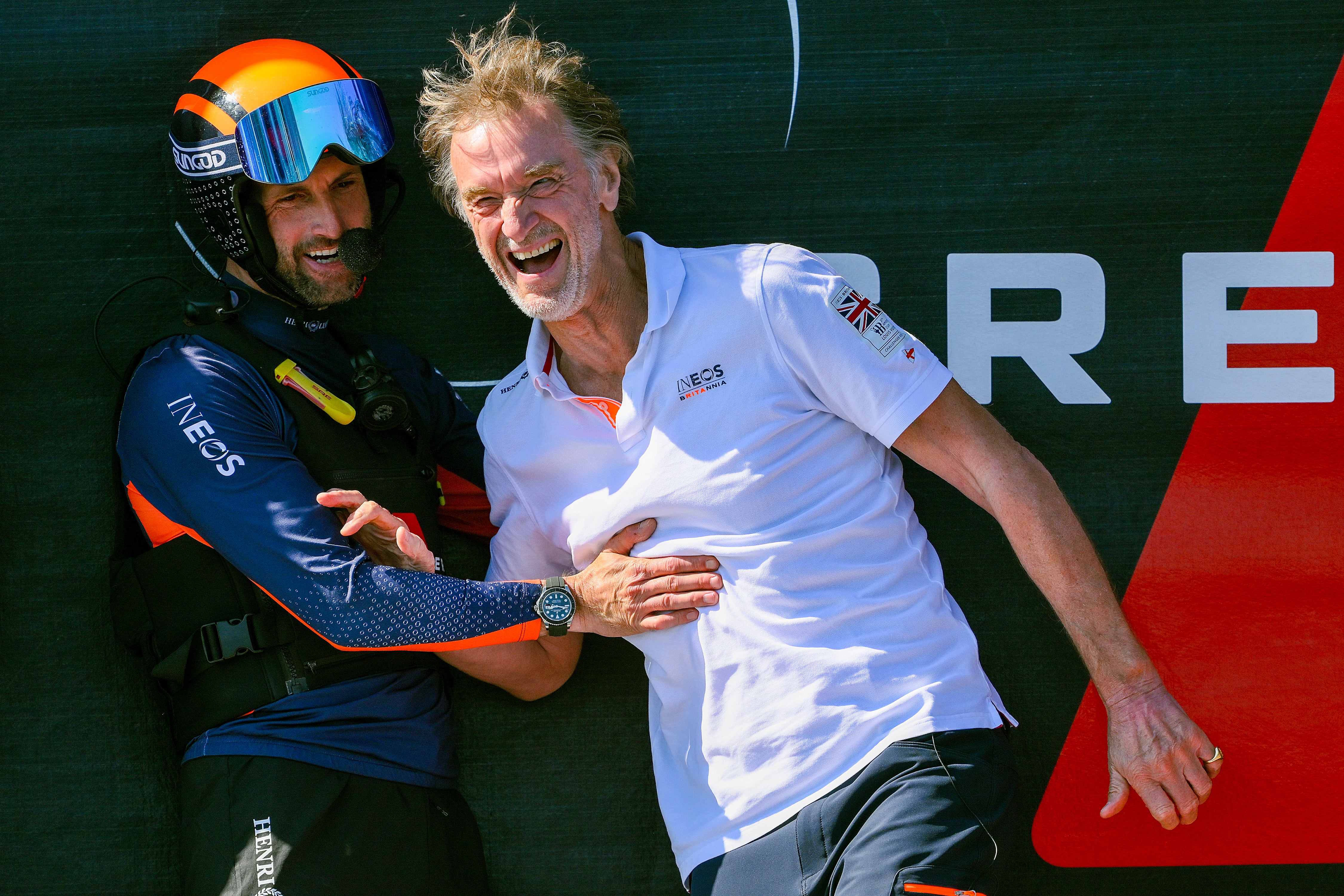 Ben Ainslie and Jim Ratcliffe fell out after two America’s Cup projects (Getty)
Ratcliffe, of course, doesn’t seem to really like Britain, a country he described earlier this year as being “colonised by immigrants”, a view formed 600 miles away in the tax haven of Monaco where he resides. He later apologised for his comments after feeling the ire of supporter groups, campaign organisations and even the prime minister.
The other theme is instability. The Ineos cycling team have fallen from the sport’s summit, held back by internal politics and leadership gaps. An investigation by cycling publication Escape Collective was told by a former rider that Ineos had introduced “too much structure, compliance and was acting like a big corporation”. A former Team Ineos staff member added: “All the smart people have left.”
Ineos has fallen short in its stated ambition to turn Nice into a force of French football. Nice have cycled through seven managers in seven years and, after some seasons of promise, they are further from a title challenge than when Ineos first took over in 2019. The bid to turn Lausanne into regulars in European competition has also failed.
Both clubs are now up for sale. There are some common threads: the churn of senior leadership, chaotic decision-making, costly strategic missteps and rancour. And for those smaller Ineos projects, Ratcliffe’s £1.3bn purchase of a minority stake in Manchester United in 2024 indicated that the true priorities of the organisation lay elsewhere.
The Glazers handed Ineos operational control of United, and Ratcliffe set about reviewing every aspect of the club’s function from top to bottom, with a view to cutting costs, increasing revenues and building a “best-in-class” leadership team. A raft of redundancies was not popular and was reported to have riled even the Glazers. Increased ticket prices were not popular either, and the man tasked with carrying out the audit, Sir Dave Brailsford, ruffled plenty of feathers in the corridors of Old Trafford.
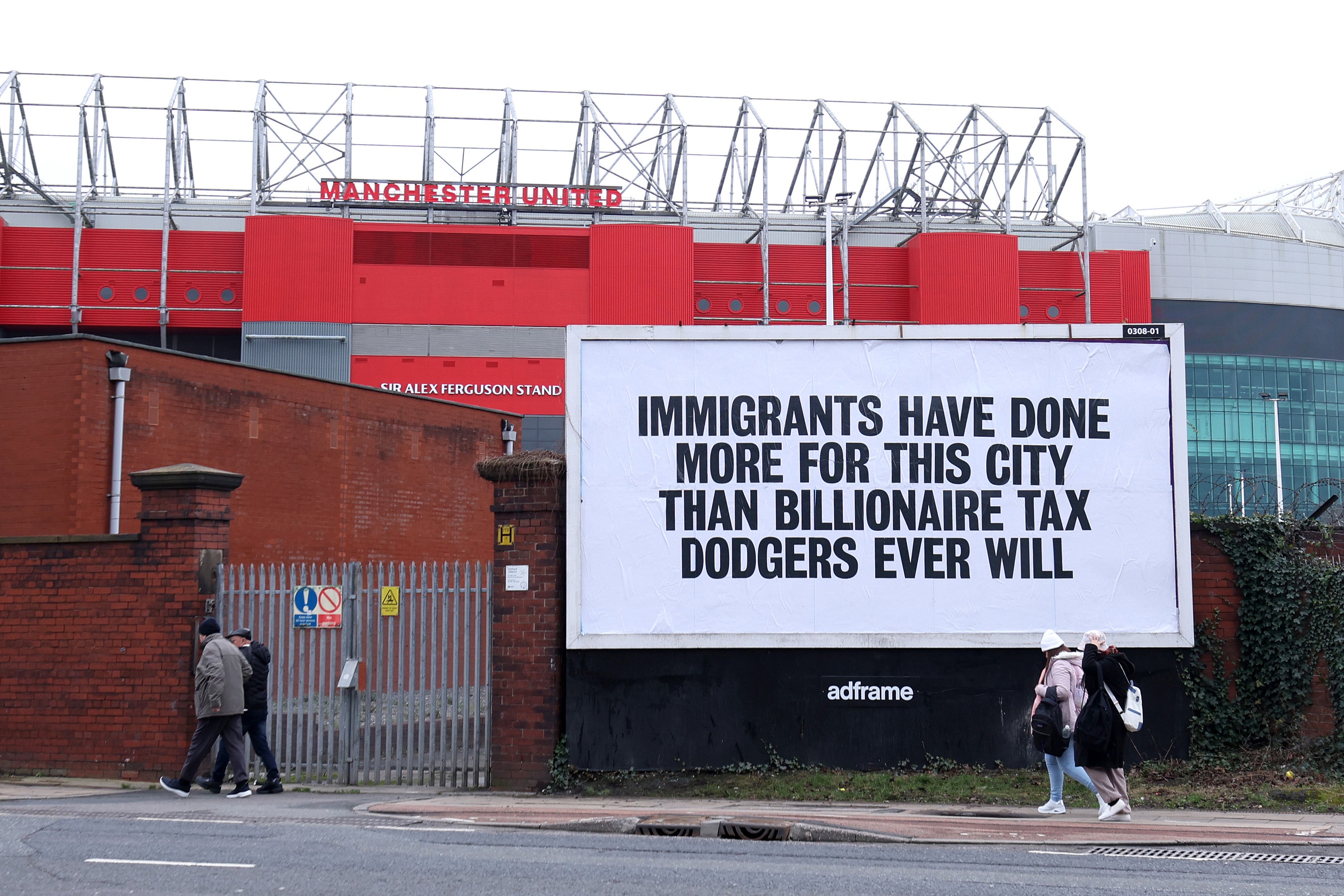 A billboard poster outside Old Trafford takes aim at Ratcliffe (Getty)
A lot would have been forgiven had the team been successful on the pitch. Ratcliffe made a bold play to prise highly regarded sporting director Dan Ashworth from Newcastle United, spending £3m on compensation after a six-month pursuit. Unlike Ineos, Ashworth had a proven track record of success in football with West Brom, Brighton and the Football Association. But the same issues arose when internal politics and a power struggle forced Ashworth out the door after only five months.
Ashworth describes his job as the central axis of a wheel that brings all the spokes together – men’s team, women’s team, academy, fitness, nutrition, recruitment, analysis – and gets them moving in the same direction, towards the same shared goal. To succeed, Ashworth requires the keys to the building, and Ratcliffe wasn’t prepared to hand them over.
The question now is whether CEO Omar Berrada, technical director Jason Wilcox and head of recruitment Christopher Vivell will hire the right coach, and sign the right players, to restore United to the upper echelons of world football. By extension, given he hired them, it is a test of whether Ratcliffe has put the right people at the helm. After the audits and the fallouts, after the mess of Ashworth’s arrival and the chaos of his departure, has Ratcliffe got the “best in class” hierarchy he promised?
Because right now United have a failing team on the pitch, led by a disillusioned captain, managed by a sinking coach, booed by disgruntled fans, in a crumbling stadium, under £1.15bn of debt. And really, when you look at Ineos’s track record in sport, what else did we expect?