
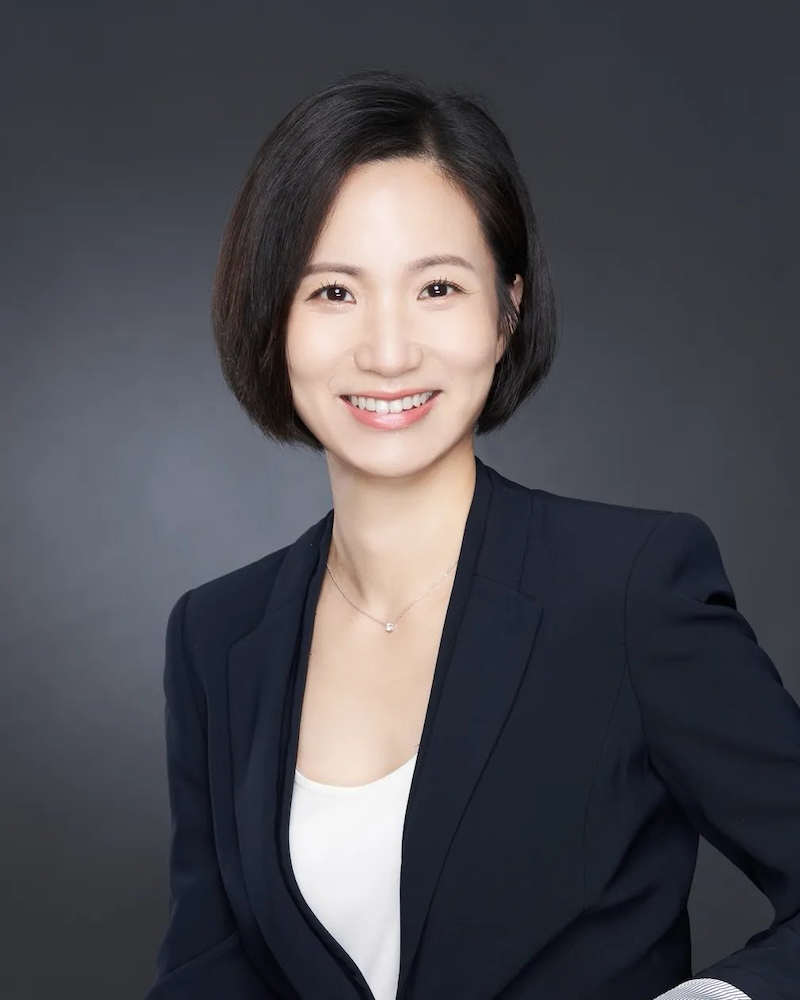
When Diana Liu took over as General Manager of Roche Pharma Taiwan in May 2025, she brought nearly two decades of experience in the pharmaceutical industry, including three and a half years leading Roche’s operations in Hong Kong and Macau.
Diana’s clinical beginnings continue to shape how she approaches executive decisions. “Because my career began with research and medical training, I needed to be really curious as medical innovation moves so quickly,” she says. “Now, that curiosity helps me navigate challenges and identify new opportunities to better meet patients’ needs.”
Her work remains rooted in an interest in people, informing both her commitment to patients and her interactions with employees, particularly in talent development. At Roche Taiwan, she encourages staff to participate in regional and global projects and assignments, gaining experience they can bring back to Taiwan.
“When I have career conversations with my team, I don’t just ask where they want to go in their next role,” Diana says. “I ask them to imagine where they want to be five years from now. Then we work backward: What can we do to help them get there?” Her objective is clear: to cultivate Taiwan into a talent hub within Roche’s Asia-Pacific network.
Diana extends that long-term thinking beyond talent development to the healthcare systems in which Roche operates. For her, sustainable progress also depends on cooperation between industry and government.
During her tenure in Hong Kong, Diana worked with government officials and pharmaceutical industry representatives to improve patient access to innovative treatments. As leader of an industry task force, she helped secure a nine-month reduction in the public drug reimbursement timeline. Diana sees the Hong Kong experience as a model for stakeholder engagement in Taiwan.
One of the country’s clearest advantages, she notes, is its medical and scientific expertise. Taiwan’s clinical personnel and researchers provide a foundation for international trial partnership, while the government’s openness to dialogue creates opportunities for healthcare innovation.
In Taiwan, Roche has maintained approximately 80 ongoing clinical trials over the past three years, with annual research investment of NT6 million). Within the company’s global network, Taiwan is among the countries considered early for participation in pipeline studies, giving Taiwanese investigators opportunities to join first-wave international trials.
Yet Diana identifies the government’s “Healthy Taiwan” agenda and Cancer Drugs Fund (CDF) as opportunities to improve patient access to treatments. Realizing their potential will require predictable financing and modernized criteria for evaluating innovation and accelerating its adoption into the local system.
Reimbursement assessments com-monly focus on clinical metrics such as overall survival and progression-free survival, but Diana argues that these overlook the economic costs of unmanaged disease. Effective treatment can help working-age patients return to their jobs, and family caregivers remain in the workforce. These benefits are particularly important in many Asian societies, where families shoulder substantial caregiving responsibilities, she says.
A WifOR study covering 11 Asia-Pacific markets estimates that unmanaged HER2-positive breast cancer and retinal diseases will account for US$180 billion in lost workforce and unpaid productivity between 2017 and 2027.
“Medical expenditure is increasingly being recognized as a sound investment in people, and not just a cost,” Diana says. Roche is increasingly collecting new types of robust evidence to support this new way of thinking about healthcare.
Within the National Health Insurance (NHI) system, she advocates for faster reimbursement for breakthrough and internationally recognized standard-of-care therapies. To maintain Taiwan’s momentum in this area, new and sustainable investment mechanisms like the CDF will be required alongside reinvesting savings from elsewhere in the pharmaceutical budget, including spending on mature, off-patent medicines.
Alongside its policy engagement, Roche connects Taiwanese clinicians with international researchers through clinical development programs and partnerships, building up its operations in Taiwan for nearly 60 years.

Drawing on its pharmaceutical and diagnostics capabilities, Roche con-ducted the “Shining Tower” project, providing 2,000 free comprehensive genomic profiling tests to Taiwanese cancer patients and partnering with other pharmaceutical companies to supply matched targeted therapies. The initiative helped establish local testing infrastructure and demonstrate how genomic profiling could inform clinical decisions. In 2024, Taiwan’s National Health Insurance introduced reimbursement for next-generation sequencing (NGS).
Roche is taking a similar collaborative approach to rare diseases. In May 2026, the company signed a memorandum of understanding with Medical Excellence Taiwan (MET) to develop Taiwan as a regional center for rare-disease screening, clinical care, and treatment monitoring, creating opportunities for medical exchange under the government’s New Southbound Policy. Roche’s development pipeline also extends beyond oncology into ophthalmology, cardiovascular conditions, and neuroscience, including Alzheimer’s disease.
Beyond clinical development, Roche uses its global supply chain to support reliable access to innovative therapies for patients with serious and chronic conditions.
For multinational companies, investment decisions depend heavily on government policy direction and pre-dictability. Diana advocates clearer government frameworks linking local research and development to market access decisions. These standards would help the local market justify further investment to global headquarters and support Taiwan’s global competitiveness and reputation as a leading adopter of innovation globally.
“From an international perspective, transparency brings reliability and longer-term partnerships,” Diana says. “If I know what will happen, I know how to plan. The more clarity it can bring, the more investment it will attract to Taiwan.”