
Listen to the article
Listening the article
Toggle language selector
English (US)
English (British)
Generated with artificial intelligence.
Despite COP31’s disappointing outcome for younger generations and supporters of ambitious climate action, multilateralism matters now more than ever, says Leonhard Kick of the Swiss Youth for Climate (SYFC) organisation.
This content was published on
November 24, 2026 – 14:00
Leonhard Kick is master’s degree student in Global Challenges for Sustainability. He is member of the board of Swiss Youth for Climate, a Swiss organization that empowers young people to engage in climate advocacy and policymaking.
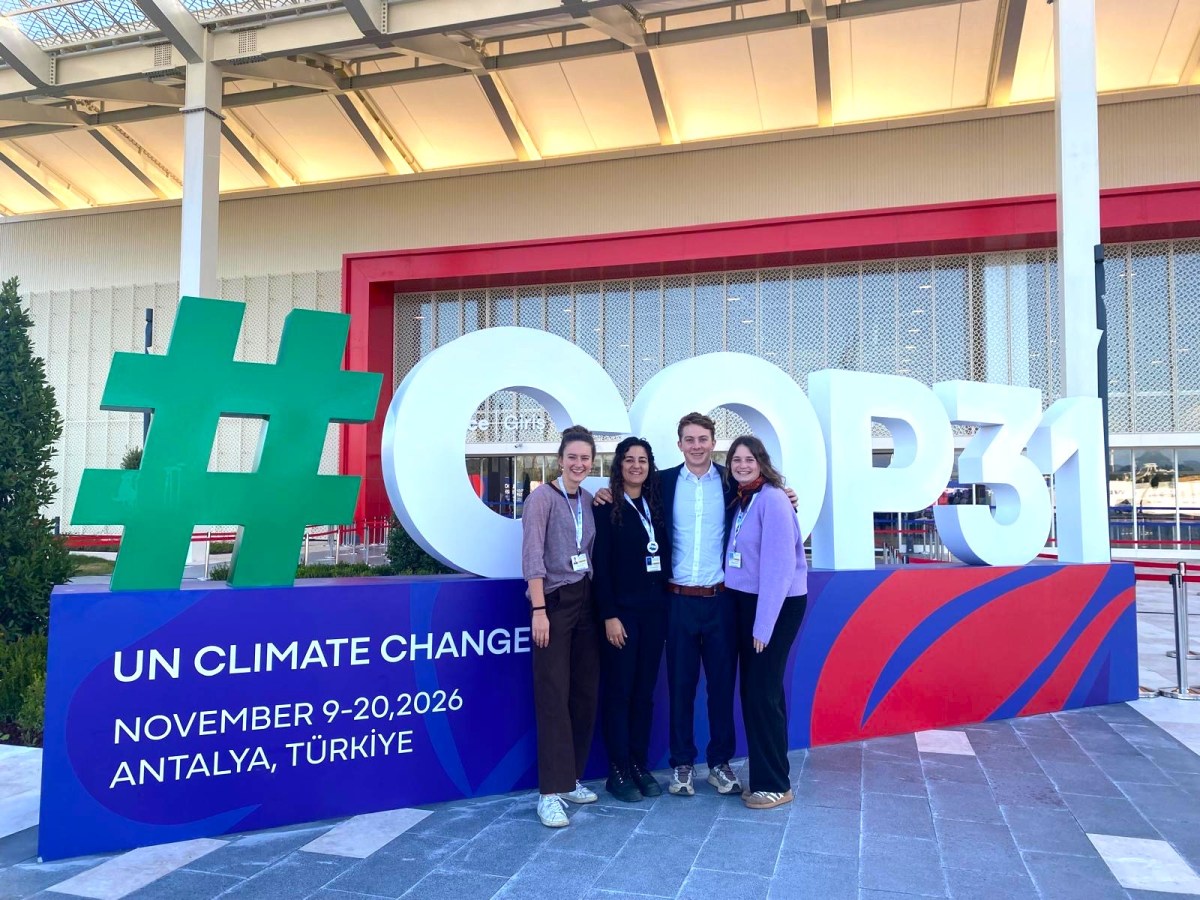
I’m 23 years old and this was the fourth climate conference I had the honor to attend in the name of Swiss Youth for Climate (SYFCExternal link), a Swiss youth-led organization active in climate advocacy and international climate negotiations.
Walking into the venue in Antalya, the familiar rush and sense of urgency kicked in immediately. That urgency felt heavier than ever this year: COP31 opened in the shadow of the 2026 United Nations Environment Program (UNEP) 1.5°C Overshoot ReportExternal link, which confirmed we are set to miss the 1.5°C limit nations set more than ten years ago at COP21 in Paris, and after devastating climate-fuelled floods in Nepal claimed over a thousand lives and caused $5 billion (CHF4.2 billion) in damages.
What upset me most at COP31 was the record number of fossil fuel and other private sector lobbyists. They were not only working in the shadows; they hosted massive pavilions, exhibitions, and countless panels promoting false solutions and dangerous distractions like large-scale carbon capture and storage (CCS) or geoengineering. Many of these lobbyists wore official country badges or were even negotiating wording in legal texts.
Amid the business of COP, the most memorable moments always happen during personal encounters. Reconnecting with a friend from the Maasai community in Kenya, whom I first met at a past conference, made it again crystal clear for me why I was here. He told me how worsening droughts and extreme weather events are disrupting his community’s daily life, undermining their ability to herd cattle or getting access to clean water.
We go to all climate conferences on a pro bono basis and take holidays from our work or studies, but for me, doing this with like-minded friends and young people from all over the world was always more than worth it.
More

More
Energy transition
How the fossil fuel industry intervenes at COP conferences and in Switzerland
This content was published on
Nov 8, 2026
The fossil fuel industry’s presence at UN climate conferences has drawn criticism. In Switzerland, too, the oil sector has sought to downplay its role in climate change.
Read more: How the fossil fuel industry intervenes at COP conferences and in Switzerland
Behind the scenes of climate diplomacy
I’m often asked: “Can you make a real difference at COPs as a young person?”. Definitely, you can. But you must take it seriously and come well-prepared. As youth delegates for SYFC at COPs, we prepare the whole year in specific working groups for these conferences, closely analysing the legal text in collaboration with the Climate Action Network (CAN) and the UN constituency for Youth and Children (YOUNGO) – two important networks SYFC is part of.
Each of us focuses on one specific negotiation item, such as finance, because that way we can get technical and understand the details and nuances of the legal texts and engage with negotiators.
What most people watching from the outside never see is the immense behind-the-scenes pressure exerted by blocking actors. Certain fossil fuel-producing countries, like Saudi Arabia, leverage enormous political weight to push the COP co-presidency (Australia and Turkey) and other delegations to water down or strip out ambitious language.
What impresses me again at every COP is the key role civil society can play: organisations such as CAN or YOUNGO have contacts across almost every country’s youth delegates, negotiators and up to very high diplomatic levels. Because we are trusted across regions, delegates often share perspectives with us that they would never state publicly on the plenary floor which allows us to build bridges when formal talks seem stuck. This has led to concrete progress at almost every COP.
What we’ve done and what we plan to do
SYFC is a nonpartisan, youth-led organization open to anyone under age 35. We work on the national and regional level on climate, biodiversity, education and other topics, through policy-advocacy, awareness raising campaigns and concrete projects. For us it’s very important to be able to truly reflect the diversity of opinions of our generation on climate action and their key demands.

Delegates of SYFC with Swiss Federal Councilor Albert Rösti (in the middle).
Leonhard Kick
Therefore, we conducted the first national youth climate survey with gfs.bern institute involving over 1,000 participants. Having hard data showing that two-thirds of 16- to 35-year-olds want stronger international climate engagement from Switzerland and four out of five hold politicians responsible. This gives real weight to our policy-demands and to the recommendations of our annual position paper.
Both ahead and during COP, we regularly followed up on our key demands with the Swiss negotiation team and Swiss Environment Minister Albert Rösti, repeating our priorities in person. We may not change Switzerland’s ambition and stance overnight, but our persistent, well-informed engagement creates trust and makes them more aware of the utmost urgency of the climate crisis which is so self-evident for our generation. Following their moves closely, we can challenge them on potential lack of ambition or red lines face-to-face.
On ground, we also coordinated closely with Swiss civil society, European youth networks like Youth Environment Europe (YEE), CAN Europe, and YOUNGO, we joined actions to build public pressure and reported back to Swiss media and to our community through social media channels.
Gap between words and action
Still, our biggest frustration remained the glaring gap between words and action – both from corporate lobbyists and from wealthy governments, including our own. Watching the Federal Council in Bern cut Switzerland’s global environment framework credit for 2027–2030 by CHF21.52 million ($25.55 million), while Swiss negotiators resisted concrete public finance commitments in Antalya, was deeply disheartening.
Even more outrageous was the Adaptation Fund pledging summit: against an urgent need of $2.4 billion, countries pledged only $50.2 million, with over half coming from Spain, and nothing from Switzerland, which hasn’t contributed since 2024. The fund is an international tool that finances projects that help vulnerable countries to adapt to the impacts of climate change.
The excuse that there is no money does not hold, when the entire global pledge is less than half the price of a single F-35 fighter jet ($121.4 million).
COP31 outcomes: a failure to meet the moment
In many important areas, the COP31 failed to deliver, and the watered-down cover decision text did not even mention fossil fuels – the root cause of the crisis. On climate finance, wealthy countries, such as the EU and Switzerland, once again refused at COP31 to live up to their obligation to pay. They failed to present a credible roadmap to deliver the New Collective Quantified Goal (NCQG) of $300 billion per year by 2035 agreed at COP29 in Baku.
While Article 9.1 of the Paris Agreement legally obligates developed nations to provide public financial resources to the Global South, they continue to argue that this target can be met through a mix of public and private sources. Without a clear, binding roadmap detailing how governments will deliver their public share, there is a severe risk that wealthy nations will simply shift their responsibility onto private capital mobilization.
Relying on the private sector is neither realistic nor just, especially given the aim to balance funding across mitigation, adaptation, and loss and damage. Because only mitigation projects typically generate a financial return, private investors have little incentive to fund adaptation or loss and damage – which is why private finance accounts for only around 6% of global adaptation finances, and why overall EU climate finance flows even dropped by 17% last year.
That’s why we call for public grants, not profit-driven loans which only add to the already huge debt burden of the developed world where many pay more on debt than on healthcare or education.
More

More
Best of SRG content
COP flop: Swiss reactions to climate talks collapse
This content was published on
Nov 23, 2026
The UN climate talks in Turkey, COP31, collapsed on Sunday without a political agreement on a joint final declaration. What happened?
Read more: COP flop: Swiss reactions to climate talks collapse
The urgent need of global cooperation
My personal assessment is clear: in the 1.5°C overshoot era, such a failure is unacceptable, and our generation is not ready to bear the costs.
Leaving Antalya without any strong outcome feels frustrating. But I am not frustrated with multilateralism or the United Nations Framework Convention on Climate Change space itself. We urgently need global cooperation – just not one held hostage by blocking actors, petrostates, and hundreds of fossil fuel lobbyists. Every day of delay costs lives.
Going forward at home, Switzerland must finally pay its fair share based on an evidence-based calculation, and when building its national roadmap for the transition away from fossil fuels, it must create a binding plan with real milestones which is shaped together with civil society and the youth who dedicate their time to fight for a liveable future.
The views expressed by the author do not necessarily reflect those of Swissinfo.
Edited by Gabe Bullard/ts

Articles in this story