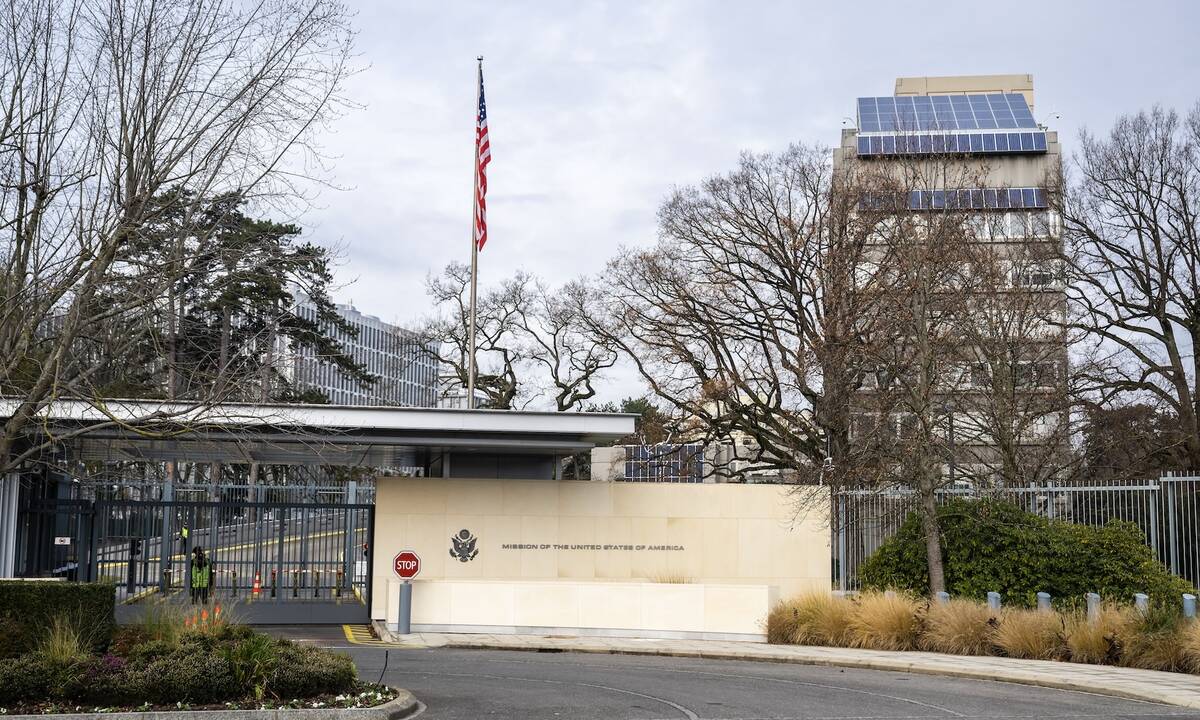
Despite exiting a host of global and UN entities, the Trump administration is sharpening its focus elsewhere, including in Geneva’s quiet but powerful rules and standards machinery.
Washington’s splashy exit earlier this month from a whopping 66 UN organisations and other international entities grabbed headlines. Less noticed has been how it intends to redirect its focus. Despite repeatedly bashing the UN as inefficient and “wasteful”, the Trump administration has signalled its determination to remain actively involved – and in some cases even expand its influence – in selected pockets of the multilateral system, including in Geneva’s obscure but powerful standard-setting agencies.
Last week, the US diplomatic mission in Geneva announced it was backing US industry executive Jennifer Warren for a seat at the International Telecommunication Union’s Radio Regulations Board. The body of experts – independent in theory, but closely linked to their respective governments in practice – plays a central role in how the Radio Regulations treaty is applied and interpreted, shaping the global rulebook that governs who can use which radio frequencies and for what purposes, from mobile networks to commercial satellites to sensitive military communications systems.
The announcement was described as a reflection of Washington’s “longstanding commitment to the ITU”. Warren’s CV offers a clue to what drives that commitment. For over 30 years, she has led global regulatory affairs and public policy at Lockheed Martin, the world’s biggest defence contractor – better known for its F-35 fighter jets and Patriot missile systems. Her role includes handling relations not only with the government but also with intergovernmental bodies like the ITU.
With demand for high-speed mobile networks, satellite operators and security services colliding over ever more crowded spectrum bands, the political stakes at this seemingly technical body are high.
Read more: Inside the UN tech agency’s role in Musk’s space conquest
Last summer, Washington also unsuccessfully sought to thwart China’s bid to host the World Radio Conference in 2027, which will determine the next set of spectrum allocations. At the same meeting, the US also backed the re-election of Biden-era nominee Doreen Bogdan Martin as head of the UN tech agency, underscoring the strategic value it places on the agency that sets global telecoms standards and manages spectrum coordination.
“At a time when global networks and digital technologies are increasingly impacting the global economy, ITU needs the right leadership,” said US secretary of state Marco Rubio when endorsing her candidacy.
Both elections are set to be held at the ITU’s annual conference taking place in Doha, Qatar, this November.
Victors write the standards
Washington has also made a late push into other quiet corners of Geneva’s regulations factory. Last year, it secured one of the vice-presidencies of the UN Centre for Trade Facilitation and Electronic Business (UN/CEFACT), a little-known body that develops standards for electronic trade documents, such as the UN/Locode system that allows a container leaving Shanghai to be processed seamlessly in Rotterdam. While the vice-presidency doesn’t have special decision-making powers, the role can shape agendas, steer debates, and at times, keep others in check.
The UN/CEFACT is just one of several key technical bodies hosted at the UN Economic Commission for Europe (UNECE) – the only regional body not included in Washington’s exit list. Its standards and recommendations underpin billions of dollars in global trade, from chemical substances to automotive parts.
UNECE’s executive secretary Tatiana Molcean told Geneva Solutions by email she welcomed “the continued engagement of the US and all countries” in the commission’s work, pointing to standards and regulations “key to entire industries, such as the automotive, chemical, energy, trade of agricultural products or logistics sectors, which generate billions of dollars and employ millions of people worldwide.”
“Globally harmonised norms developed at UNECE in these sectors bring countries huge economic benefits through economies of scale and increased safety and predictability of operations,” she added. “These benefits can only be maintained if the largest possible number of countries continue participating in their development and maintenance, and in the creation of new ones.”
Among those new ones are regulations for automated vehicles set to be adopted this summer, a development that could unlock a global market for automation enthusiasts such as tech billionaire Elon Musk, as countries look to UN rules as a reference point.
Political appointments
The US has also kept a foot inside some organisations it has often criticised. Last year, Washington nominated Nels Nordquist, a former senior Trump economic adviser, for the post of deputy director general at the International Labour Organization – a move that triggered internal resistance from staff concerned about political influence from an administration openly hostile to the ILO’s mandate.
Around the same time, his wife, Jennifer “DJ” Nordquist, a former US executive director at the World Bank and a Trump-era economic adviser, also took up the role of deputy director general of the World Trade Organization.
Both positions are traditionally held by US nationals, reflecting Washington’s status as their biggest contributor. But the near-simultaneous nominations of Trump-linked figures for senior roles in Geneva could signal the Trump administration’s intentions to expand its political footprint in multilateral organisations.
Far from avoiding Geneva, the Trump administration has also dispatched a string of senior officials there for high-level diplomacy, including trade talks with China amid their tariff standoff last May and peace talks on Ukraine last November. In December, Washington also picked the city as the venue to ink a new humanitarian funding agreement with the UN’s aid chief, Tom Fletcher.
While the administration has yet to appoint a US ambassador to the UN in Geneva – with Tressa Rae Finerty serving in the meantime as the chargé d’affaires – it finally appointed Joseph Barloon in October to oversee trade matters at the WTO, yet another sign of where US priorities lie.