
I ran a cost analysis to test it out for myself.
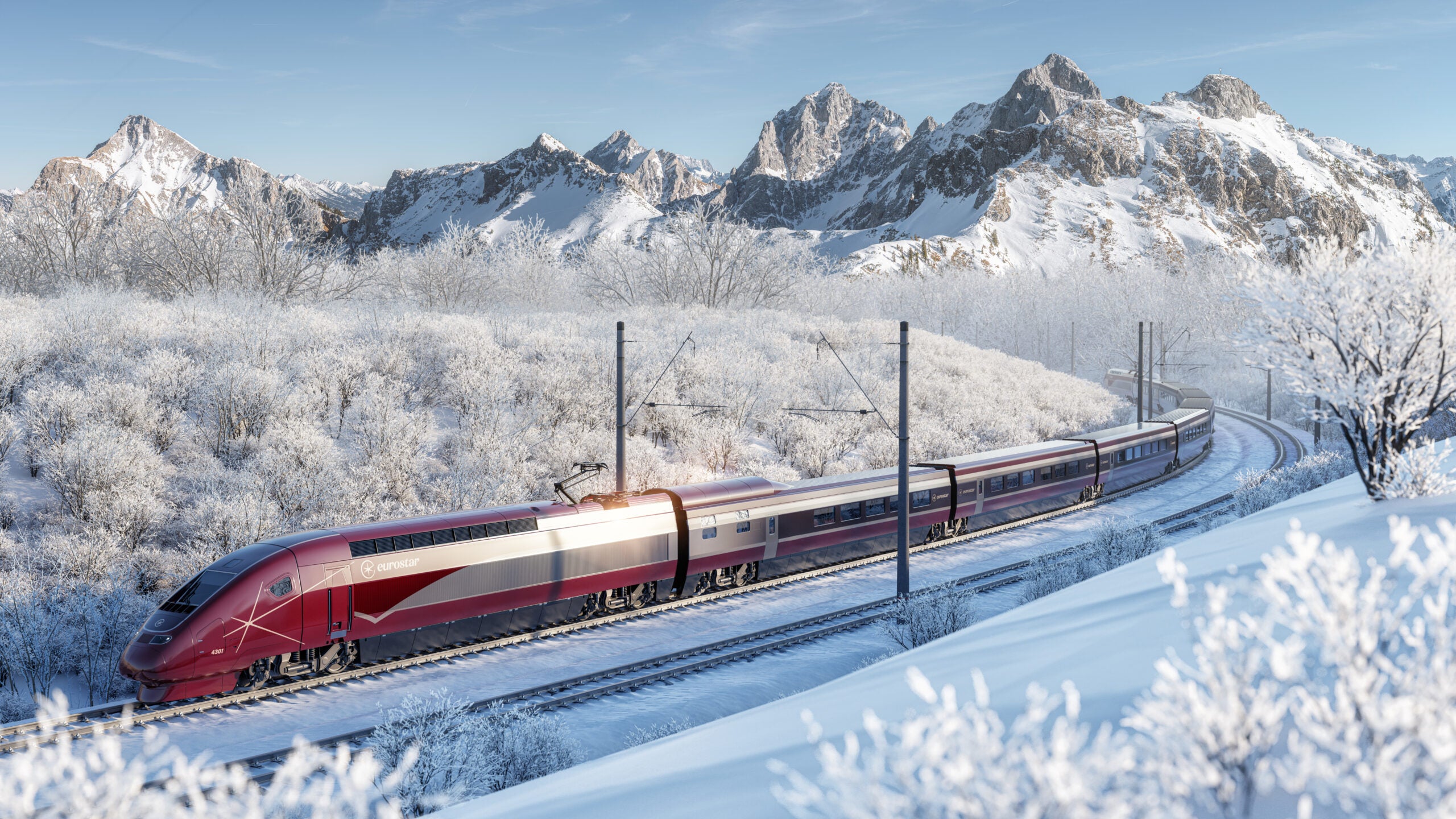
The Eurostar Ski Train is back starting in December. (Photo: Courtesy of Eurostar)
Updated August 25, 2025 08:43AM
For many American skiers, a ski trip to the European Alps is a dream-worthy adventure. The wide-open runs, the snow-capped crags of the peaks, and the distinct après scene draw close to two million U.S. skiers across the pond every year.
And of course the price. It’s no secret that lift tickets in Europe are less expensive than stateside resorts of a similar size. Often, food on the mountain is less expensive (before you factor in the exchange rate), and the same goes for lodging, gear rentals, and other incidentals.
The biggest cost factor is usually the flight. Even with a dirt-cheap flight across the Atlantic, odds are you’re probably going to pay a little more to fly into European ski cities (Zurich, Milan, Munich, or Vienna), and then you still need to travel to get to the slopes.
Further Reading: 11 Things About Skiing in Europe That Shock Americans
But, there’s a cheeky little hack we discovered—the Eurostar London Ski Train—for getting to the French Alps from the heart of London town. And it might save you a chunk of change if done right.
London isn’t a ski town per se. However, it does offer one thing that European ski destinations can’t: travel convenience from the U.S. In fact, there are between 50 and 80 nonstop flights from U.S. cities to London every single day, which makes finding a flight much easier and often less expensive.
How It Works
The 2025-’26 Ski Train runs from Dec. 20 through April 11 (a whole month later than last year) and departs from London’s St Pancras International Station to several destinations in the Alps, including Chambéry, Albertville, Moûtiers, Aime-La-Plagne, and Bourg-Saint-Maurice. From those stations, skiers can reach resort destinations such as Val Thorens, Val d’Isère, Courchevel, La Tania, Tignes, Meribel, and Les Menuires. The entire journey takes approximately 7 to 9 hours (depending on your final stop) and includes a layover in Lille, France. The train runs East toward the Alps every Saturday and departs West toward London every Sunday.
 Val Thorens in the Three Valleys ski area is one of the resorts accessed by the ski train. (Photo: Courtesy of L.Brochot / Val Thorens)
Passport checks are done in the United Kingdom, so when passengers arrive in the French Alps, they’ll be able to grab their things and go, no fuss required. In fact, the ski train prides itself on being “high-speed, low-stress travel.”
Bring the kids! 5 Best Alps Ski Resorts for Families of All Ages
Taking the Eurostar train offers amenities that airplanes frequently lack. The most important thing for skiers is the free baggage. Eurostar offers a generous two pieces of baggage plus ski equipment with every ticket. Not to mention free wifi, outlets, a snack car, and much more forgiving refund policies if your plans change.
If booked in advance, ski train fares are often less than flights (when you account for the free baggage on the train). Prices haven’t been released, but in previous years started around $128 (£99). You can also upgrade to a higher class that includes a roomier seat and meal service. Tickets in the most luxurious section, last year Business Premier, began at $325 (£250) for a one-way ticket. Children under 11 qualify for a discounted rate. Locals suggest keeping an eye out for special sale fares.
Cost Comparison
As a price comparison between flying to London and taking the Eurostar train vs. traditional Alps travel, I decided to see how much it would cost to travel from my home in New York City to the French Alps, namely Bourg-Saint-Maurice. A round-trip flight from New York to London in mid-January would run me about $500 and take about seven hours. The Eurostar costs $162 each way, bringing my round-trip train fare to $372. My total travel cost between the flight and the train is $872.
Flights into Chambery Airport (CMF), which is about an hour-and-a-half drive from the resort, are about $900 and often require a lengthy layover; some itineraries can be as long as 26 hours. You can shave the cost down by flying into a bigger airport like Geneva, which ranges from $450 to $750 (although the lower-cost flights do not include baggage), but Geneva to Bourg-Saint-Maurice requires another four hours of travel via train and a bus, if not a private car as well.
So, is taking the Eurostar cheaper or more effective for Americans? I’d argue yes. Most ski resorts are ways outside of international airports that can sometimes be pricey to fly into. The Eurostar is long, but when you factor in getting from other European cities to the mountains, you’re probably not saving much time anyway. Also, with baggage included (and skiers aren’t known to pack light), the train is a pretty appealing option. After all, getting there is half the fun, right?