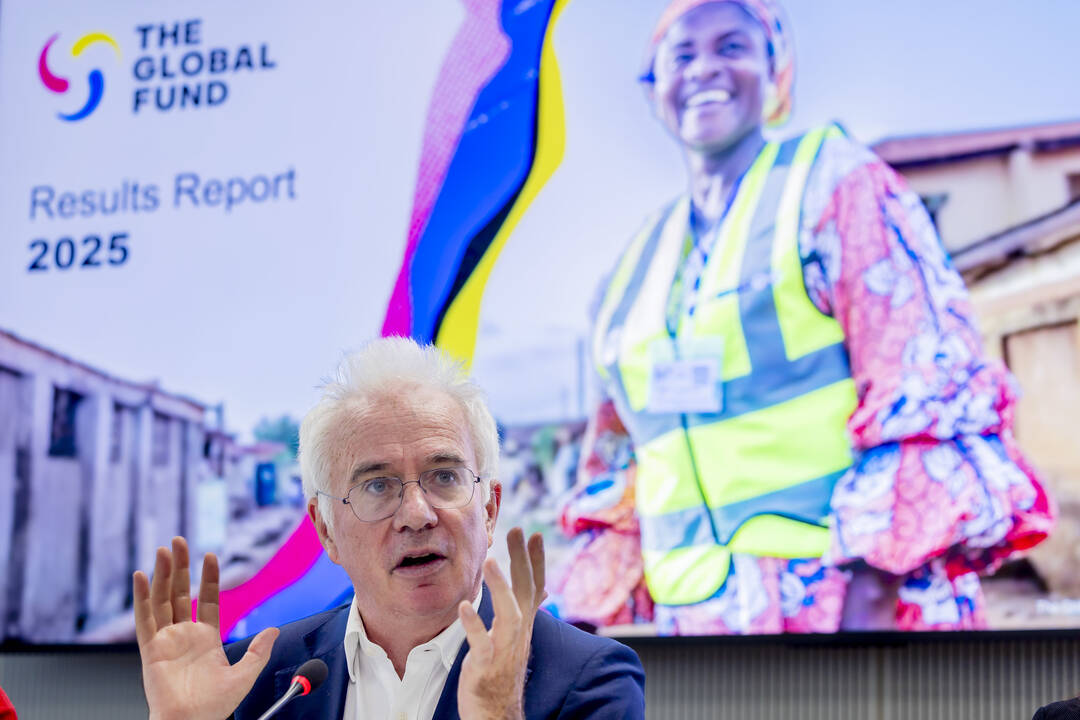
Climate change, conflicts and a lack of funding compounded by recent aid cuts are hurting hard-won gains in fighting the disease that claims 600,000 lives each year, according to one of the world’s top health funders. The Geneva-based organisation is also being forced to shrink its activities and consider layoffs.
The fight against malaria has been among the diseases most heavily impacted by recent cuts to foreign aid, the chief executive of one of the world’s biggest global health funders, Peter Sands, warned, costing more lives and potentially reversing decades of progress.
The Global Fund to Fight Aids, Tuberculosis and Malaria on Wednesday said that deaths caused by the mosquito-borne disease have fallen by 29 per cent in the two decades since the organisation was launched in 2002, even as the population in the countries it supports grew by 43 per cent.
However, a perfect storm of climate change, conflicts, resistance to insecticides and a lack of funding – compounded by recent aid cuts – is stalling fragile progress in some of the worst-affected areas, Sands said. Sub-Saharan Africa shoulders the biggest burden, accounting for 94 per cent of the 240 million malaria cases recorded in 2022 worldwide.
“There has been a significant impact…and I suspect that we may well see an increase in the number of children dying of malaria this year in part due to the reductions in funding,” he told reporters in Geneva as the organisation revealed its annual results report.
In 2022, 76 per cent of the 608,000 malaria deaths worldwide were in children under the age of five, according to the latest figures presented in the report.
Sands said a study by Roll Back Malaria, a partnership between private and public sector organisations, suggests that, in total, including adults, there could be more than 100,000 additional deaths this year.
The global health sector has been hit hard this year by the abrupt withdrawal of funds by the United States and by other countries slashing their foreign assistance budgets, jeopardising health systems and putting mounting pressure on already debt-ridden low-income countries.
Sands said a shift towards national health systems less reliant on aid will take time, while the impact of the sudden withdrawal of support could cause immediate setbacks in fighting epidemics like malaria.
“There is a lot at stake. Malaria is a disease that reacts very quickly to changing circumstances, and it doesn’t react in small percentage changes,” he added, citing the catastrophic floods in Pakistan in 2002, which led to a five-fold increase in malaria cases, up from 500,000 in 2021 to 2.6 million the following year.
“Whether it is changes in funding or environmental conditions, we see very sharp adjustments,” Sands added.
Funding cuts have also harmed progress in tackling HIV, particularly on prevention by reducing access to antiretrovirals, while for tuberculosis, which is in large part domestically funded, the impact has been more pronounced in Africa whre countries rely more on external sources, he said.
Funding woes and layoffs ahead
The Global Fund is currently in the midst of its eighth replenishment round for the period from 2027 to 2029, and hopes to raise $18 billion by the end of November.
However, a retreat from donors is adding to an already challenging fiscal environment, compounded by increasing health needs driven by factors such as climate change and ongoing conflicts.
So far, it has raised close to $700m from countries, including Norway and Luxembourg, and private sector donors like the London-headquartered Children’s Investment Fund Foundation. However, Sands conceded that it was unclear where total pledges would stand by the end of the funding round.
The organisation already confirmed in July that it was cutting $1.43bn in funding already allocated to grants for its current cycle that runs through 2026 due to the uncertainty over whether donors would deliver on their outstanding funding pledges.
Sands said that, like other health organisations, the global fund was reducing its headcount and “adjusting to the realities of the funding situation”, including changing the scope and scale of its activities, without disclosing the number of layoffs. These have also included staff being offered early retirement or voluntary separation schemes. According to its website, the Global Fund has over 1,000 employees at its headquarters in Geneva.
He said that some of these adjustments were already planned and related to the winding down of the fund’s time-limited Covid-19 Response Mechanism, where many of the staff were on defined-duration contracts.
“The primary concern that we have is the impact of the changes in external funding on the people that we serve, because that’s what ultimately really matters.”
According to its 2025 results report, the organisation has slashed the combined death rate from AIDS, tuberculosis and malaria by 63 per cent since its inception in 2002, saving an estimated 70m lives.