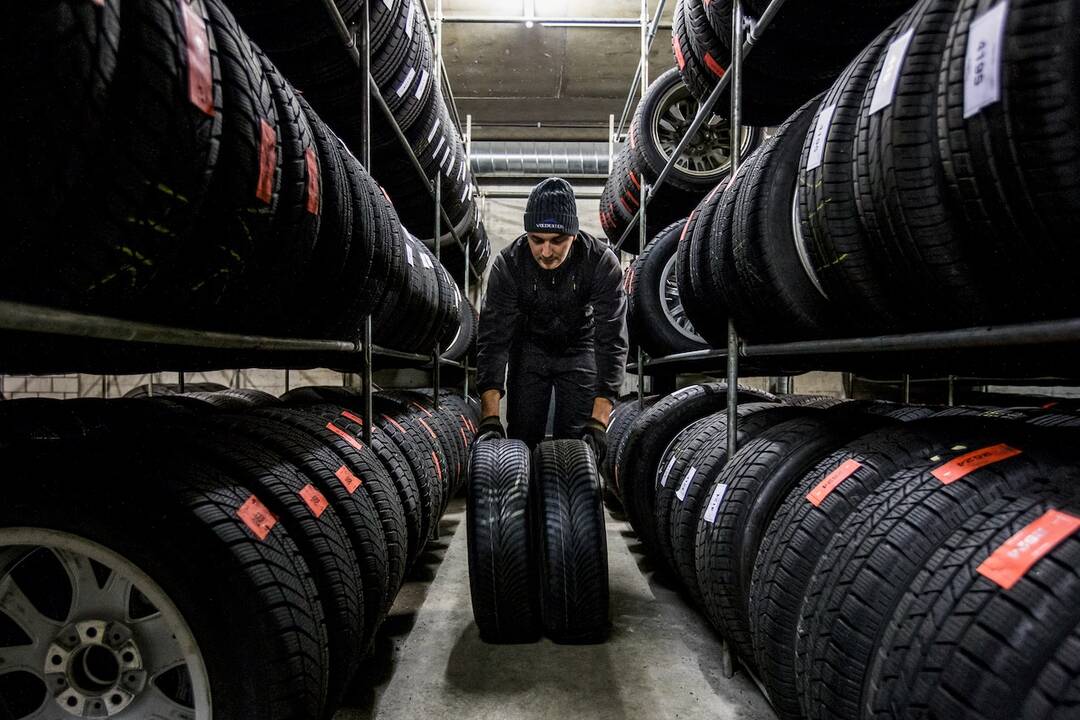
A new UN regulation is set to curb one of the biggest sources of microplastic pollution – your tyres.
Every move you make, every turn you take, every time you brake, every time you accelerate – your tyres will be shedding microplastics. Tyre and road wear particles – as the specialists call it – are an invisible, lesser-known source of plastic pollution. Part natural and part synthetic rubber, a plastic polymer, tyres lose about a third of their weight over their lifetime, polluting the air, water and soil.
Now, a new regulation under discussion in Geneva wants to curb that. This week, the UN Economic Commission for Europe (UNECE) adopted limits on tyre abrasions from new C1 tyres for cars and vans.
Why it matters
Studies have shown tyre wear is one of the largest sources of microplastics in the environment, making up 78 per cent of 1.3 million metric tons of microplastics leaking into the ocean in 2016 – a figure on track to more than double by 2040.
Even the most pristine natural habitats are affected. Earlier this year, samples collected from the air, water and inhabitants of Lake Annecy reportedly found high levels of microplastics and toxic chemicals from tyres, suspected to have washed down from the 40km of road snaking alongside the lake.
“As engine exhaust standards have tightened over the decades, brake and tyre wear have become the dominant source of fine particulate emissions from road transport,” says François Cuenot, secretary of the UNECE’s Working Party on Noise and Tyres, which endorsed the limits on Tuesday.
How it works
The regulation will be submitted for adoption to the World Forum for Harmonization of Vehicle Regulations at its next meeting in Geneva in June 2026 and will enter into force in January 2027 in countries that have ratified the 1958 agreement on UN regulations for wheeled vehicles.
Manufacturers would be required to prove that their tyres lose no more than a set weight threshold. The test is straightforward in principle: weigh a tyre, drive a vehicle, weigh it again. But agreeing on how to run the test turned out to be anything but simple.
The European Union’s Euro 7 vehicle emission regulation, due to kick in in 2028, sets strict limits on exhaust pollutants and first-ever limits on brake and tyre abrasion. The clock has already started ticking. “You need to test hundreds of types of tyres in a couple of years, and you need a lot of testing facilities to be able to do those tests,” Cuenot explains. Two tests were allowed – one on the road and one in the lab. Getting them to count equally was one of the biggest sticking points.
Environmental groups pushed back. “Test methods must be representative of abrasion in real-world conditions to effectively phase out worst-performing tyres from the market,” several organisations, including the Environmental Coalition on Standards (ECOS), Pew Trust and the Gallifrey Foundation, wrote in an open letter to the European Commission, urging the body not to let ambition be dragged down by compromises and delays.
Cuenot says that while still not perfect, negotiators have largely arrived at an agreement that ensures both methods provide equivalent results. He further notes that firms engaged with discussions early on, partly out of reputational concern.
Sarah Baulch, senior officer at The Pew Charitable Trusts, who leads the NGO’s EU microplastics work, describes this week’s adoption as an “important milestone in international efforts to address tyre wear emissions”, but that it’s impact is yet to be tested.
“The environmental effectiveness of the framework will depend on how ambitious the performance thresholds are, how quickly they are strengthened over time, and whether the methodology delivers robust and transparent results,” she says, noting the importance of “continued independent scrutiny and open access to underlying data”.
Driving impact
The regulation is expected to knock 30 per cent of tyres currently off the European and Japanese markets by 2028. Full implementation would cut tyre wear pollution in countries adopting the regulation by 10 per cent – “not a huge number but it’s already very significant” according to Cuenot. Fleet turnover will determine how quickly the effect is felt, though he notes it typically takes only a few years.
The EU’s Zero Pollution Plan aims to cut microplastics by 30 per cent by 2030, with tyres making up a third of it.
The rules bind the roughly 60 signatories of the agreement. That’s most of Europe, plus a handful of countries from Asia and Africa, like Nigeria and Pakistan. China – roughly half of production and 40 per cent of the consumer market – and the US, the world’s second largest consumer market, are not among them.
Even so, the standards’ impact may travel beyond their formal boundaries. “We know that some countries, for example, in Latin America, that are not officially contracting parties are required by law to be compliant with UN regulations,” says Cuenot. Whether these particular regulations join that list will become clear in a few years.
What’s missing
One caveat, the regulations require countries to accept compliant tyres but not to ban non-compliant ones. The EU is planning to close that gap and impose a ban by 2030, the UK is following suit, and Japan and Korea are still weighing it.
“If you take all those four major markets, that’s already a big share of production globally,” says Cuenot.
But abrasions are only part of the story. Tyres don’t just shed particles – they leach chemicals. One notorious example is 6PPD, a chemical used as an antioxidant to keep tyres from cracking and breaking down. Studies have shown that it can be toxic to aquatic life and a certain type of salmon and possibly harm human health under high exposure.
“The chemical pollution aspect is not yet well addressed at the global level or at the EU level,” says Emily Best, senior programme manager at the environmental NGO ECOS. Some EU initiatives are in the pipeline, according to Best, including a proposal to restrict 6PPD and other related substances and through its latest regulations on ecodesign for sustainable products, for which tyres have been identified as a priority area.
As for the UNECE’s work on tyre wear, the working groups will next tackle C2 and C3 tyres for heavier vehicles – like buses and heavy-duty trucks – where more durable tyres and greater mileage will require a different test procedure. A first proposal for light trucks is expected in September.