
Switzerland’s Federal Intelligence Service (FIS) has announced it will grant access to files about Josef Mengele, after years of turning down historians who sought to see if the notorious Nazi death camp doctor spent time in Zurich when there was an international arrest warrant against him.
The announcement followed a crowdfunded appeal by historian Gérard Wettstein against the intelligence service’s most recent refusal, in February, of a request to review the documents.
Without naming Wettstein, the FIS said in a May 4 statement that it would grant the appellant access to the files under still-undetermined conditions that will remain in place for future requests. The statement did not specify when access would be granted, and a report published by the BBC on Saturday indicated Wettstein had not yet gained access to the files.
The FIS has until now refused such a request under Swiss declassification laws. It said it reversed course after the Swiss federal archive determined the documents were within the scope of a 2001 government decision requiring “liberal access” to files reviewed by the Bergier Commission, which Switzerland established in 1996 to review Swiss banks’ withholding of assets that belonged to Jews killed in the Holocaust.
Wettstein, who made his request in 2025, told the BBC that the Mengele files had been set to stay sealed until 2071.
Get The Times of Israel’s Daily Edition
by email and never miss our top stories
By signing up, you agree to the terms
“It seemed ridiculous,” he said. “It fuels conspiracy; everyone says, ‘they must have something to hide’.”
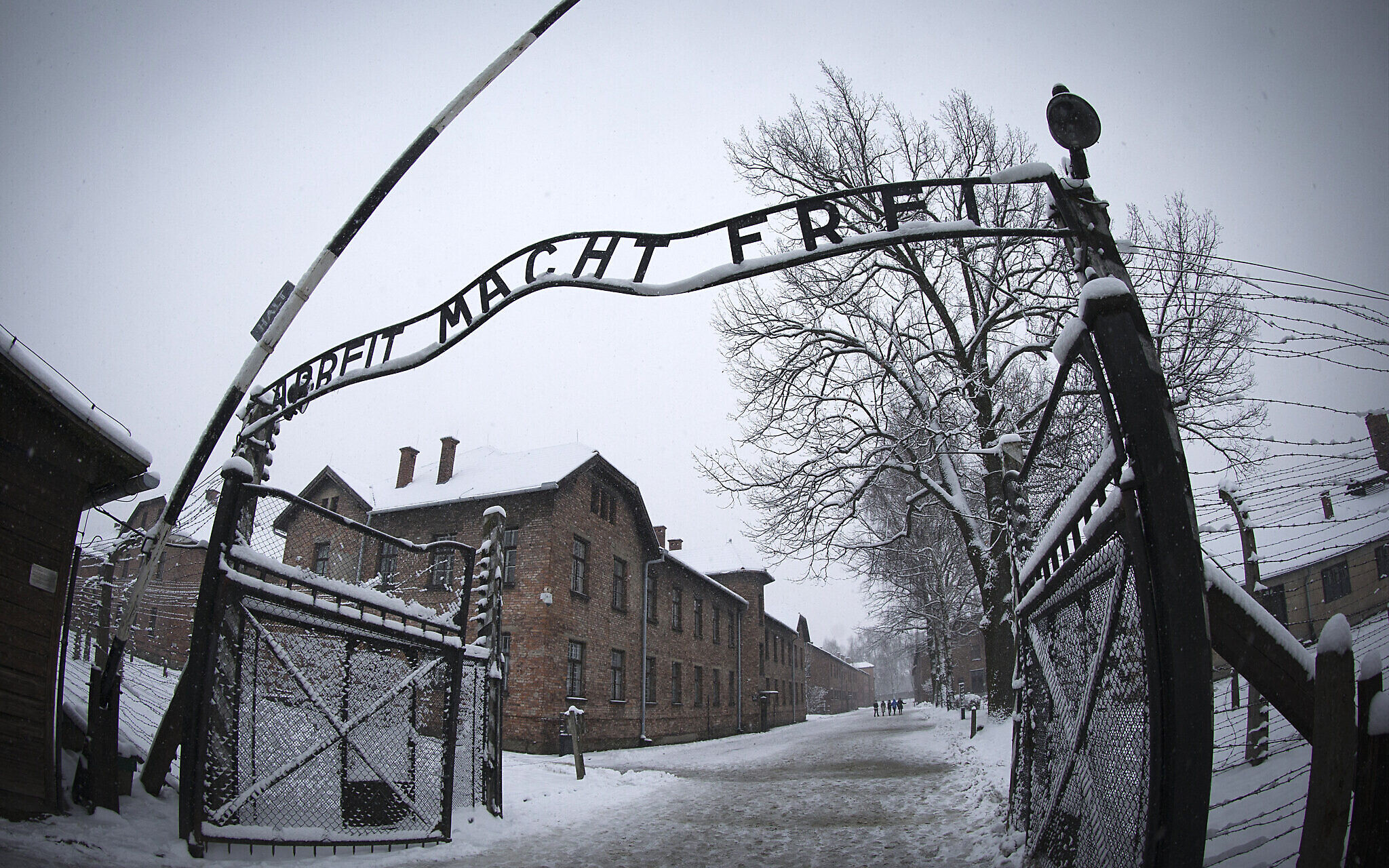
The entrance to the former Nazi concentration camp Auschwitz-Birkenau with the lettering ‘Arbeit macht frei’ (‘Work sets free’) is pictured in Oswiecim, Poland, on January 25, 2015, days before the 70th anniversary of the liberation of the camp by Russian forces. (Joël Saget / AFP)
He expressed concern that FIS conditions could result in the documents being heavily redacted.
“I fear we will get a file that is more black than transparent,” he told the BBC.
Mengele, a German SS officer and physician, played a central role in determining whether victims arriving at the Auschwitz camp would be sent to death, hard labor, or “experimentation.”
He is known as the “Angel of Death” for his sadistic experiments on twins, pregnant women and individuals with physical abnormalities, often without anesthesia and with lethal results.
Israel’s Yad Vashem Holocaust museum estimates that a million Jews were murdered in Auschwitz between 1941 and 1945, when Russian forces liberated the camp toward the end of the Second World War.
Mengele fled to Argentina under an alias in 1949 and died in Brazil in 1979 without having ever been prosecuted for his crimes, despite Argentine authorities’ knowledge of his true identity.
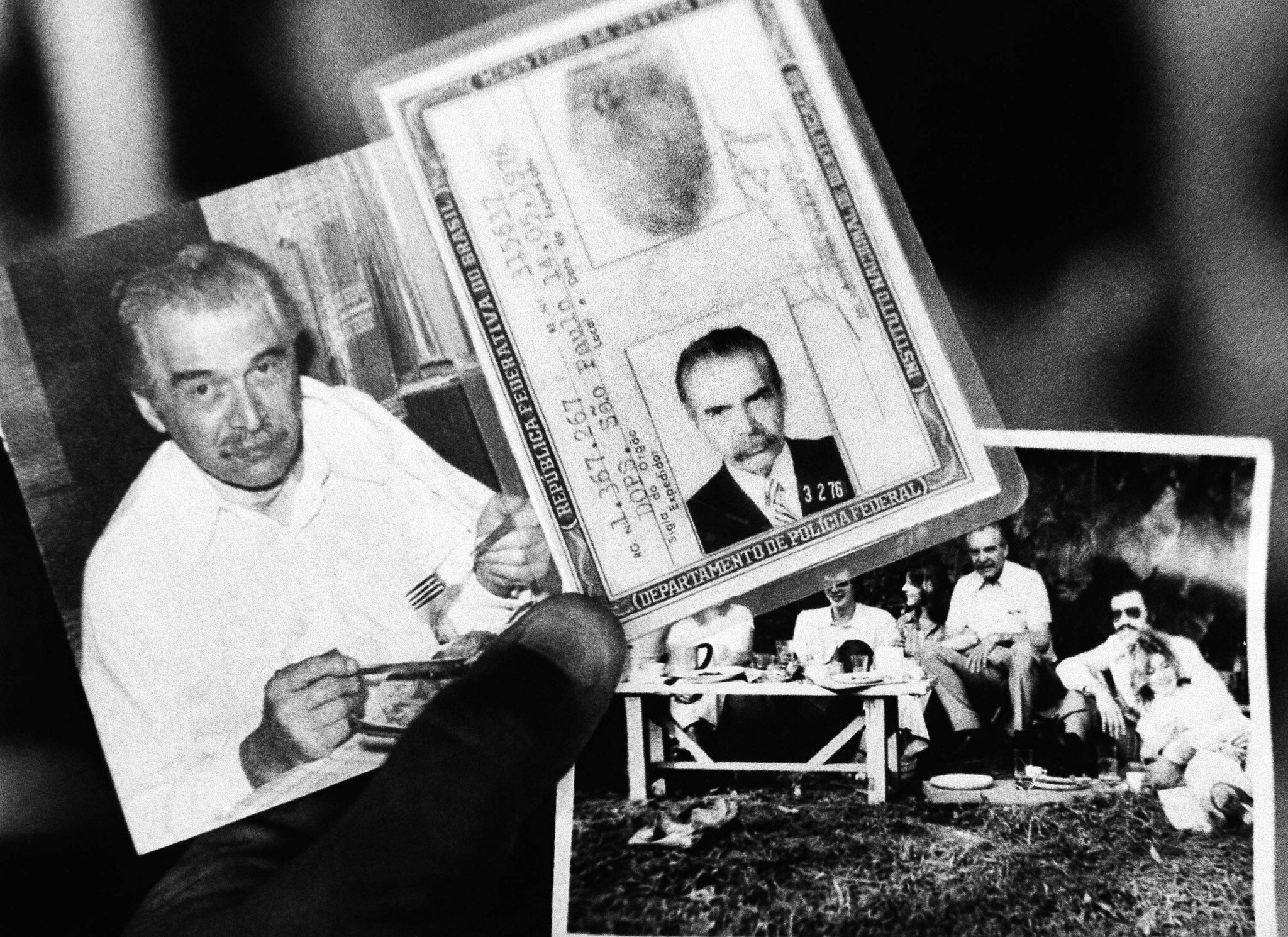
A federal police agent holds two photos and the identity card found in the house in which the man believed to be Nazi war criminal Josef Mengele lived, June 7, 1985. The photo on the left shows Mengele eating. The photo on the right shows Mengele during a picnic with friends and in the middle is the identity card. (AP Photo)
It has been known since the 1980s that Mengele took a 1956 ski trip with his son in the Swiss Alps, the BBC said.
Historians cited by the outlet said Mengele’s wife also rented an apartment in Zurich in 1959 — the year the West German government issued the first arrest warrant against him.
In 1961, Austrian intelligence warned Switzerland that Mengele might be traveling there under a pseudonym, and the Zurich flat was placed under surveillance, with local police noting that the tenant was seen with an unidentified man, Swiss historian Regula Bochsler told the BBC.
It remains unclear if the man was Mengele himself. Bochsler was turned down by the Swiss archive when she sought in 2019 to review files of the Swiss federal police, which would have been involved in the arrest of an internationally wanted war criminal, the BBC said.
Which gorgeous bird do you prefer?

THIS MONTH ONLY: Join our reader support group for as little as $6/month and receive an exclusive tote bag featuring one of Israel’s native birds.
Choose between the Duchifat (orange), Israel’s national bird, or the Shaldag (blue), a beloved symbol of the Israeli landscape.
As a member of the Times of Israel Community, you’ll also enjoy:
An ad-free experience of our site and podcasts.
Exclusive access to award-winning films via DocuNation.
Weekly letters from founding editor David Horovitz.
Join ToI Community & claim my bag
Already a member? Sign in to stop seeing this
You’re a dedicated reader

That’s why we started the Times of Israel – to provide discerning readers like you with must-read coverage of Israel and the Jewish world.
So now we have a request. Unlike other news outlets, we haven’t put up a paywall. But as the journalism we do is costly, we invite readers for whom The Times of Israel has become important to help support our work by joining The Times of Israel Community.
For as little as $6 a month you can help support our quality journalism while enjoying The Times of Israel AD-FREE, as well as accessing exclusive content available only to Times of Israel Community members.
Thank you,
David Horovitz, Founding Editor of The Times of Israel