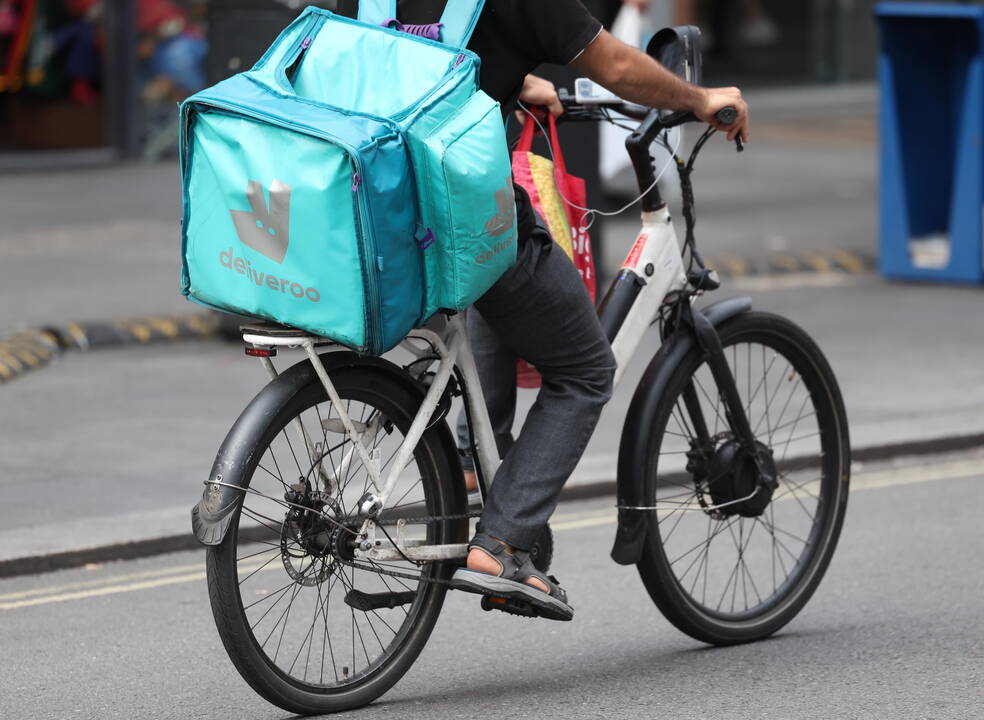
Low pay, job insecurity and opaque management systems run by algorithms have long topped the list of grievances for workers tied to digital platforms.
The International Labour Organization (ILO) is in financial straits. Like other United Nations agencies, it has been swept up in reform plans and cost-cutting efforts. But over the next two weeks, at the work organisation’s annual conference in Geneva, countries will, at least momentarily, put gloom over their ledgers aside as they look to score another point on the multilateralism scoreboard.
Governments, employers and workers that make up the ILO’s special tripartite structure are due to finalise the first-ever international convention safeguarding workers in the gig economy, in which online platforms provide everything from temp work to dog walking to food delivery services. It comes after a majority of ILO members at last year’s meeting backed the landmark decision to move forward with creating international ground rules, despite resistance from some countries including the United States, Argentina and Pakistan.
The seven-page draft text, which once adopted and ratified requires countries to translate into domestic law, sets out rules to guarantee core labour rights, fair pay, and safe working conditions for all platform workers, regardless of how companies classify them, whether employees or contractors.
Lena Simet, senior economic justice researcher and advocate at Human Rights Watch, called it “a major and meaningful step” in regulating platform work, labour markets, and the use of technologies. The rights group has been vocal alongside dozens of trade unions and other civil society groups in calling for a binding agreement.
“The fact that the majority of governments decided that they want a convention that tackles this type of work, which has been expanding so rapidly in so many markets, is something we shouldn’t lose sight of, even if we’re still very critical of some of the aspects,” she told Geneva Solutions.
Unfair tradeoffs
The gig economy – also dubbed the platform economy – has grown at breakneck speed over the last two decades, further boosted during the Covid pandemic. It nearly doubled in size between 2016 and 2021, according to the ILO, with a market value of roughly $10.2 trillion in 2023. It now counts up to 435 million workers, or 12.5 per cent of the global labour workforce, according to the World Bank.
But the model – which reduces overheads for companies while promising more flexibility and autonomy for on-demand workers compared with traditional employment – has been far from an equal trade-off. “Platform companies profit enormously from a business model that strips workers of their rights,” Simet said.
Much of the issue boils down to the question of worker classification. The vast majority of people working for app-based companies are considered independent contractors and do not receive the perks of traditional employment, which puts them on a precarious footing.
Most are denied their rights to minimum wage protections, freedom of association, collective bargaining or social security. Disputes over their status and access to basic rights, including demands by workers to be able to unionise, has embroiled gig economy companies, including Lyft, Uber and Deliveroo, in a spate of global lawsuits.
In a report from April, called Algorithms of Exploitation, Human Rights Watch interviewed gig workers across India, Kenya, Kuwait, Lebanon, Mexico, Pakistan, Saudi Arabia, the UAE and the United Kingdom. It found that across all nine countries, they face low and unstable earnings, unsafe working conditions, and little to no protection when injured or unable to work.
The report also found how the growing use of algorithms by platform companies to set pay, create incentives and assign tasks is increasing pressure on workers to accept jobs quickly, meet tight deadlines and maintain high ratings, with penalties for falling short. One female driver for several platform companies in Kenya described how she felt forced to accept jobs in unsafe areas, or risk losing her rating on the app or being deactivated altogether.
Growing algorithmic control also means employers become increasingly difficult to reach. Another driver working in Nairobi said she had been assaulted by a passenger and received no response when she reported the attack to her company.
Recognising gig workers’ rights
At this week’s gathering, ILO members will pore over the third version of the draft convention on decent work in the platform economy, after going back and forth with amendments and tweaks over the past year.
While far from perfect and divergences between countries remain, Limet stresses that it is “absolutely critical” that criticisms do not derail the sprint to the finish line. “Because there’s still some concern that some countries favour a recommendation, there’s a certain risk that if there isn’t an agreement on some of the fundamentals, that those voices would become louder and potentially undermine the convention process,” she said.
The agreement is being drawn up alongside a non-binding but more detailed and practical recommendation, which Simet said allows flexibility for standards to be adapted over time. But while the majority of countries back the adoption of the two documents, some countries, including Pakistan, and the majority of employers’ organisations have persisted with calls for a recommendation only.
The International Organisation of Employers, which represents more than 150 businesses, described the convention as “overly lengthy and prescriptive”, especially in areas like automation and pay, which it warned could lead to a lengthy session in June. It believes “a stand-alone recommendation is the most feasible path to consensus in 2026”.
At the same time, the unusual two-part composition has also caused friction over what should be binding or not, and what some countries and rights groups see as attempts to water down the convention. “Simplification should not be used as an argument for removing or transferring to the draft recommendation provisions which concern fundamental rights,” Spain said in comments about the latest draft agreement summarised by the ILO.
Many of the components around algorithmic control, for example, have been moved to the recommendation, said Simet – creating a means for companies to avoid certain obligations when it comes to transparency and the ability of workers to challenge decisions made by automated systems. ”This is going to be a critical one to push back on and ensure that it’s being kept in the convention,” she said.
One of the biggest concerns is that despite the convention covering all gig workers, attempts to create exceptions or weaken language around how independent workers are classified risk creating loopholes for companies to exploit. “The convention ought to be broad enough to cover all platform workers, regardless of how they are classified,” Limet said.