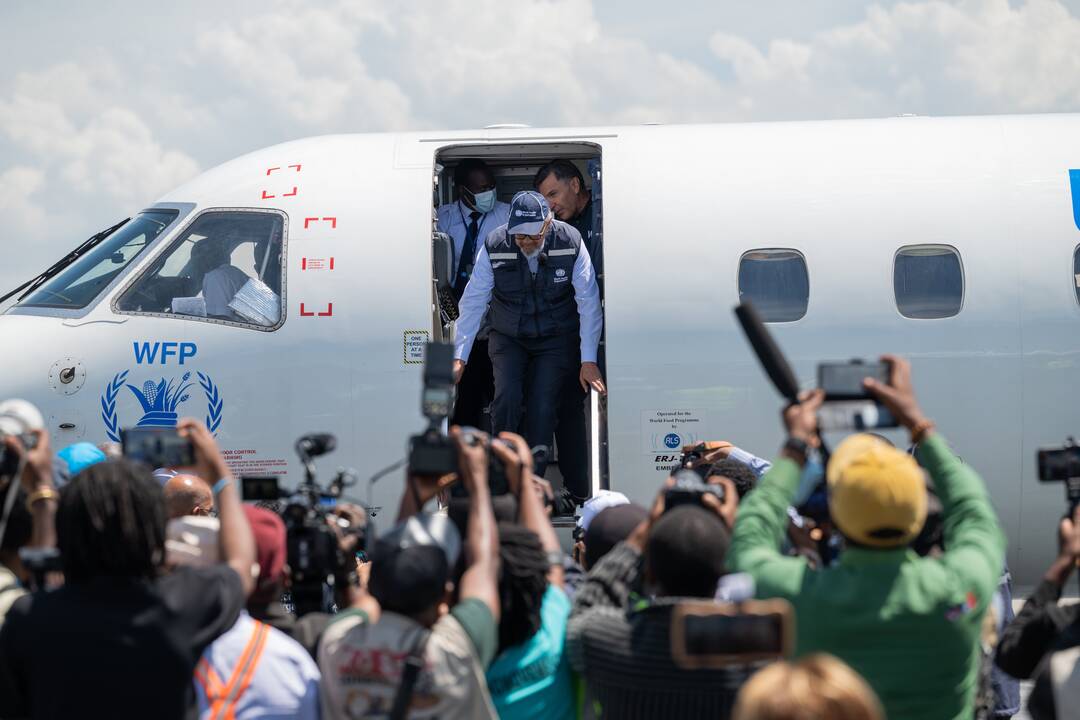
In eastern Congo, the international playbook ignores the reality on the ground: conflict is not just the backdrop to the epidemic – it’s the driver. To stop Ebola, treat malaria, pay healthcare workers and ensure hospitals are not bombed, writes war zone clinician Annie Sparrow.
The World Health Organization’s director general, Tedros Adhanom Ghebreyesus, recently called for an immediate ceasefire in eastern Congo, warning that the outbreak is “outpacing the response”. He is right. But the crisis is about more than just speed – it exposes a deeper failure in how the international community understands the relationship between conflict and disease.
Too often, conflict is treated as a mere backdrop to epidemics. In reality, conflict has become a top driver of epidemic emergence, transmission and pandemic risk.
The current response relies on a familiar playbook: surveillance, screening, contact tracing and appeals for people to seek care. While these interventions hold value, they are insufficient in a setting where the health system itself is under attack.
An alienating response
After more than a decade working in eastern Congo, one lesson has stayed with me: communities understand disease, risk and death very well. Having lived through repeated outbreaks of Ebola, cholera, measles, mpox and malaria while simultaneously enduring displacement, armed violence and chronic insecurity, communities are not confused by the response. They are frustrated because it too often fails to address what they regard as urgent.
People notice when fleets of vehicles, international staff and emergency funding suddenly arrive for a disease of international concern while their most basic health needs remain neglected. In eastern Congo, malaria remains the quotidian killer. A fever is far more likely to be malaria than the rare Bundibugyo virus currently dominating the headlines. Yet they see contact tracers appear at their doors while malaria medicines remain unstocked.
Trust is not built through messaging campaigns but through responding to the health problems people actually face. If we want communities to participate in outbreak detection and control, we must address their priorities and not just our own. That means malaria diagnosis and treatment, insecticide-treated bed nets, measles vaccination, maternal healthcare, chlorine tablets for household water treatment and functioning primary healthcare services. These are not distractions from outbreak control – they are its foundation.
The solutions are often neither complicated nor expensive, yet they demonstrate that responders are paying attention to the concerns communities themselves consider most urgent. And the result is genuine community buy-in.
Trust cannot be built from Geneva, New York or Kinshasa alone. It must be built through institutions and leaders that communities already know and trust. Churches, traditional authorities, local chiefs, teachers, musicians, athletes and respected regional figures all have critical roles to play. The Kings of DR Congo and the Rwenzururu – who govern overscores of subkings – should be viewed not as peripheral actors but as essential partners in outbreak response.
The human cost of war
The lessons of previous Ebola outbreaks have also been misunderstood. Contact tracing proved valuable during the 2018-2020 outbreak because it led to something tangible: vaccination and treatment. Without a meaningful benefit attached to it, contact tracing can quickly come to feel extractive rather than protective. That feeling is compounded when families watch loved ones taken away, wrapped in plastic and denied traditional burial practices – outbreak protocols that may be epidemiologically justified but are nonetheless deeply traumatic.
Likewise, urging people to seek care at health facilities can ring hollow in places where healthcare itself has become a casualty of war. Hospitals, clinics, ambulances, water systems, supply chains, vaccination programmes and physicians on the front lines of primary healthcare and district hospitals increasingly have become direct targets amid hostilities.
The consequences extend far beyond immediate mortality. The destruction of health systems creates a biological environment in which pathogens circulate undetected, vaccination coverage declines, antimicrobial resistance accelerates, and outbreaks spread more easily. The weaponisation of healthcare has become a threat not only to civilians trapped in conflict but to global health security itself.
Eastern Congo also entered this crisis with a chronic shortage of healthcare workers. Years of conflict had already depleted the workforce through insecurity, displacement and underinvestment. The resurgence of violence by Rwanda-backed M23 forces has accelerated that process. Healthcare workers have fled. Others have been arrested, detained or killed.
Now the outbreak is claiming healthcare workers themselves. At least eight have succumbed. In a region where doctors, nurses, laboratory technicians and midwives are already few and far between, every one of those losses represents diminished capacity to diagnose, treat, vaccinate, monitor and respond.
Health workers are not simply another vulnerable population during outbreaks – they are the foundation of outbreak control. Protecting them must therefore be a central pillar of outbreak response. That means ensuring their physical safety, providing adequate infection prevention and control measures, guaranteeing reliable supplies of medicines and protective equipment, and paying salaries consistently and on time.
The solution requires more than technical interventions.
War is the epidemic risk
The international response is also constrained by a hard political reality. Wealthier countries have largely concluded that such outbreaks are unlikely to pose a major threat to their own populations. The result is a cycle of attention and neglect: headlines, emergency meetings and short-term funding are rarely followed by sustained investment in strengthening health systems, supporting healthcare workers or rebuilding public health infrastructure.
Part of the problem is that the world has become comfortable with the idea that outbreaks in eastern Congo are largely Congo’s problem.
But that logic misses the larger point. The threat is not simply Ebola. The threat is the progressive erosion of health systems, the attrition of the healthcare workforce, the collapse of vaccination and malaria control, the degradation of water and sanitation infrastructure needed to detect and contain whatever comes next while millions are displaced, creating precisely the conditions in which pathogens emerge, circulate, evolve and spread. These armed conflicts are not simply complicating outbreak control. They are the risk.
For too long, global health has treated conflict as a humanitarian issue and epidemics as a biomedical issue. Increasingly, they are one and the same. Tedros is right to call for a ceasefire. It’s not only a political intervention. It is a public health intervention. But ceasefires alone will not be enough. Unless we also protect and support healthcare workers, rebuild health services, address community priorities and stop the weaponisation of healthcare, outbreaks will continue to outpace our response.
If we are serious about pandemic prevention, we must stop treating war as a backdrop and address it as an epidemic risk.
Annie Sparrow is a war zone clinician and associate professor at the Icahn School of Medicine at Mount Sinai. She has worked extensively in eastern Congo on outbreaks and humanitarian issues.
Geneva Solutions publishes opinions and columns proposed by or requested from external contributors and experts. These texts reflect the point of view of their authors and do not represent the position of the media.