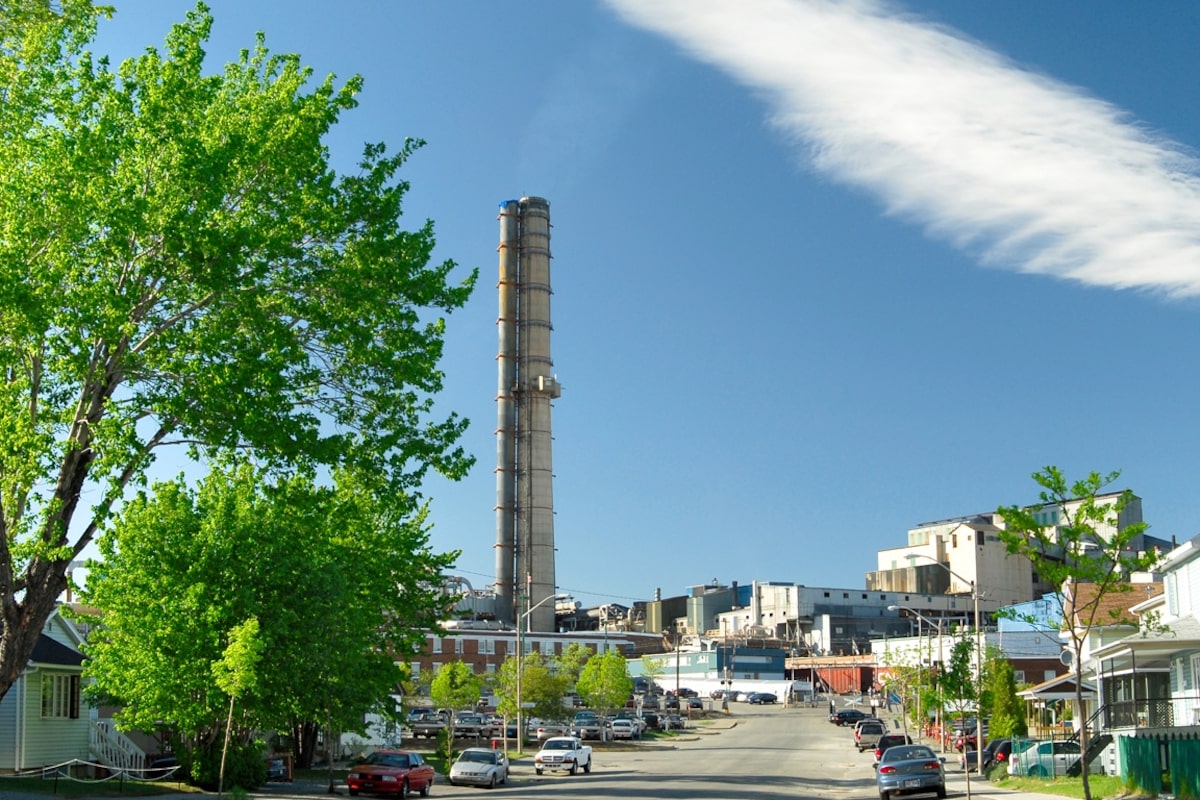
The Horne copper smelter in Rouyn-Noranda, about 500 kilometres northwest of Montreal.Supplied
Glencore PLC said it would resume its work to cut air pollution at its Horne copper smelter after Quebec on Thursday passed legislative amendments giving the Swiss mining giant several more years to meet tougher provincial emissions targets.
But the company stopped short of promising it would keep the facility open in the long term, saying it needs the Canadian government to step up and match Quebec’s effort with concrete financial support to help pay for new pollution control systems. Ottawa’s backing is “essential to secure the economic viability of the smelter,” Glencore said in a news release.
“The regulatory certainty provided by the Government of Quebec, along with its existing targeted programs, speaks to how much the province values the copper sector,” Marc Bédard, Glencore’s chief operating officer of custom metallurgical assets, said in the release. “What remains is decisive federal action to solidify Canada’s commitment.”
Glencore did not say how much it is seeking from Ottawa but a person familiar with discussions between the company and the government said it’s about $150-million. The Globe and Mail is not naming the person, who wasn’t authorized to share details of the private talks.
Analysis: Canada’s OG mining financiers are pushing to develop new national champions
The Horne smelter is located about 500 kilometres northwest of Montreal in Rouyn-Noranda, a city in Quebec’s Abitibi-Témiscamingue region. As Canada’s only copper smelter and one of the continent’s biggest recyclers of discarded electronics, it is widely seen as a critical asset in the country’s push for greater economic sovereignty.
In February, Glencore announced it was suspending investment plans worth $1-billion for the century-old smelter after the failure of negotiations with Quebec over toxic arsenic emissions, raising the spectre of the facility’s closure. Those plans included $300-million to reduce pollution as well as other upgrades.
The company had been in talks with the Quebec government since last summer about securing the long-term viability of the Horne site, as well as a related refinery in Montreal’s east end. The two parties were at odds over the targets for reducing emissions at Horne and the timeline for achieving those reductions.
Horne is now operating under a ministerial authorization that limits arsenic emissions in the ambient air of the smelter’s property line to 45 nanograms a cubic metre as an annual average, with a scheduled decrease to 15 ng/m3 in March of next year.
Ottawa funds mining skills alliance to build ‘talent pipelines’
Glencore asked Quebec to modify that authorization to give the company until the end of 2029 to meet that new target and provide assurances that it will maintain that limit until around 2033 and not reduce it further. It received that approval from the government on Thursday, through the passage of Bill 11.
The Horne smelter operations and their effects on human health have been the subject of controversy for years.
A Quebec Superior Court judge authorized a class-action lawsuit last October on behalf of citizens who claim to have been affected by emissions from the facility. The judge cited a 2022 report by Quebec’s public health institute that indicated that past and current exposure to arsenic and cadmium concentrations from the facility could put residents at a higher risk of cancer.