Geneva may provide the stage this Friday for the greatest breakthrough yet towards ending the US-Israeli war against Iran. But long-held divergences and Trump’s unpredictability make an actual peace agreement still elusive.
Monday, after arriving at the French resort town of Evian, US president Donald Trump said that the Strait of Hormuz was “partially open” after Tehran and Washington had signed a deal aimed at ending the war in the Middle East over the weekend. On its part, Iran confirmed the agreement included an immediate halt in hostilities on all war fronts.
An official signing ceremony is scheduled for Friday in Geneva. But the prospects of actual peace remain elusive, and the details of the undisclosed agreement, brokered by Pakistan and Qatar, are still unclear.
Trump to skip signing
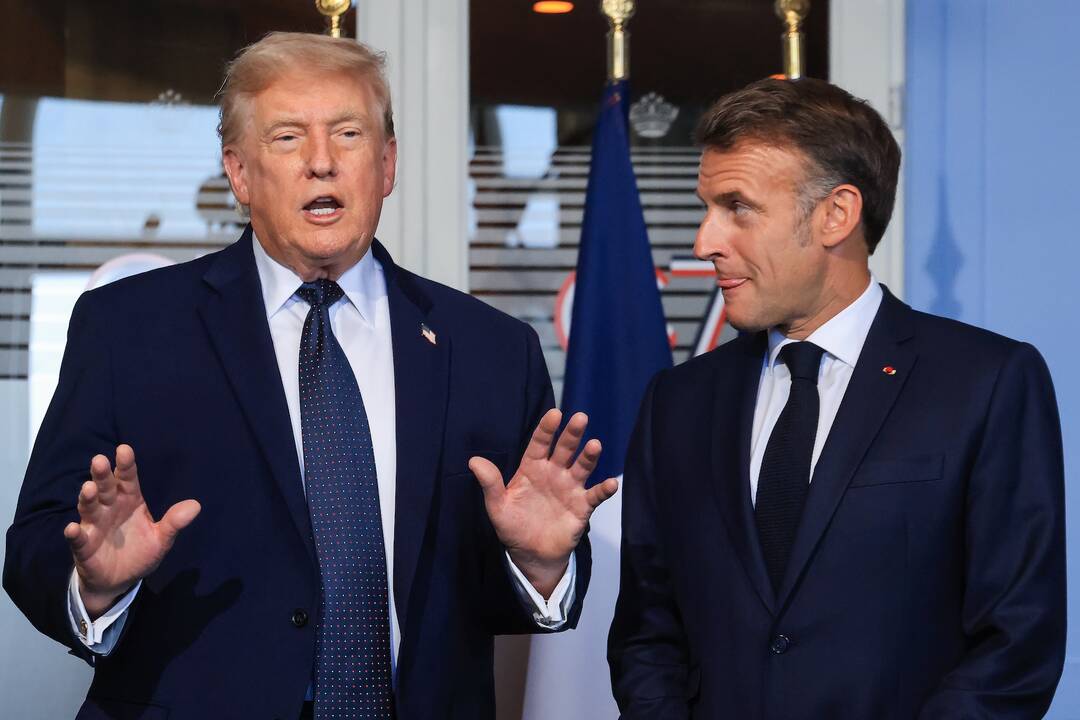
Iran’s foreign minister, Abbas Araghchi, and parliament speaker Mohammad Bagher Ghalibaf are expected to travel to Geneva for the signing ceremony, while US vice president JD Vance is set to represent Washington. Asked at a joint press conference with French president Emmanuel Macron whether he would attend, Trump said he “might be involved or I may not” but would probably leave early for his dinner in Versailles.
Vance reportedly already signed some version of an agreement electronically over the weekend, though he also said some details still need to be finalised before Friday. Beyond that, its content remains murky, other than the fact that it is meant to kickstart a 60-day ceasefire period for actual substantive negotiations. Trump said the agreement, a “powerful document”, would be published “in the near future” but not before the signing ceremony on Friday.
But the tentative agreement is far from an actual peace deal. Between Iran’s nuclear programme, western sanctions and Israel’s relentless war against Hezbollah – whose airstrikes on Beirut over the weekend drew Iran’s ire – the two rivalling powers still have much ground to cover. Hardliners in Iran have also voiced their opposition to the terms of the agreement, saying they amount to capitulation.
Different takes
The deal, which coincided with Trump’s extravagant 80th birthday celebrations at the White House on Sunday, was painted by the Republican as a victory. But he may still need Europe’s help for the reopening of the shipping route.
French president Emmanuel Macron, who is attending and leading his last G7 summit, said at the press conference jointly held with Trump that France stood ready to deploy in the next few days with London an international mission to secure the strait for its full opening. Trump largely dismissed the proposal, saying “we’re probably not going to need much help” and that the strait would reopen fully on Friday “toll-free” after some sea mines laid by Iran in the strait were removed.
On Monday, Iranian officials offered a different take on the agreement. A foreign ministry spokesperson said that Iran, together with Oman, would be “responsible for maritime passage through the strait”, and “in return for navigation services, environmental protection, insurance and other maritime services, Iran will collect necessary fees.”
Macron will host a lunch meeting on Tuesday with the leaders of Qatar, the United Arab Emirates and Egypt to discuss peace in the Middle East, with questions about security for the shipping route likely to be raised.
EU bargaining chip
Speaking at a press conference in Evian, European Commission president Ursula Von der Leyen welcomed the announcement. “The Strait of Hormuz must reopen, and freedom of navigation must be restored,” she told reporters, adding that the preliminary agreement should “open the door to greater talks and the end of Iran’s nuclear programme”.
Asked whether the EU was prepared to lift sanctions on Tehran, she said it needed to see “real change on the ground” before considering the lifting of sanctions over both human rights violations and nuclear programme obligations.
The EU is hoping to obtain from Trump a greater role in the Ukraine-Russia peace talks. Trump’s sudden need for support on Iran may put the Europeans in a better position to barter. The Europeans are also keen on seeing the war against Lebanon cease – a “non-negotiable” for Tehran as well. Von der Leyen called for a “genuine ceasefire and respect for Lebanon’s sovereignty”.
Trump’s ability to keep the Israeli’s in check will prove decisive for the success of this latest breakthrough. Trump hinted at Lebanon as still pending, saying, “We should talk to Hezbollah”.