Geneva will become the backdrop for back-to-back high-stakes negotiations on Iran’s nuclear programme, followed by the Ukraine war, as Washington dials up the pressure to secure deals in two of the world’s most combustible contexts.
For the next two days, all eyes will be on Geneva as US, Russian, Iranian and Ukrainian top officials cross paths in the multilateral hub in an attempt to avert further war. US president Donald Trump’s envoys Steve Witkoff and his son-in-law Jared Kushner will have a packed agenda, attempting to break a decade-long gridlock with the Iranians over their nuclear programme in the morning before overseeing Russia-Ukraine peace talks in the afternoon.
Between deeply entrenched red lines held by opposing parties and military tensions boiling over, both files face bleak prospects from the outset.
Diplomatic choreography
Calendar fortuity or not, the back-to-back meetings are likely to require a carefully choreographed dance of military aeroplanes, security detail and diplomatic motorcades carrying delegations to and fro. Witkoff and Kushner are due to arrive in Geneva by private jet at 8 am on Tuesday before heading to Oman’s permanent mission in Chambésy for indirect talks with Iran.
The expedited negotiations follow a first round held just 10 days ago in Muscat. A first since Washington’s strikes on Iran’s nuclear sites in June, the discussions conducted through Omani mediators were described by the two rival powers as a “good start”.
Iranian foreign minister Abbas Araghchi, in Geneva since Sunday night, is expected to join the discussions at the Oman mission before heading to the Palais des Nations to address the UN Conference of Disarmament at 3 pm. The Iranian delegation will leave that same evening, according to online Swedish flight tracker Flightradar24.
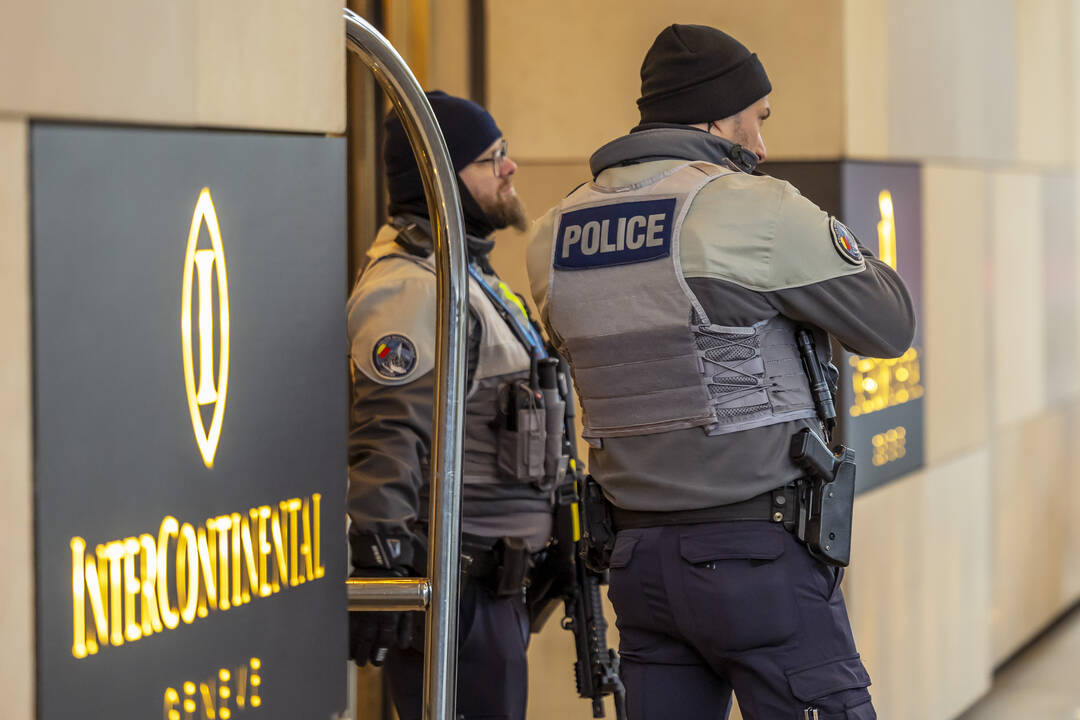
As for the tripartite talks on the Ukraine war, discussions expected to kick off on Tuesday afternoon and last until Wednesday, are reportedly to take place at the InterContinental Hotel, a stroll away from the US and Russian permanent missions.
The Ukrainian delegation includes many of the same officials who attended November’s talks with the US, including the president’s chief of staff, Kyrylo Budanov, and secretary of Ukraine’s national and security defence council, Rustem Umerov.
As for the Russian side, an expanded 20-strong delegation – led by Russian president Vladimir Putin’s aide, Vladimir Medinsky, and one of the biggest in recent talks – had already secured visas, according to Russian media reports. Kirill Dmitriev, head of Russia’s sovereign wealth fund and architect behind Washington’s peace proposal, will lead a parallel track of negotiations with the US on economic cooperation.
Europe watches over from the sidelines
The Europeans, meanwhile, seem to still be largely excluded from the talks. It’s still unclear whether Ukraine’s main allies – France, Germany and the United Kingdom – will dispatch their envoys to back Ukraine, pressured by Washington to quickly wrap up a deal with Russia and organise elections by mid-May.
This could be much to the dismay of French president Emmanuel Macron, who, according to diplomatic sources, had pressed for Ukraine peace talks to take place in Geneva, perhaps thinking the multilateral hub would offer Europe better access than the far-off Gulf.
The French leader made Europe’s stance loud and clear at the Munich Security Conference on Friday, saying: “You can negotiate without the Europeans, if you prefer, but it will not bring peace to the table.”
Contacted by Geneva Solutions, European permanent missions in Geneva could not confirm whether they would be playing any behind-the-scenes role during the discussions.
Iran talks: doomed from the start?
But can a few-hour-long meeting break the deadlock between Iran and the US and avoid a military escalation? US secretary of state Marco Rubio sounded sceptical over the weekend about a deal but said the US was “going to try” and that Trump preferred a diplomatic way out. At the same time, Washington has been preparing for a more catastrophic scenario, sending another aircraft carrier to the Persian Gulf and threatening to attack if Tehran doesn’t agree to a deal.
Araghchi set the tone early on. “I am in Geneva with real ideas to achieve a fair and equitable deal,” he wrote on social media platform X on Monday. “What is not on the table: submission before threats.”
On Sunday, he told the BBC Iran was ready to dilute its stockpile of highly enriched uranium in exchange for a lifting of sanctions, but that renouncing its missiles was out of the question.
Ahead of Tuesday’s negotiations, the Iranian top official met on Monday morning with Rafael Grossi, head of the UN’s nuclear watchdog, for “deep technical discussions” as the UN head seeks answers regarding Iran’s stockpiles. He was also meeting with the Omani foreign minister, Badr bin Hamad al-Busaidi, who mediated talks in Muscat on 6 February.
But Iran may have another card up its sleeve. Its foreign ministry deputy director for economic diplomacy, Hamid Ghanbari, floated an economic deal including investments in oil, gas mining and aircraft purchases as part of a nuclear agreement.
Camille Pagella and Kasmira Jefford contributed reporting to this article.