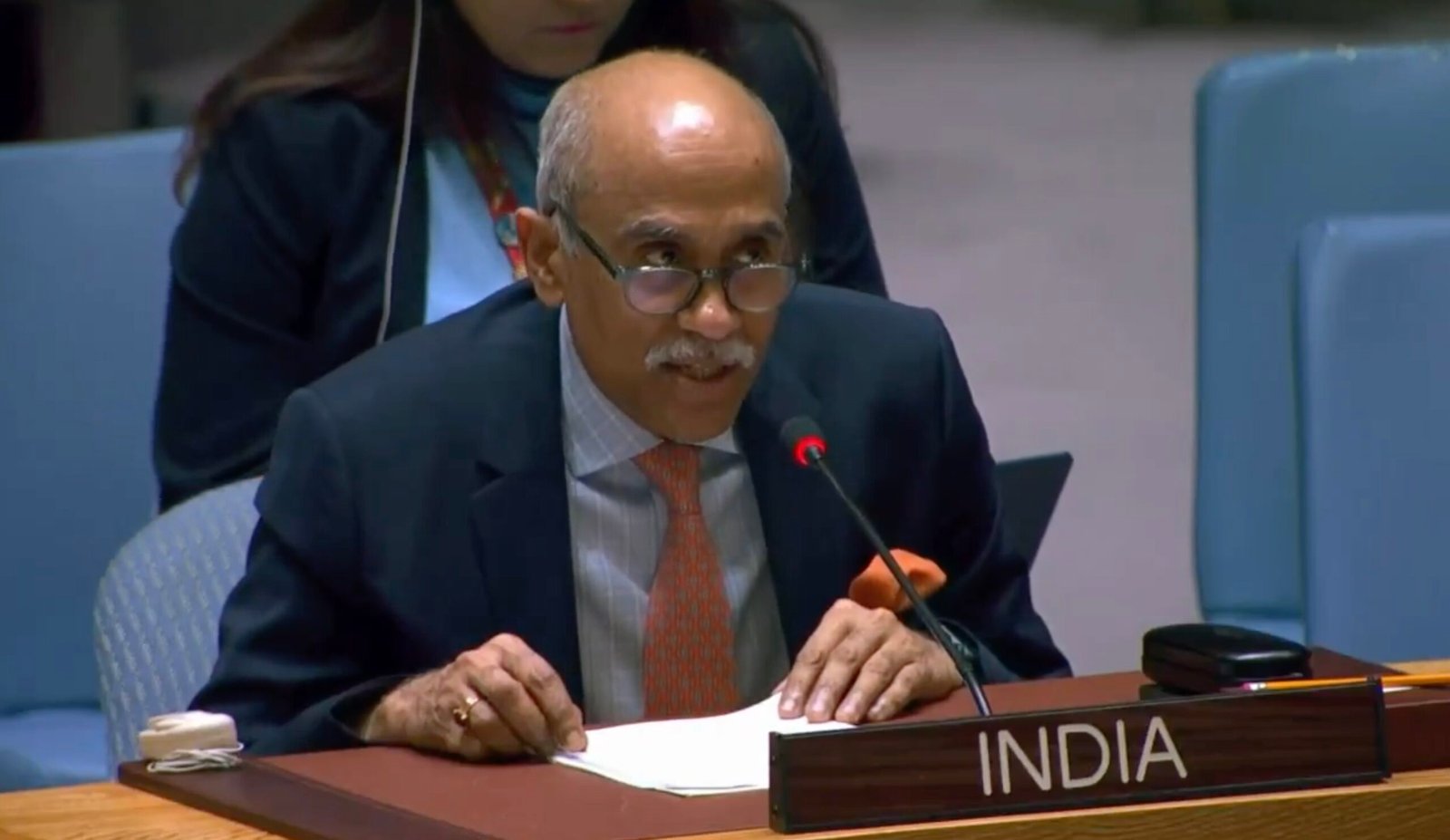
India called for human oversight of artificial intelligence and autonomous systems in conflict, telling the United Nations Security Council that emerging technologies can help prevent crises and protect civilians while introducing new risks to international peace and security.
Speaking at a high-level open debate on conflict resolution on November 24, 2026, India’s Permanent Representative to the United Nations, Ambassador Harish Parvathaneni, said the rapid adoption of AI in military, intelligence, and civilian settings is changing the nature of conflict.
He outlined four priorities for UN member states, covering the use of technology in peace efforts, compliance with international law, safeguards against misuse, and equitable access.
Also readIndia Urges UN to Protect Black Sea Grain Routes and Seafarers

Harish said AI-enabled analysis, satellite imagery, and digital platforms could help the UN identify emerging crises and respond more effectively. He added that these tools could support mediation, improve awareness of conditions on the ground, and make peacekeeping operations safer and more effective.
He said the use of emerging technologies in conflict must respect national sovereignty and comply with international law. Efforts to use these tools for protection, he added, should extend to civilians, peacekeepers, and humanitarian personnel.
On lethal autonomous weapons systems, Harish said India supports addressing legal and ethical questions under the Convention on Certain Conventional Weapons, which seeks to balance military necessity with humanitarian considerations. He said the level of oversight should take into account the circumstances in which a system is used and the characteristics of the system itself.
“Responsibility for the use of such systems must always rest with humans,” he said.
Harish also raised concerns about the potential misuse of AI by terrorists and other nonstate actors. He said incomplete, inaccurate, or deliberately manipulated data could undermine decision-making. Citing India’s investments in digital infrastructure and cybersecurity, he said the country has focused on protecting critical information infrastructure and keeping essential civilian services running.
He added that protections under India’s Information Technology Act and related rules against unauthorized access, data tampering, and disruption of computer systems remain relevant during armed conflict.
The Ambassador warned that restrictions on access to technology, including through export controls and licensing, could leave countries in the Global South with little say in how AI is developed, regulated, and deployed. He also said AI systems could perpetuate biases related to gender, language, and socioeconomic background.
Harish said India supports broader participation in international talks on technology governance, including at the United Nations, with attention to countries’ national priorities and development needs. He also reiterated India’s call to expand both permanent and non-permanent membership of the Security Council.
He pointed to the AI Impact Summit that India hosted in New Delhi in February, describing it as the first gathering of its kind convened by a Global South nation. He said more than 90 countries endorsed the summit’s New Delhi Declaration, which called for wider access to AI resources, investment in skills, and the development of secure and trustworthy systems. The declaration also emphasized using AI to support economic growth and social good.
“Technology may inform human judgment but cannot and should not replace it,” Harish said.