 27 November 2026, 06:00
3 min.
 Add as preferred on Google
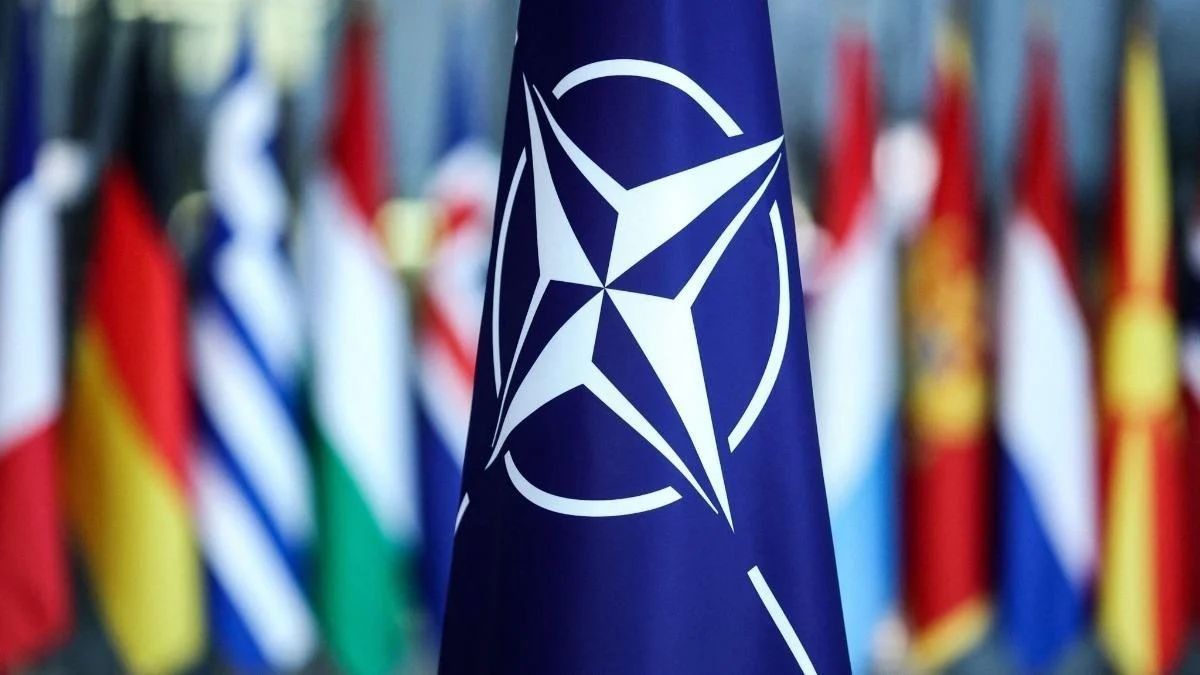
 Photo. www.nspa.nato.int
The 72nd annual session of the NATO Parliamentary Assembly took place in Berlin from 20 to 23 November. One of the main topics discussed was the violation of Polish airspace by Russian missiles or drones. Other issues included strengthening defence capabilities, modernising the armed forces, developing the defence industry and enhancing the resilience of NATO’s critical infrastructure.
The Assembly also discussed aid to Ukraine and the use of its wartime experience. During the meeting, Poland, France and Germany signed a joint declaration on the threat Russia poses to the security of the Alliance.
The NATO Parliamentary Assembly is a forum for cooperation among parliamentarians from Alliance member states, supporting work on security and defence issues. However, it is not part of the Alliance’s military command structures. The Assembly currently comprises 281 parliamentarians from 32 member states. Representatives from 11 associate countries also take part in its work.
New leadership of the Parliamentary Assembly
At the session, the Assembly elected its president and five vice-presidents. US Congressman Brendan Boyle was elected president. The vice-presidents are Tomas Valasek of Slovakia, Javier Maroto of Spain, Feryal Clark of the United Kingdom, Nicola Care of Italy, and Polish Senator Tomasz Grodzki. The president and vice-presidents are elected for one-year terms, with the possibility of re-election once. They take part in the work of the bodies that direct the institution’s activities and coordinate its cooperation with NATO Headquarters.
Press conference
The session concluded with a press conference attended by NATO Secretary General Mark Rutte and German Chancellor Friedrich Merz. Speaking about the Alliance’s response to Russian actions, M. Rutte said: “You will not always see them; we cannot always speak openly about them, and the response will not always be tit for tat.” He added that the “best response” to any Russian incident in Europe was greater support for Ukraine. The German Chancellor, meanwhile, called on Russia to “immediately stop its dangerous provocations” and assured Poland that it could count on “our full solidarity”. He also warned that Russia “is ready for a far-reaching escalation”. Should the need arise, however, “NATO will defend every inch of Alliance territory”. F. Merz also commented on reports that Russia planned to launch a satellite carrying a nuclear payload into space before the end of the year. He concluded: “These are not new threats, but they are still shocking,” adding that the use of such a weapon could significantly limit NATO’s ability to detect approaching threats.
Prof. Sebastian Wojciechowski – Department of Strategic Studies and International Security at Adam Mickiewicz University (UAM). Chief Analyst at the Institute for Western Affairs. NATO DEEP eAcademy and OSCE security expert. Editor-in-Chief of “Strategic Review” (Przegląd Strategiczny).