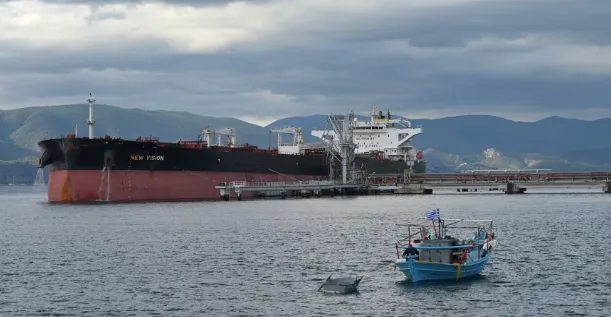
CNN. As military tensions in West Asia escalate again, crude oil prices have started to rise again in the international market. Concerns about the impact on global oil supply due to attacks related to Iran, attacks on Saudi Arabian oil refineries, and continuous attacks on oil tankers in the Strait of Hormuz have increased.
Brent crude, considered the international oil standard, reached approximately 96 US dollars per barrel for January supply forward trading (front-month futures) on Friday. The price reached its highest point in the week after the midterm elections closed on Thursday.
Brent prices have risen by approximately 3.5 percent this week. Along with this, oil prices are showing signs of achieving weekly growth for the first time in November. West Texas Intermediate (WTI), traded in the US market, also rose by 1 percent on Friday to approximately 84.50 US dollars per barrel.
However, oil prices are still significantly below the peak of approximately 120 dollars reached during the war with Iran. This week, prices had fallen below 90 dollars per barrel. Oil prices had been declining for the past few weeks.
The decline in prices was due to US President Donald Trump’s hesitation to take further military action in West Asia, a slight increase in oil supply from the region, and a significant decrease in global oil consumption.
However, recent attacks have started to change the market’s direction. On Thursday, two Italian citizens were killed in what was suspected to be an Iranian drone attack in a military area of Kuwait. According to Italy’s Foreign Minister Antonio Tajani, they were technicians working for the German defense company Rheinmetall Italia.
A Kuwaiti and a Pakistani citizen were also injured in the attack. Iran has denied its involvement in the attack.
Meanwhile, Yemen’s Houthi rebels have launched continuous attacks on two Saudi Arabian oil refineries this week. The Houthi group, which claimed to have targeted the country’s largest oil refinery Ras Tanura on Wednesday, also attacked another refinery in the southwestern Jazan region on Thursday.
A Nepali worker died in the second attack. The Saudi Ministry of Energy stated that a fire broke out after the attack and some operations of the refinery were temporarily halted.
The skyscraper housing Saudi Arabia’s multi-billion dollar sovereign wealth fund headquarters in the capital Riyadh has also been attacked for the second time in a few days. Saudi officials and eyewitnesses said 11 people were injured in the incident.
Iran has also continued to attack oil tankers transiting through the Strait of Hormuz. According to data analyzed by the UK Maritime Trade Operations Centre, approximately two dozen attacks have occurred in the region in November. This number is close to the 30 attacks recorded in October.
Oil supply through the Strait of Hormuz has also been affected. According to preliminary data, oil flow through this route has decreased to 55 percent in the week ending November 25 compared to pre-war levels. This indicates that maritime traffic has been affected by the attacks.
Kathleen Brooks, Research Director at online broker XTB, stated that regional instability persists due to the lack of a permanent peace agreement between the US and Iran. According to her, if oil prices continue to rise, the enthusiastic growth in shares of AI technology-related companies may also be affected.
Meanwhile, a meeting of the Organization of the Petroleum Exporting Countries (OPEC) and its allies, OPEC Plus, is scheduled for Sunday. The group has kept oil production stable since September. Analysts suggest that a decision may be made at the meeting to keep production quotas unchanged until January, although some member states are pressuring for increased production.
Tensions in West Asia, disruptions in oil supply, and the upcoming OPEC Plus decision are likely to determine the direction of oil prices in the global market from now on.