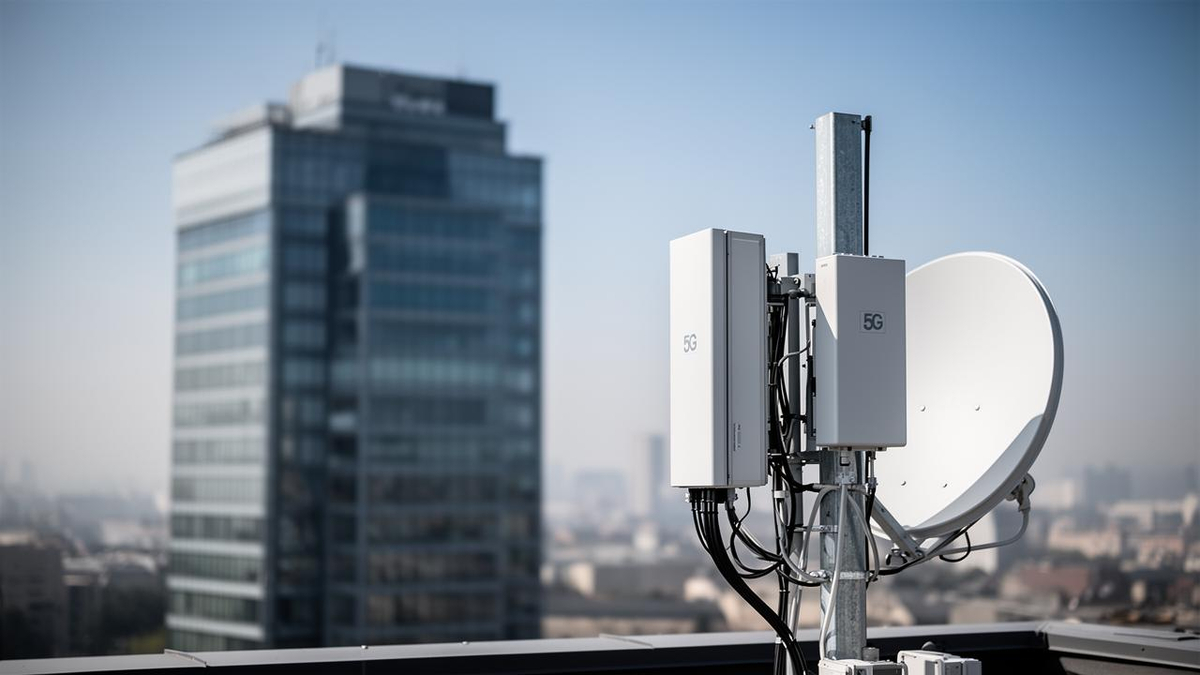
KT announced on the 28th that it will participate in the 9th meeting of the North Atlantic Treaty Organization (NATO) defense communications standardization project “NWCSP” as a 5G·6G standardization committee member. The meeting runs from today through October 2 at KT West in Gwanghwamun, Seoul, with approximately 100 defense and government officials and communications and standards experts from South Korea and abroad attending to discuss the development direction of next-generation defense communications standards.
NWCSP (NATO Wireless Communications Standards Project) is a civil-military cooperation project in which government agencies and private-sector experts from NATO allies and partner countries discuss the defense applications and standardization of mobile communications technologies such as 5G and 6G. It runs from February 2024 to February 2027, with three in-person meetings per year. The 8th meeting was held in San Diego, USA, last May.
South Korea has been represented by the Ministry of National Defense, the Korea Institute for Defense Analyses (KIDA), and the Telecommunications Technology Association (TTA). KT will dispatch 5G·6G standardization experts starting with this 9th meeting. The company plans to share technology and network deployment experience accumulated from defense 5G projects and present views on adoption guidelines and standardization approaches for 5G·6G-based defense communications technologies.
At this Seoul meeting, participating countries will share their 5G·6G technology development status and defense application cases. Review of standard documents for applying satellite communications and wireless backhaul to defense will also take place. In particular, substantial intergovernmental agreement is expected to be finalized on technical standards needed to interconnect and operate communications technologies and systems that differ by country.
TTA plans to continue participating in NWCSP in cooperation with the Ministry of National Defense and other relevant agencies to establish guidelines for adopting 5G·6G technologies in the defense sector and strengthen the international standards response capabilities of South Korea’s defense and telecommunications industries.
Son Seung-hyun, Chairman of TTA, said, “Applying commercial mobile communications technologies such as 5G and 6G to the defense sector is a challenge that the private sector and defense must solve together. With this 9th meeting as an opportunity, we will further solidify civil-military cooperation with the Ministry of National Defense and other relevant agencies and take the lead in international standardization discussions.”
Yeom Ju-seong, Director General of the Defense Informatization Bureau at South Korea’s Ministry of National Defense, said, “We recognize securing interoperability of allied communications networks based on 5G·6G standards, including with NATO, as a core task for implementing a hyper-connected command and control system for the future battlefield. We hope this Seoul meeting will be a meaningful venue for sharing each country’s experience and technology and advancing practical standards.”
Kim Won-tae, Senior Vice President and Head of KT Enterprise’s Public & Financial Business Division, said, “Applying commercial mobile communications technologies such as 5G and 6G to the defense sector is a challenge that the private sector and defense must solve together. We will further solidify civil-military cooperation with the Ministry of National Defense and other relevant agencies and actively contribute to international standardization discussions on next-generation defense communications technologies.”
The meeting consists of government sessions and plenary sessions. Participating countries will share their 5G·6G implementation status and discuss the development direction of defense communications standards, while standard documents for applying the latest mobile communications technologies such as satellite communications and wireless backhaul to defense will be addressed. KT plans to use this participation as an opportunity to continue civil-military technology cooperation with the Ministry of National Defense and other relevant agencies.
The movement to introduce commercial 5G·6G technologies into military communications networks is progressing rapidly at the NATO level. Interoperability of communications networks among allies is a core prerequisite for multinational operations, and the longer standardization is delayed, the greater the risk of proliferation of disparate equipment and systems across countries. NWCSP works to address this problem by adapting 3GPP standards to defense requirements.
KT’s participation marks the first time a South Korean telecommunications operator has directly engaged in NATO-led standardization discussions. This signifies that the commercial network deployment and operations experience gained from defense 5G projects is being recognized in international standards discussions. If technical standards proposed by KT are reflected in NWCSP standard documents going forward, it is expected to have a positive impact on the export competitiveness of South Korean defense and telecommunications equipment.