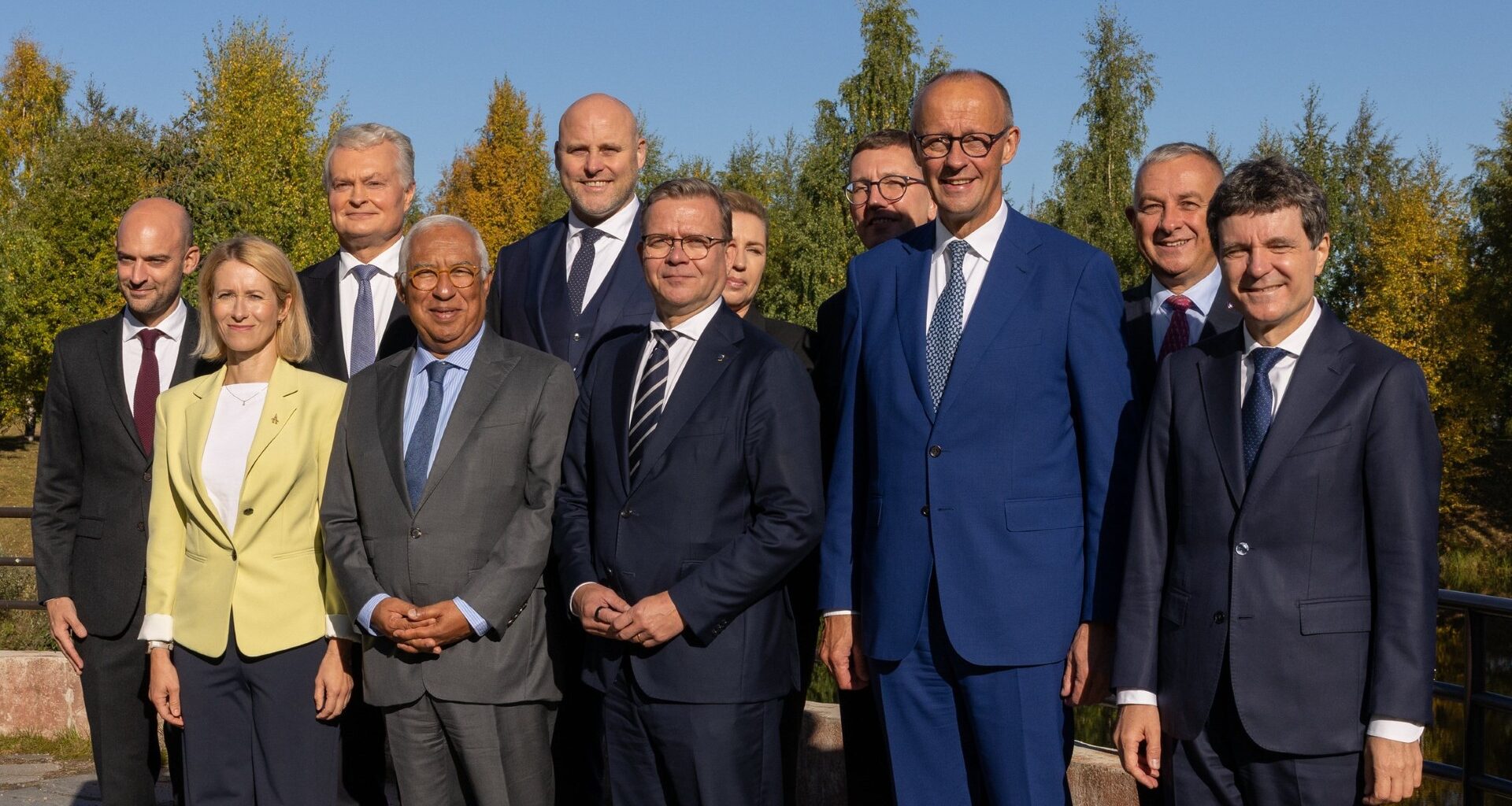
At the European Arctic Summit on 13–14 September 2026, the leaders of more than ten EU Member States highlighted the increasing strategic importance of the Arctic region for the security of Europe as a whole. In their joint statement, the leaders stressed the need for active work to strengthen the role of the European Union in northern regions. The summit, held against a backdrop of autumn foliage in Rovaniemi, Lapland, was hosted by Prime Minister Petteri Orpo.
Prime Minister Orpo noted that Europe should take a comprehensive approach to Arctic security. He reminded the leaders gathered in Rovaniemi of the intensifying competition between great powers in the Arctic.
“We had a very productive high-level discussion on the Arctic region. The importance of the region goes beyond military security: this is about economic security, critical minerals, energy, infrastructure and logistics, trade routes, security of supply, climate change and sustainable development,” Prime Minister Orpo said.
The EU leaders believe that Russia poses a persistent security threat in the Arctic region. In their statement, they note that Russia’s intensifying military activity, hybrid actions and strategic investments highlight the need for the EU to enhance its collective preparedness.
Prime Minister Orpo stressed the need for concrete European projects in the north. Areas for development could include satellite launching capabilities, critical infrastructure and military mobility, cross-border transport connections, and the extraction and processing of critical minerals.
“Icebreaking capabilities are also a strategic resource. Europe should look into the possibility of joint ownership of icebreakers. We want to share Finland’s world-class icebreaking expertise with all of Europe,” said Prime Minister Orpo.
In their joint statement, the EU leaders highlight the unique characteristics of the Arctic, the status of Indigenous peoples and the need to take into account long-term sustainable development when making investments in the region. The area must be developed together with local residents.
The European Commission is expected to present a proposal for a new EU Arctic Strategy and an action plan for its implementation this autumn.
The European Arctic Summit was attended by Federal Chancellor of Germany Friedrich Merz, Danish Prime Minister Mette Frederiksen, Estonian Prime Minister Kristen Michal, Latvian Prime Minister Andris Kulbergs, Lithuanian President Gitanas Nausėda, Romanian President Nicușor Dan and French Foreign Minister Jean-Noël Barrot. Greece, the Netherlands, Poland and Sweden also signed the joint statement.
The heads of state and government were joined at the summit by President of the European Council António Costa, High Representative of the Union for Foreign Affairs and Security Policy Kaja Kallas and European Commissioner for International Partnerships Jozef Síkela.
The leaders also met for a working dinner on Sunday 13 September with President of the Republic Alexander Stubb, Prime Minister of Norway Jonas Gahr Støre and Prime Minister of Iceland Kristrún Frostadóttir.
In connection with the meeting, the participants visited the Lapland Air Wing and learned about its activities from its Commander, Colonel Saku Joukas.
Prime Minister Orpo has also invited EU leaders to Finland in previous years: the Eastern Flank Summit was held in Helsinki in December 2025, while the North South Summit on European security challenges took place in Saariselkä in December 2024.
Inquiries: Laura Quist, Diplomatic Adviser to the Prime Minister, tel. +358 50 439 1677, Tuomas Tikkanen, Senior Adviser in European Affairs, tel. +358 40 523 5768, Elisa Tarkiainen, Special Adviser to the Prime Minister (EU Affairs), tel. +358 295 160 363 and Anne Sjöholm, Head of Communications, tel. +358 40 537 0733, Prime Minister’s Office
The email addresses of the Finnish Government are in the format [email protected]
Statement updated on 15 September 2026 at 16.10: Statement signed by Italy, no other changes.