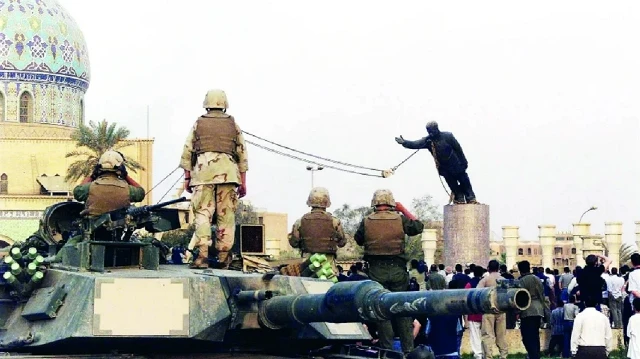
The final US troops are leaving Iraq, bringing an end to the American military presence that began with the 2003 invasion and continued through years of war and instability. The withdrawal follows a September 2024 agreement between Baghdad and Washington to conclude the US-led international coalition’s military mission in the country.
A new phase in US-Iraq security ties
Under the 2024 transition plan, the coalition’s military role in Iraq was to be phased out in favor of direct security cooperation between Baghdad and individual coalition members. The arrangement also allows Iraq to continue supporting operations against Daesh in Syria from its territory.
The US-led coalition recently transferred its main headquarters at Baghdad International Airport to the Iraqi military. Iraqi military spokesman Sabah al-Numan said the final coalition personnel would depart on Sept. 30, describing the move as the restoration of Iraq’s full sovereignty.
Numan said some coalition countries could maintain bilateral security ties with Baghdad after the withdrawal, with those arrangements based on equality and reciprocity. During its mission, the coalition provided assistance including air defense, aerial support, training and ammunition, while Iraqi forces conducted ground operations.
Iraqi forces take primary role against Daesh
The international coalition was established after Daesh captured major areas of Iraq and Syria in 2014, including Mosul, Iraq’s second-largest city. The coalition announced in 2020 that Daesh had been defeated in Iraq.
Coalition members supported Iraqi forces with airpower, intelligence and training as Iraqi troops carried out ground campaigns to recover territory from the group. Under the 2024 agreement, Iraqi forces will remain responsible for ground operations against any renewed Daesh threat.
The United States could still provide air assistance if Baghdad requests it, reflecting the shift from a multinational military campaign toward a more limited bilateral security relationship.
Barzani questions timing of US withdrawal
American forces also left military bases in Erbil, the capital of the Kurdistan Regional Government, last week. KRG Prime Minister Masrour Barzani said the departure was taking place amid continuing regional instability.
Barzani argued that the Kurdistan Region does not have sufficient defense capabilities to address security threats on its own and questioned whether the timing was appropriate for a complete US withdrawal.
Civilian deaths reported in Syria
The coalition’s withdrawal process from Syria was completed earlier this year. The Syrian Network for Human Rights (SNHR), citing its own documentation of coalition operations since 2014, said 3,048 Syrian civilians had been killed in coalition attacks.
The organization called for coalition members to provide compensation for civilian deaths and property damage attributed to their operations in Syria. It also urged the Syrian government to raise the issue through international institutions.
The end of the US military mission in Iraq therefore marks a transition from a large-scale coalition deployment toward an arrangement in which Iraqi forces hold the primary operational role, while Washington and Baghdad retain channels for bilateral security cooperation.