This is an old strategy. The Vietcong understood it in Vietnam. The Taliban understood it in Afghanistan. They understood they needed to survive its attacks. Their calculation was that the US had vastly greater military power but limited tolerance for wars without a clear end. In other words, time would always work in favour of the weaker side.
Iran and the Houthis are applying the same logic. The first element of their strategy is asymmetry. Iran does not need to match US aircraft, aircraft carriers, satellites or precision weapons; it needs to make those advantages expensive to use.
Iranian and Houthi missiles and drones are comparatively cheap to produce; intercepting them with sophisticated American or Gulf air defence systems is costly. Even when an attack is intercepted, the defender has had to expend ammunition, deploy aircraft and maintain an elaborate defensive network.

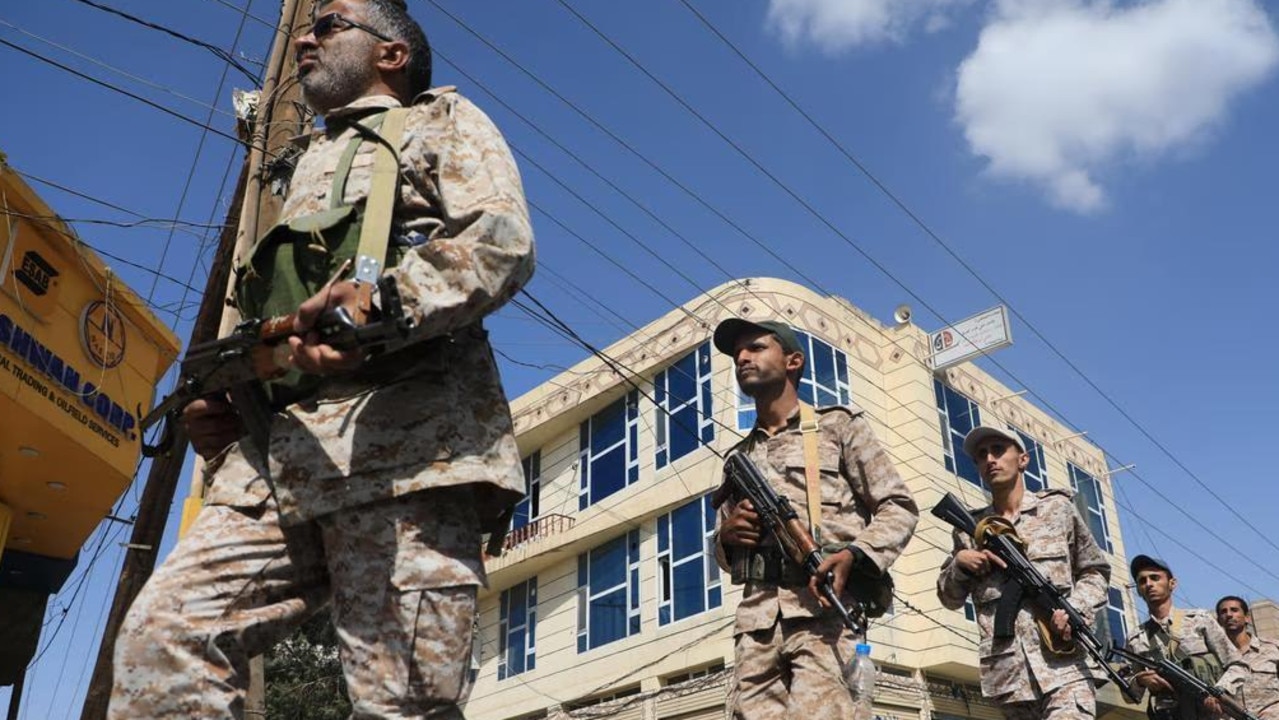
The second element is dispersion. Iran does not have to fight the US on one battlefield. It can operate through a network of partners and proxies, while the Houthis possess their own geographical advantages in Yemen. The conflict therefore stretches across a large area encompassing Iran, Iraq, the Persian Gulf, the Red Sea and the approaches to the Bab al-Mandab Strait.
The Houthis have demonstrated the value of this approach particularly clearly. Their renewed campaign has threatened Saudi infrastructure, shipping and oil-export routes.
Last Saturday they launched a ballistic missile towards Riyadh while also claiming attacks on other Saudi targets. Saudi Arabia intercepted the missile, but the fact Riyadh itself can again be threatened illustrates the strategic problem.
The third element is economic pressure. The Houthis do not have to stop all Gulf oil exports to cause economic consequences. They merely have to make shipping and energy infrastructure sufficiently vulnerable that insurance costs rise, routes are altered, production is interrupted and oil prices increase.
That creates a dilemma for Washington. Protecting Gulf shipping and infrastructure requires an increasingly substantial American military commitment. But not doing so and allowing its Gulf allies to remain vulnerable undermines confidence in the US as the Gulf’s security guarantor.
The fourth element is strategic overstretch. The US has the military power to defend its forces, allies, shipping and critical infrastructure across the region, but doing so simultaneously becomes increasingly difficult as the number of threats and locations expands.
Iran and the Houthis therefore do not need to defeat American forces. They can seek to force Washington to spread those forces more widely, protect more targets and respond to more crises at the same time.
This creates an escalation dilemma. If Washington concentrates its forces on one threat, another becomes more exposed. If it expands the military effort to deal with each new threat, the geographical and political scope of the war expands with it.
The result can be a conflict in which American military superiority remains overwhelming but becomes progressively harder to translate into a decisive political result.
Recent evidence suggests the war is already imposing substantial costs. A US government watchdog report put the cost at $US37.5bn ($52.6bn) and reported extensive damage to US facilities around the region, including losses or damage to as many as 30 MQ-9 Reaper drones and seven KC-135 tanker aircraft.
Iran and the Houthis are pursuing a war of endurance rather than annihilation. Their success model can be reduced to five principles: survive; disperse; impose economic costs; stretch the stronger power across several fronts; and wait for the political pressure generated by the accumulating costs to exceed the perceived benefits of continuing the war.
The final ingredient is particularly important. Gulf governments may have immense military resources but they also have economies, populations and infrastructure that are vulnerable to disruption.
Saudi Arabia’s military expenditure was already $US83.2bn in 2025, making it the world’s eighth-largest military spender. Yet expensive weapons do not eliminate the underlying vulnerability of oil facilities, ports, airports and shipping routes.
Strategic victory for a weaker power does not necessarily mean defeating the stronger power. It can mean preventing the stronger power from converting its military superiority into a satisfactory political outcome.
If Iran can continue fighting without surrendering, while the Houthis continue to threaten Saudi Arabia, Red Sea shipping and Gulf energy infrastructure, Washington faces an increasingly difficult choice: escalate further and accept greater costs and risks – or seek an accommodation that could leave Iran and its allies with substantial political gains.
Iran and the Houthis do not have to win the war. They just have to make Donald Trump decide that continuing it is no longer worth the price.
Clive Williams is director of the Terrorism Research Centre in Canberra and is a former Australian defence intelligence officer.
Read related topics:Afghanistan