By Daniel Flynn and Pavel Polityuk
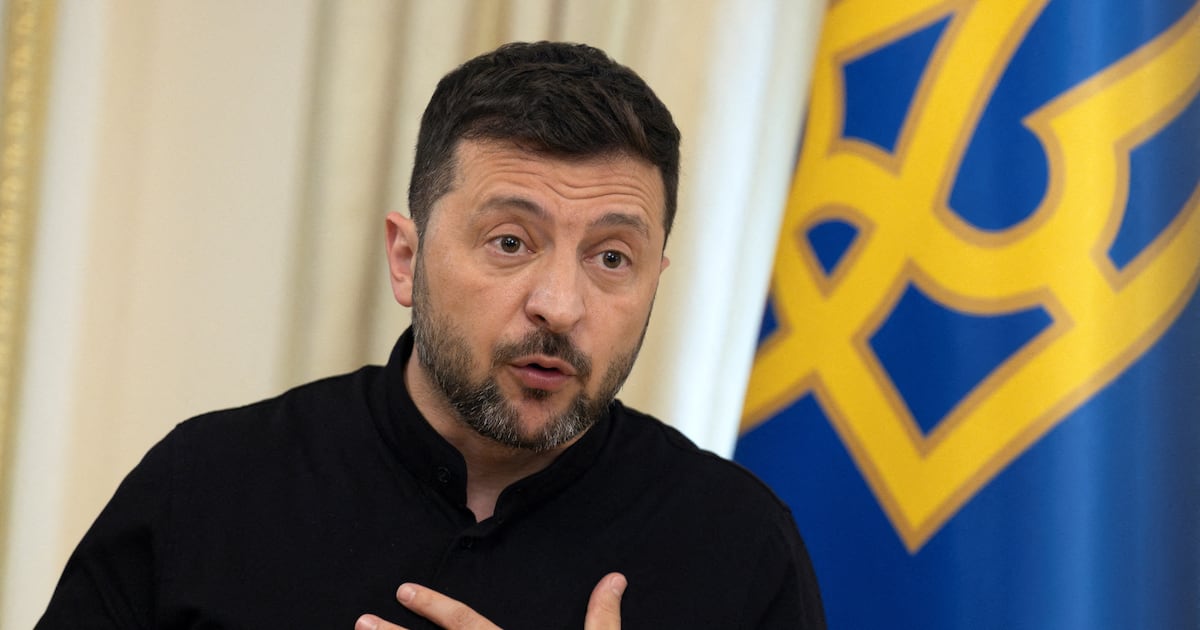
Russia hit at least six energy targets during a night and morning of deadly airstrikes across Ukraine, President Volodymyr Zelensky said on Monday, adding this showed Moscow had no interest in an energy ceasefire announced by US President Donald Trump.
Under pressure over high energy prices ahead of US midterm elections next month, Trump blindsided Kyiv and its European allies over the weekend by declaring that Ukraine and Russia had agreed not to hit each other’s energy systems.
“It is increasingly evident that Russia is unwilling to accept an energy ceasefire proposed by the US and intends to continue its terrorist air attacks against our people and communities,” Zelensky said on X.
“This is what happens when Russia sees the prospect of higher revenues for its war machine.”
In earlier comments by video link to a conference in Poland, Zelensky identified two of the targets as a gas facility and a petrol station, both hit by Russian drones.
Trump announced the purported energy ceasefire days after unveiling a deal to buy diesel from Russia, which Zelensky has criticised as a reversal of years of Western policy aimed at isolating Russia’s economy.
Trump, for his part, has called on Ukrainians to unseat Zelensky in an election, an unusually severe exchange in a relationship between the two leaders that has been strained since Trump returned to power in 2025.
Trump’s announcement was the second time within a few weeks that Trump has declared an energy ceasefire without confirmation from the two warring sides.
Ukraine’s European allies on Monday voiced scepticism of any such agreement, spoke strongly in support of Kyiv and approved the largest set of EU sanctions since Russia’s full-scale invasion in 2022.
Russian oil refineries
Kyiv has increasingly targeted Russian oil refineries and logistics with long-range strikes in recent months, its answer to more than four-and-a-half years of relentless Russian attacks on its cities, including persistent campaigns to knock out Ukraine’s power and heat in successive winters.
Zelensky said Ukraine had carried out no attacks on Russian refineries overnight and was willing to agree an energy ceasefire, but only if Russia abided by it. He also said elections, suspended during wartime, could be held in Ukraine if Moscow agreed to a full ceasefire for 60 days.
Russia, for its part, said talks were ongoing about a possible energy ceasefire, and Kremlin spokesperson Dmitry Peskov said further information would be revealed in due course. But he rejected Zelensky’s proposal for a full 60-day truce.
“In the Kremlin, both President (Vladimir) Putin and officials at other levels have repeatedly stated that we do not want a ceasefire,” said Peskov. “We want long-term peace and are prepared to do everything possible to achieve it.”
Body among wreckage
In Kharkiv, Ukraine’s second-biggest city, rescue workers picked through wreckage of shattered buildings. The body of a dead civilian in jeans and white sneakers lay beneath debris, lit up by floodlights in the nighttime dark.
Nataliia Minka said she had just made it to a shelter when a missile struck nearby. She and her child had seen what they believed to be a missile hitting a nearby power station.
“Ten minutes had passed since they promised they wouldn’t target energy facilities,” she said.
“It’s so hard to describe how a child was lying there, already covered up, and the father was running around her, crying and screaming,” she added. ”It’s so terrifying ― it’s impossible to get through something like this.”
After nighttime attacks killed at least three people in Kharkiv, further strikes took place in the morning, hitting residential buildings and wounding at least 22 more people, municipal officials said. At least three other people were reported killed on Sunday in the western city of Ivano-Frankivsk.
Russia began its latest strike campaign on Ukraine’s grid two weeks ago, already causing daily, hours-long power cuts in Kyiv, affecting the capital’s water and sewage systems and twice bringing its underground trains to an abrupt halt.
To maintain pressure on Moscow, EU foreign ministers on Monday added 1,569 new names to their sanctions list of banned individuals and businesses, billed as the largest single package to date.
German Chancellor Friedrich Merz said Moscow “will only negotiate seriously under pressure, which is why we are sticking to our sanctions against Russia.
“Following Moscow’s ruthless attacks on Ukraine’s civilian energy infrastructure, we must actually tighten them further.”
Trump has increasingly blamed Kyiv’s attacks on Russian refineries for surging global costs for fuel, especially diesel, which has hit record prices in the US since he launched his military campaign against Iran. On Saturday he said Zelenskiy had “better damn well stop” attacking Russian refineries.
A person familiar with the situation said the US had threatened to cut off intelligence sharing with Ukraine and supplies of weapons, which Washington no longer provides to Kyiv but allows European countries to buy on its behalf.
Trump on Monday defended a diesel oil deal he made with Russia as legislators from both parties complained the agreement appears to violate US law barring imports of Russian energy until Moscow ends its aggression against Ukraine.
Trump said he is taking steps to bring down high fuel prices, which are jeopardising Republican chances in the November 3 midterm elections. Prices have shot up since he launched a war against Iran seven months ago but he blames Ukraine’s attacks on Russian oil refineries as a leading factor.
“I made the right choice for the American People — ALWAYS, AMERICA FIRST! President DONALD J. TRUMP,” Trump said in a social media post.
Trump said on Friday that Russia had agreed to supply diesel to global markets, and his administration temporarily lifted US sanctions on Russian fuel designed to deprive Moscow of revenue for its war on Ukraine.
On Sunday a group of Republican and Democratic US senators called on Trump to “reverse course” on the diesel supply deal with Russia. They said his deal may violate a 2022 law designed to support Ukraine in its bid to repel Russian invaders.
“We should be tightening sanctions further, not undercutting them by allowing the import of Russian diesel and risking erasing our leverage, damaging our credibility with allies, and emboldening our adversaries,” said Republican Senator Jerry Moran in a social media post.
Trump and Zelensky bickered over the weekend about the Ukrainian attacks on Russian refineries. Trump said Ukraine needs a new president and Zelensky promised to hold elections if Russia would agree to a 60-day ceasefire.
Zelensky told Fox News that Ukraine’s attacks on Russian refineries were not the leading cause of rising fuel prices.
“Everybody understands the prices on diesel — it doesn’t depend on our attacks on diesel in Russia. Everybody understands that it depends on the blocking … the Strait of Hormuz,” he said.
Meanwhile, Nato’s top commander warned Russia that his forces would destroy “anything and everything” involved in any attack if Moscow was “foolish enough” to launch an assault on alliance territory.
Outlining his “theory of victory” at a security conference in Warsaw, US Air Force General Alexus Grynkewich said Nato was a defensive alliance but it would block, blunt and break any attack against any of its members to ensure the assault proved “utterly futile”.
Grynkewich, Nato’s Supreme Allied Commander Europe, made his remarks at a time of rising tension between European nations and Russia.
European governments have accused Moscow of stepping up a campaign of sabotage, drone incursions and cyberattacks against them and Russia warned last month it would use nuclear weapons if Nato attempted to cut off its exclave of Kaliningrad.
In his speech to the Warsaw Security Forum, Grynkewich did not mention Russia by name, but his message was clearly directed at Moscow. Nato’s 2022 Strategic Concept describes Russia as the most significant threat to the alliance’s security.
“If someone is foolish enough to attack us, we will fight,” he said. “We will stop the attack and deny them the ability to achieve their objectives, whatever those might be. We will, in short, ensure any attack, against any ally, proves utterly futile.”
Grynkewich issued a clear message to Moscow that, if necessary, this would involve massive retaliation, striking far beyond the forces in the area under attack.
“Should the adversary choose to press the attack or commit his reserves, we will break the warfighting system engaged against us,” he said.
“This includes not just the attacking force itself, but anything and everything that supports, sustains and controls that force.”
Reuters