Iowa congressional leaders split over Iran war as diesel prices climb

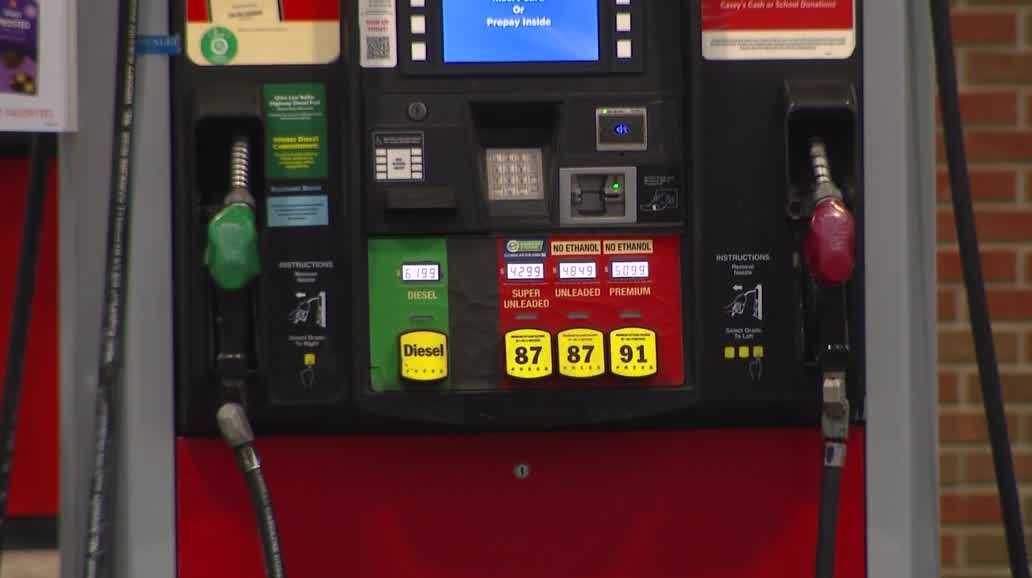
Iowa Republicans are calling for action as high diesel prices put pressure on farmers, truckers and other businesses, but they disagree over whether ending the war with Iran should be part of the response.
U.S. Sen. Chuck Grassley and U.S. Reps. Ashley Hinson, Mariannette Miller-Meeks and Zach Nunn have each proposed steps they say could lower fuel costs or provide relief.
Iowa lawmakers’ proposals
Grassley is asking President Donald Trump to impose a temporary diesel-export ban through executive action.
“Iran’s nuclear threat puts Americans’ lives at risk, and national security is the number one responsibility of the federal government,” Grassley said in a statement. “Through executive action, President Trump can provide immediate relief for Iowa family farmers feeling the squeeze by imposing a temporary diesel export ban.”
Grassley has also compared a possible diesel ban to U.S. restrictions on chip exports to China. In social media posts, he questioned why the president could not restrict diesel exports as previous presidents restricted agricultural exports during periods of high food prices.
Hinson said Iowans “shouldn’t have to foot the bill at the pump or the checkout line for the war in Iran.” Her proposals include suspending the gas tax, pausing diesel exports, expanding E-15, restoring the $1-per-gallon biodiesel tax credit and creating a diesel relief program for farmers and truckers.
She also called for replenishing the Highway Trust Fund so a temporary gas-tax suspension would not worsen funding problems for roads and bridges. Hinson said the war should be brought to a “successful and immediate end.”
Hinson’s Democratic opponent in the U.S. Senate race, state Rep. Josh Turek, released his own plan to lower fuel prices last Wednesday. Turek called for tapping the Strategic Petroleum Reserve, pausing U.S. diesel exports and temporarily suspending the federal gas tax.
Turek criticized Hinson’s proposal Monday, noting that two of her recommendations, pausing diesel exports and suspending the gas tax, were also included in his plan.
“Glad you’re finally following my lead after waffling on the proposals I put forward last week to address the rising costs of the war in Iran,” Turek wrote on social media.
Turek also criticized Hinson for voting against a resolution last week that would have directed President Donald Trump to end U.S. military action against Iran without congressional authorization. “It’s easy to send a tweet but when you had the chance to vote to end this war, you chose not to,” Turek wrote.
Miller-Meeks, who represents Iowa’s 1st congressional district, outlined a six-point plan that includes suspending federal and state fuel taxes, temporarily stopping diesel exports, providing direct relief to farmers and truckers, expanding domestic drilling, allowing year-round E-15 and extending the biodiesel tax credit.
Her plan also calls for ending the open-ended war with Iran. Miller-Meeks described the approach as stopping the immediate financial pressure first, then addressing the causes of higher prices.
Last week, Miller-Meeks was one of seven House Republicans who voted for the resolution that would have directed President Donald Trump to end U.S. military action against Iran without congressional authorization.
After the vote, Miller-Meek’s opponent in the upcoming midterm elections Christina Bohannan responded in a statement to KCCI.
“Rep. Miller-Meeks voted 5 times for the Iran War, continuing it for over six months, as gas, diesel, and fertilizer prices have skyrocketed for Iowans,” said Bohannan. “The fact that it took her until weeks before an election to realize how angry the people she represents are shows just how out of touch she is in her Washington bubble.”
Nunn reposted Grassley’s call for action and said his plan is to “sell American energy to Americans first,” pass an Iowa-led biofuels bill and hold oil companies accountable.
In a separate statement after the House vote on Iran, Nunn said Iran should be held accountable for killing Americans, supporting terrorism, threatening the Strait of Hormuz and pursuing nuclear weapons. He said Congress owes military members “clear objectives and constitutional oversight” and that he would not support another open-ended war.
In an interview with KCCI after the House vote on Iran, Nunn’s opponent in the 3rd congressional district race Sarah Trone Garriott argued Nunn’s latest vote does not erase his previous support for the war.
“He has consistently voted to support this war. And he has spoken in favor of it,” Trone Garriott said. “And every time Iowans have complained about the cost, he has told us that it’s worth it and that we need to grow a spine.”
Iowa Republicans split over war-powers vote
On Sept. 15, the House passed H.Con.Res. 93 by a vote of 220–204. The resolution directed the president, under the War Powers Resolution, to remove U.S. forces from hostilities with Iran unless Congress authorized military action. It preserved the president’s authority to respond to an imminent attack.
Seven Republicans voted for the resolution, including Nunn and Miller-Meeks. Hinson and U.S. Rep. Randy Feenstra voted against it.
The measure did not immediately remove U.S. troops and, as a concurrent resolution, did not go to the president for his signature.
Grassley was not part of the House vote. In June, he voted against a similar Senate war-powers resolution. That measure passed the Senate 50–48.
After the House vote, Grassley said he would continue supporting efforts to prevent Iran from obtaining a nuclear weapon.
Political pressure
University of Iowa political science professor Tim Hagle said lawmakers are hearing directly from constituents about the cost of fuel.
“They’re hearing from their constituents … that these high prices are killing us,” Hagle said.
Hagle said the issue is especially significant in competitive congressional districts, where independent voters could play an important role in the midterm elections. He said Hinson’s opposition to the war-powers resolution may reflect her unwillingness to limit presidential authority while still pressing Trump to reach a resolution.
Fuel industry opposes export ban
The American Fuel and Petrochemical Manufacturers, which represents U.S. refiners, is pushing back against the proposal.
The group said a diesel-export ban could reduce fuel production because refineries produce diesel and gasoline together. It argues that if refiners cannot export or store excess diesel, they could reduce production, tightening supplies and raising prices.
AFPM also warned that an export ban could weaken U.S. energy security, benefit foreign competitors and invite retaliation. The group’s position is that “export bans do not create more fuel for Americans.”
The Trump administration had not announced a diesel-export ban or direct fuel-relief program at the time of publication. Agriculture Secretary Brooke Rollins said the president had discussed diesel relief and that an announcement could be coming soon. Interior Secretary Doug Burgum said the administration would consider proposals but was not convinced an export ban would lower prices.