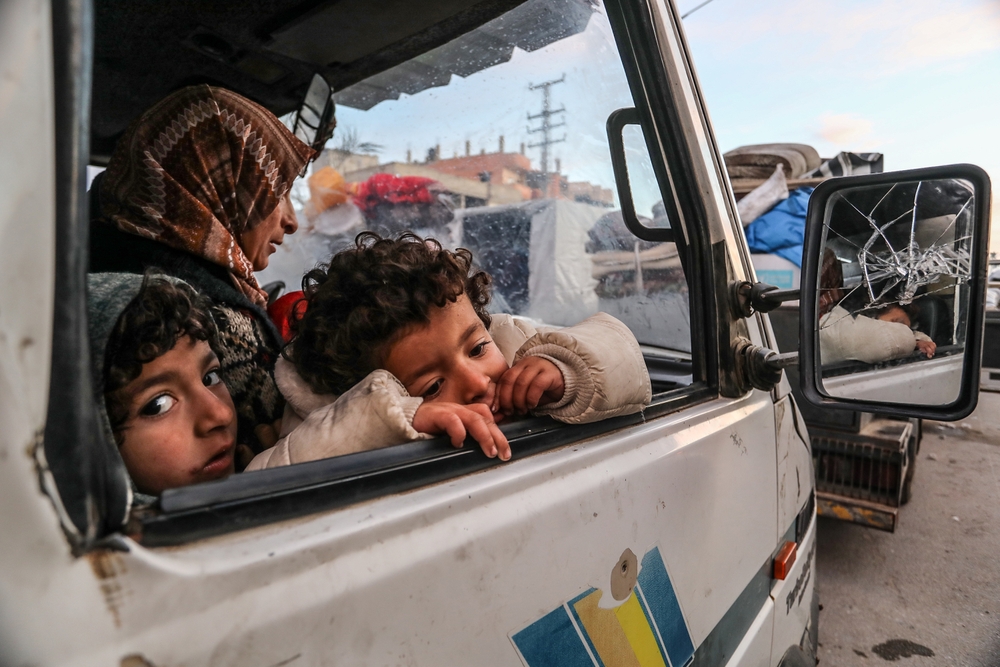
The Rise and Spread of Conflict
Internationalised intrastate conflicts have increased by 175% since 2010. This new era of warfare is defined by overlapping conflict systems, in which localised wars are no longer isolated but instead feed into broader regional instabilities through political, economic, and military factors, as well as refugee flows.
These dynamics are increasingly fuelled by self-financing, illicit economies. The production value of illicit drug economies in five major conflict-affected states more than quadrupled between 2015 and 2024, rising from US$14 billion to US$59 billion.
Sudan’s civil war is the world’s most severe humanitarian crisis, with an estimated 150,000 people killed, over 12 million displaced, and famine confirmed across multiple regions. The country serves as a prime example of how conflict clusters operate, as conflicts in Sudan, Ethiopia, Eritrea, South Sudan, and Somalia are interlocked by refugee flows, proxy sponsorship, and illicit trade. The war in Sudan is partially self-financing through gold. The Rapid Support Forces produced an estimated ten tonnes in 2024 alone, worth approximately US$860 million. With gold prices rising to historic highs, the financial incentive to control mines has skyrocketed, making it unlikely that withdrawing external state sponsorship will stop the fighting.
Iran War and Economic Impact
The war in Iran acts as a massive geopolitical force multiplier, amplifying existing conflict pathways and spreading instability. Beyond the immediate macroeconomic shock, the conflict has fuelled existing proxy networks and cross-border insurgencies, from Iran-backed militias in Iraq to Balochistan separatist groups launching attacks across the Pakistan-Iran border, threatening to pull neighbouring states into a wider regional conflagration.
Economically, the impact will be substantial and unevenly distributed. While the first-year global GDP loss is estimated at 0.6%, the worst impact falls on a narrow group of fragile, import-dependent economies. There is a looming crisis in global food production, with disrupted supply chains impacting future yields across South Asia and East Africa. Harvest shortfalls and food inflation will hit severely in late 2026 and 2027.
Highly fragile nations like Pakistan, Egypt, and Kenya face a combined US$5.1 billion in debt rollovers in late 2026 amid disrupted trade routes and strict IMF programme reviews. The difference between a prolonged stalemate and the resumption of war is stark. Successful diplomacy that prevents this would be worth approximately US$2.2 trillion to the global economy.
Regional Highlights
Europe remains the most peaceful region, home to seven of the ten most peaceful countries. However, its long-term trend of demilitarisation has reversed sharply since 2022. The Middle East and North Africa remain the least peaceful region, home to four of the bottom ten countries.
South Asia had the largest regional deterioration in peacefulness, with Nepal falling 26 places, the steepest drop globally, and Pakistan falling to 152nd.
North and Central America’s peacefulness deteriorated, driven by the fall in the US.
— Download the Global Peace Index 2026 Press Release
— Request a Media Interview
— View the Global Peace Index 2026 interactive map