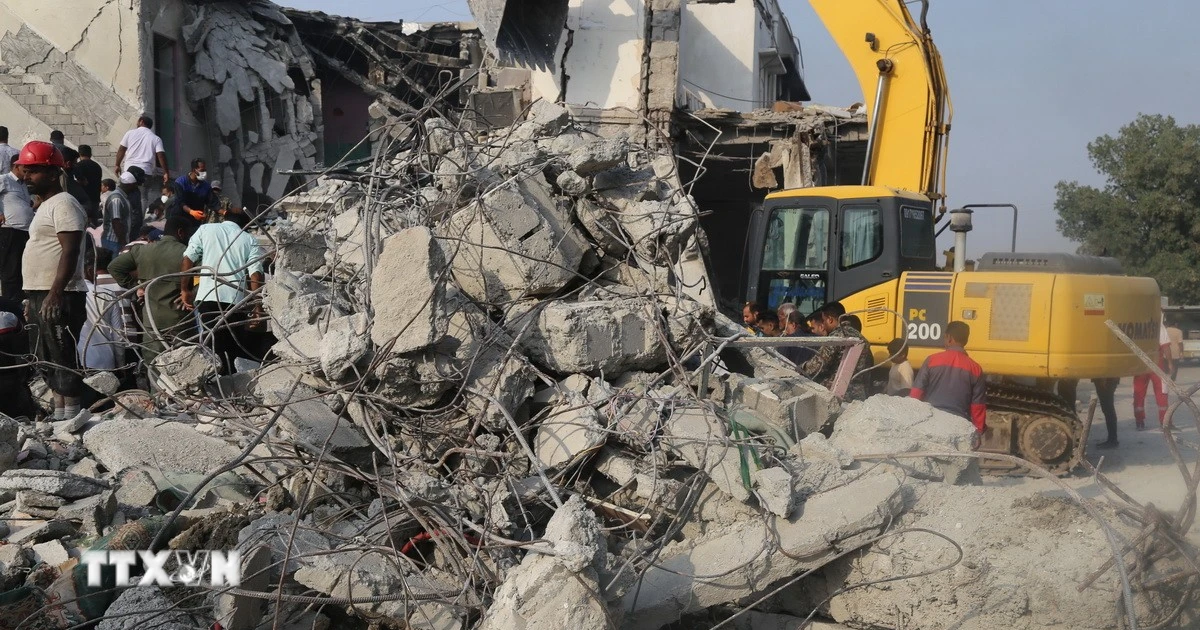
Tensions between Iran and the US and Israel continue to escalate after Iranian media reported multiple explosions in the southern coastal region of Sirik.
The incident occurred amid reports that the US and Israel were developing plans to conduct new airstrikes against Tehran.
According to Iranian media outlets Mehr, Fars, and IRNA, multiple explosions were heard in the coastal area of Sirik, in Hormozgan province, near the Strait of Hormuz, on the evening of October 21.
The cause of the incident has not yet been determined. Iranian officials have not issued an official statement, and there is no confirmed information regarding casualties or damage.
According to the Vietnam News Agency correspondent in Tel Aviv, this development occurred amidst reports in Israeli media that dozens of Israeli fighter jets and refueling aircraft flew through Syrian and Iraqi airspace, heading towards the Iranian border in a military operation earlier this week.
According to Israel’s Channel 12, the planes followed a similar route to an airstrike on Iran but turned around before entering Israeli airspace.
Some US sources said Israel had notified Washington in advance about the activity, explaining it as a military exercise.
Meanwhile, the New York Times reported on October 21, citing US officials and sources familiar with the matter, that the US and Israel have developed plans for a short but high-intensity military operation against Iran, potentially lasting about three days. Targets being considered include Iran’s nuclear facilities, energy infrastructure, missile stockpiles, and unmanned aerial vehicle (UAV) capabilities.
According to these sources, US War Secretary Pete Hegseth discussed these options with Israeli Prime Minister Benjamin Netanyahu during his visit to Israel this week.
However, US President Donald Trump has not yet approved the new military operation. The US and Israel came close to launching an attack in early October, but the plan was postponed at the last minute.
On the Iranian side, officials warned that any new attack could lead to a widespread response, including the possibility of targeting data centers and undersea communications cables.
Meanwhile, diplomatic efforts between Washington and Tehran continue, despite remaining disagreements. The US wants Iran to make progress on the nuclear issue, while Tehran prioritizes ending hostilities, lifting sanctions, and promoting the resumption of operations in the Strait of Hormuz.
Also on October 21st, the UK and Oman stressed the need to restore operations on this strategic shipping route. According to the UK government , Prime Minister Andy Burnham and the Sultan of Oman, Haitham bin Tariq, agreed that reopening this strategic sea route would ease pressure on global supply chains and limit the impact on the population.
Before the conflict erupted, approximately 20.3 million barrels of oil and crude oil were transported through the Strait of Hormuz daily, equivalent to about 25% of the world’s seaborne oil trade. Therefore, any prolonged disruption to this shipping lane could significantly impact the global energy market and economy.