
The claim that Turkey is preparing to withdraw from NATO is not supported by any official declaration or notification under Article 13 of the North Atlantic Treaty.
Abstract
Relations between Ankara and its allies nevertheless remain marked by substantive contradictions: Russia’s S-400 systems and the F-35 programme deadlock; disputes in the Aegean and Cyprus; differences over Syria and Israel; a functional but competitive relationship with Moscow; and concerns about civil liberties in Turkey. NATO itself demonstrated in March 2026 that it could provide military protection for Turkish airspace, while the Ankara summit in July 2026 and the new Canada–Turkey partnership of October 2026 confirm the incentives for continued cooperation. The central hypothesis of this dossier is that Turkey is not leaving the Alliance but continuously bargaining over the scope of its strategic autonomy. The most immediate risk is not formal withdrawal; it is the gradual erosion of political interoperability and predictability among allies. [S01][S02][S17]
Methodological Note
This dossier draws on open-source intelligence (OSINT) selected according to a hierarchy of reliability: NATO and other official treaty, governmental and parliamentary documents; EU and US trade statistics; reports by research institutes and human rights organisations; and reporting from news agencies that clearly attributes statements to their sources. Observed evidence is separated from interpretation and counterfactual scenarios. Real photographs serve documentary or illustrative purposes and identify their source, date, evidentiary value, limitations and confidence level. The infographics are original visualisations based on verified figures; they are not photographs or evidence of events on the ground.
The research cut-off date is 26 October 2026. Trade figures refer to 2025, the latest full year used for comparison. Euro and US dollar values are not added together, and goods and services aggregates are kept distinct. Operational developments in Syria, confidential diplomatic contacts and the precise deployment status of S-400 systems cannot be fully verified from open sources; uncertainties are identified where relevant. Bibliographical references are collected at the end rather than linked in the body.
Introduction
The Right Question: Withdrawal from NATO or a Redefinition of Membership?
On 8 July 2026, Turkey’s ambassador to Syria, Nuh Yılmaz, raised questions about NATO’s future and called on Western partners to do more to restrain Israeli actions in Syria. Taking a rhetorical question out of context and presenting it as an announcement of withdrawal produces a claim with no documentary basis. Neither an official government decision nor a notice of withdrawal has been established. This is more than a semantic distinction: Article 13 sets out a specific legal pathway, separate from an individual statement or political disagreement. [S06][S18]
Conversely, the Ankara Declaration adopted at the NATO summit on 7–8 July 2026 reaffirmed all members’ commitment, including Turkey’s, to collective defence under Article 5. The Alliance announced more than US$50 billion in new acquisitions and measures to strengthen its industrial base. Frictions with Ankara are real and consequential, but they coexist with active institutional cooperation. [S01]
The Economic Relationship: Ankara Is Not Isolated from the West
Turkey is so closely integrated into the European economy that it is misleading to describe it as simply switching from one strategic bloc to another. The EU–Turkey customs union, in place since the mid-1990s for a broad range of industrial goods, has supported deeply connected automotive, machinery and electrical manufacturing networks. In 2025, bilateral EU–Turkey trade in goods exceeded €217 billion: EU exports to Turkey amounted to approximately €114.3 billion and EU imports from Turkey to approximately €103.3 billion. The EU accounted for more than 36% of Turkey’s trade in goods, while Turkey was the Union’s fifth-largest trading partner. [S04][S22][S23]
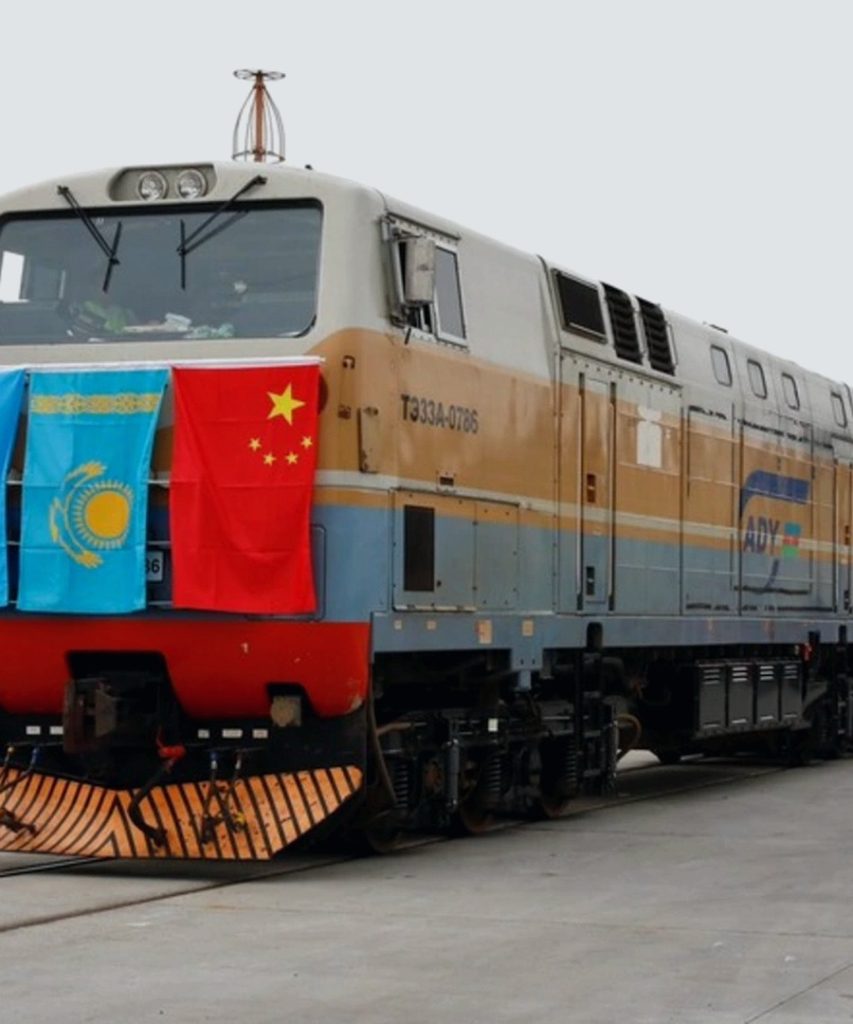 OSINT P05 | Freight train in the Trans-Caspian logistics network. Source: Azerbaijan Railways CJSC, 2024; photograph reproduced from the 2026 IARI dossier on the Organization of Turkic States. It illustrates the physical infrastructure of Eurasian connectivity; it does not quantify EU–Turkey trade. Confidence: medium-high.
The American economic relationship is also material, though different in scale and structure. In 2025, US–Turkey trade in goods reached US$36.8 billion, comprising US$20.4 billion in US exports and US$16.4 billion in imports from Turkey. Including services, estimated total bilateral trade reached approximately US$48.9 billion. A direct comparison of dollar-denominated US figures with euro-denominated EU figures, without currency conversion or consistent statistical categories, would be methodologically unsound. [S05]
Economic interdependence does not eliminate geopolitical autonomy. For Ankara, the ability to sell into European markets, acquire Western technology and components, and maintain energy links with Russia broadens its bargaining options. Those same connections create constraints: standards, capital, export markets and certain strategic technologies remain closely tied to the Euro-Atlantic system. The European Commission reported that the EU accounted for 55% of foreign direct investment inflows to Turkey in 2024. [S19]
 Original IARI infographic. Figures: Council of the European Union and USTR, 2025 trade statistics. The currencies and statistical aggregates must not be directly equated.
Corpus
The Military Dispute: S-400, F-35 and Technological Trust
Turkey received Russian S-400 air-defence systems in 2019. Washington removed Ankara from the F-35 programme and imposed CAATSA sanctions on Turkey’s principal defence procurement agency in 2020. Ankara frames the acquisition as an exercise of sovereign choice and points to prolonged difficulties in negotiations to buy Western air-defence systems. The United States argues that Russian-origin equipment could jeopardise information about the F-35’s characteristics and the security of a technologically sensitive multinational aircraft programme. Evidence that such data have already been transmitted is not required to understand the risk underpinning Washington’s decision. [S02][S03]
The legal dimension is frequently overlooked. US legislation links any waiver of the prohibition on F-35 transfers to Turkey no longer possessing S-400 systems, along with additional certifications. Simply placing the equipment in storage does not clearly satisfy that requirement. As of July 2026, Congress retained tools to constrain any deal and associated sanctions relief. A possible transfer to a third country, or an alternative custody arrangement, remains hypothetical and could require legal and security assessments and, potentially, Russian consent. [S02][S03]
At a minimum, Turkey is seeking delivery of six F-35 aircraft originally built for its programme and, more broadly, a route back into the supply chain. Defence Minister Yaşar Güler confirmed on 15 October 2026 that negotiations with Washington were continuing. Expressions of openness by the White House do not, however, automatically amend legislation enacted by Congress. [S20]
Domestic Defence Industry: Genuine but Incomplete Autonomy
The expansion of Turkey’s defence industry is a structural response to uncertainty in its relationships with Western partners. Exports of drones and defence systems strengthen Ankara’s links with third countries and increase its negotiating leverage. The KAAN fighter aircraft reflects the ambition to secure greater independence in advanced platforms. Industrial development does not remove all remaining dependencies, particularly in components, engines, electronics and certification. Turkey is therefore both a potential supplier to NATO allies and a competitor—and at times a difficult counterpart—in defence procurement policy. [S02]
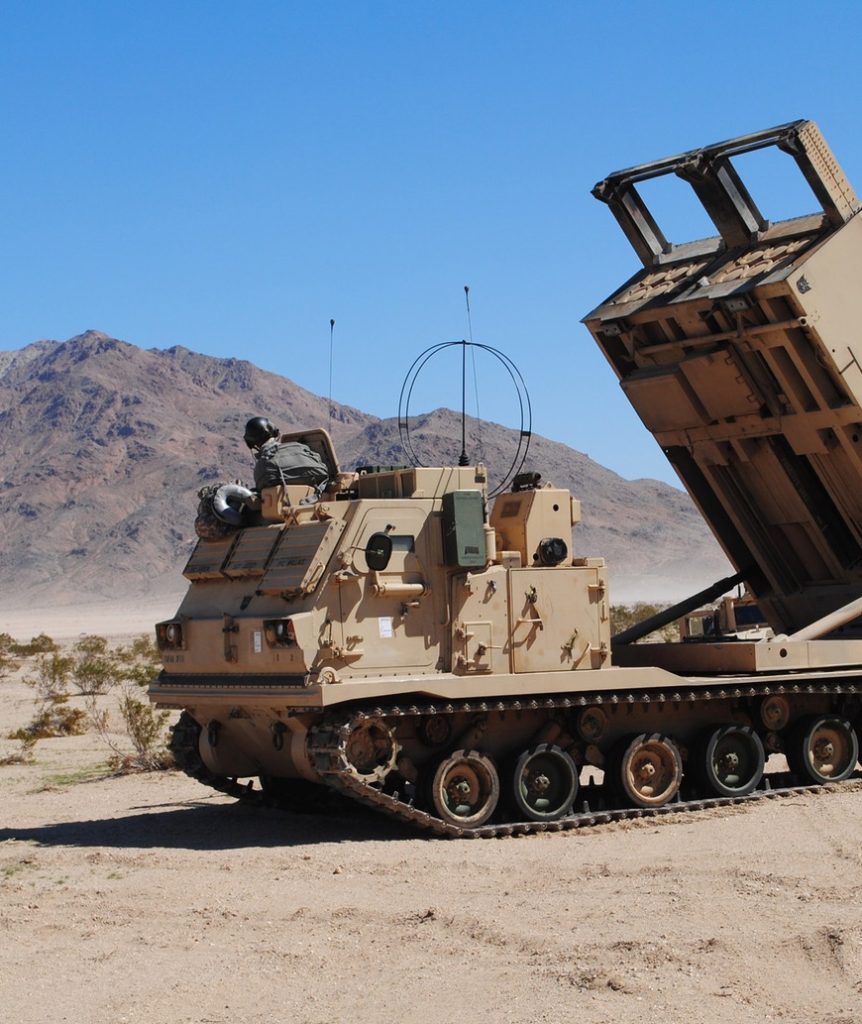 OSINT P06 | M270 multiple-launch rocket system during training. Source: US Army, 2015; photographic crop from an earlier IARI editorial composite. It illustrates a US-origin weapons platform discussed in the context of potential Turkish arms transfers. It does not establish any 2026 deliveries and is not an S-400 system. Confidence: high for platform identification.
Greece and Cyprus: Disputed Sovereignty Within a Shared Security Architecture
Greek–Turkish rivalry predates the current government and involves conflicting interpretations of airspace, territorial waters, the maritime entitlements of islands and Aegean security arrangements. Greece maintains that it has the right under the law of the sea to extend territorial waters to 12 nautical miles; Ankara considers a unilateral extension in the Aegean a strategic threat and continues to invoke the precedent of the Turkish parliament’s 1995 casus belli resolution. The existence of a dispute does not mean that every incident constitutes an established violation. Sovereign airspace, flight information regions and maritime claims must be distinguished from one another. [S02]
The incident involving flights carrying European ministers to Cyprus on 7 June 2026 illustrates the problem of conflicting narratives. Greek and Cypriot sources reported interference and activity by Turkish fighter jets. Ankara confirmed that two F-16s had taken off but denied harassing the aircraft or entering airspace recognised as belonging to the Republic of Cyprus. The competing accounts cannot be settled using only statements by the parties. A rigorous OSINT reconstruction would require verifiable radar tracks, radio recordings and aviation records, which are not available for this dossier. [S12][S13]
Cyprus is a structural obstacle to NATO–EU cooperation. The island’s north is controlled by a Turkish Cypriot entity recognised only by Ankara, whereas the Republic of Cyprus is an internationally recognised EU member state. For Athens and Nicosia, Turkish pressure may threaten sovereignty; for Turkey, protecting the Turkish Cypriot community is a fundamental security interest. An appeal to Atlantic unity alone cannot resolve this divergence.
Israel and Syria: Western Partners with Divergent Threat Perceptions
After Bashar al-Assad’s fall in December 2024, Turkey sought to expand its influence in Damascus, support institutional reconstruction and contain Kurdish armed structures that Ankara considers linked to the PKK. Israel, concerned about a permanent Turkish military presence and the prospect of losing freedom of action in Syria, has developed a markedly different threat assessment. Western convergence on the general objective of Syrian stability does not imply agreement about the means of achieving it.
According to Reuters and Syrian sources, Israel struck the Abu al-Duhur airbase on 18 August 2026. Israel said it had warned Damascus against a possible Turkish presence, while the Syrian foreign minister subsequently denied plans for a permanent Turkish base, distinguishing visits and training from a standing deployment. The episode illustrates the seriousness of the rivalry, but it does not establish that construction of a Turkish garrison was already under way. [S14][S15]
Turkey’s request for greater political support for its concerns in Syria may be understandable without becoming an automatic obligation for the Alliance. NATO is a collective-defence system, not an instrument for approving every regional decision of its member states. Equally, an ally’s opposition to certain Turkish choices does not, by itself, demonstrate systematic hostility towards Turkey.
Articles 4 and 5: The Myth of a Two-Tier Alliance
Article 4 provides for consultations when a member believes its territorial integrity, political independence or security is threatened. Article 5 concerns collective defence following an armed attack under the conditions set out in the Treaty. Article 5 has formally been invoked only once, after the attacks of 11 September 2001. This does not mean, however, that Allied defensive assets may operate only after Article 5 has been invoked. [S18][S24]
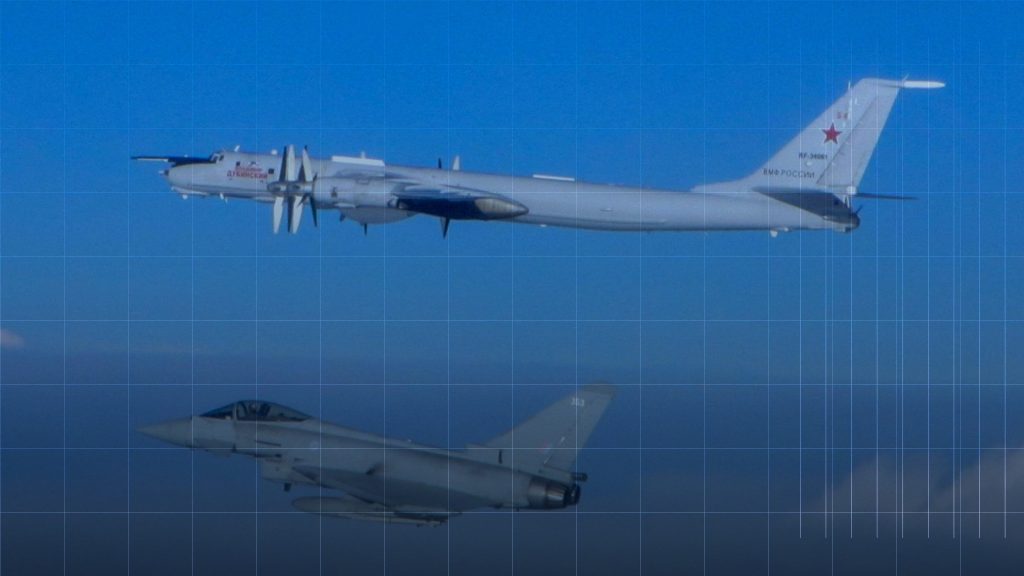 OSINT P04 | Royal Air Force Typhoon intercepting a Russian Tu-142 aircraft, 11 March 2020. Source: Royal Air Force / Crown Copyright; colour adjustments by IARI. Illustrative photograph of Allied air policing, not Turkish fighter jets or a 2026 incident. Confidence: high.
In March 2026, NATO assets in the eastern Mediterranean intercepted multiple missiles heading towards Turkey, providing direct evidence of military protection available to Ankara. Statements from the Turkish Ministry of National Defence document incidents on at least 4, 9, 13 and 30 March, and NATO reaffirmed its solidarity and ability to defend Allied populations on 5 March. These actions do not mean that NATO endorses every Turkish operation beyond its borders. [S07][S08][S09][S10][S11]
Turkey’s perception that Allied solidarity is applied selectively can therefore coexist with concrete acts of Allied military assistance. The critical distinction is between defending a member’s territory, providing preventive military cooperation and giving political support to regional operations. An impartial assessment should evaluate these three dimensions separately rather than treating them as interchangeable.
Russia and the Black Sea: Turkish Autonomy as Balancing, Not Automatic Alignment
Relations with Moscow combine energy cooperation, trade and diplomatic channels with longstanding competition across the former Soviet space and the Middle East. Following Russia’s invasion of Ukraine in February 2022, Ankara supported Ukrainian capabilities, maintained a mediation role and applied the Montreux Convention regime to military passage through the Straits. These restrictions limit naval options, including Russia’s, while also constraining the access available to Western partners. [S02]
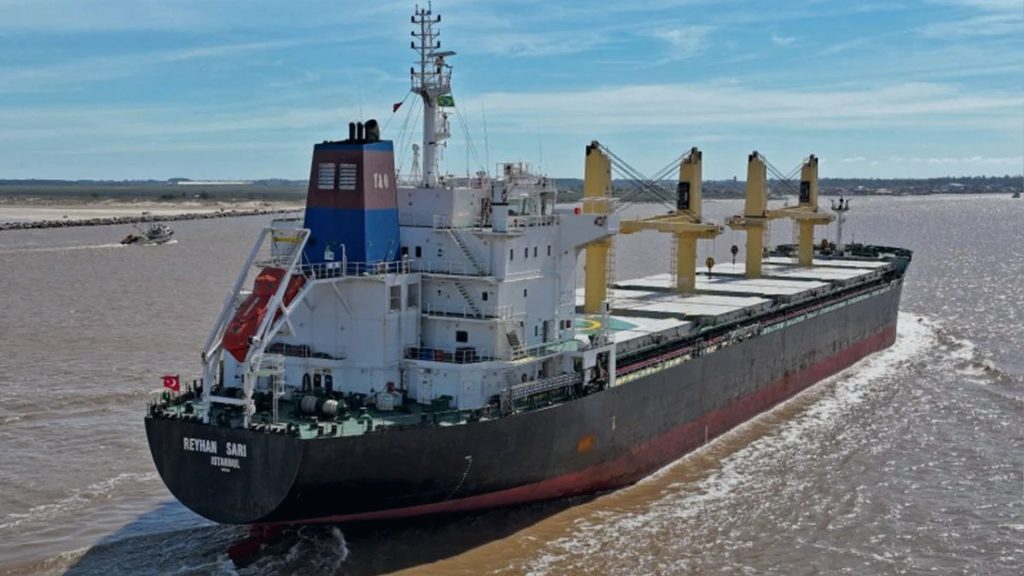 OSINT P03 | MV Reyhan Sarı, a Turkish merchant ship relevant to commercial navigation security in the Black Sea, July 2026. Source: TRHaber, reproduced in IARI documentation in August 2026. The photograph illustrates the exposure of Turkish merchant shipping; it does not attribute responsibility for any attack and does not depict the Bosporus. Confidence: medium-high.
Ankara’s behaviour cannot be reduced to subordination to Moscow. Balancing is the more appropriate concept: Turkey seeks to maximise its room for manoeuvre in response to the circumstances of each theatre and its own economic vulnerabilities. This approach comes at the cost of reduced predictability for allies, especially when technological security and defence acquisitions involve Russian equipment.
The Ankara Summit: Tangible Outcomes and Tensions over Values
The July 2026 summit recognised Turkey’s role within NATO, setting objectives for greater defence acquisitions and industrial capacity, technological development and modernisation. It should not be dismissed as mere diplomatic theatre. At the same time, Human Rights Watch reported arrests and restrictions on freedoms ahead of the summit. On 26 June, Ankara’s prosecutor’s office stated that 178 of the 225 people detained on 23 June had been remanded in custody. These figures require accurate attribution, distinguishing numbers reported by the authorities from any judgment about the legality of the measures. [S01][S16]
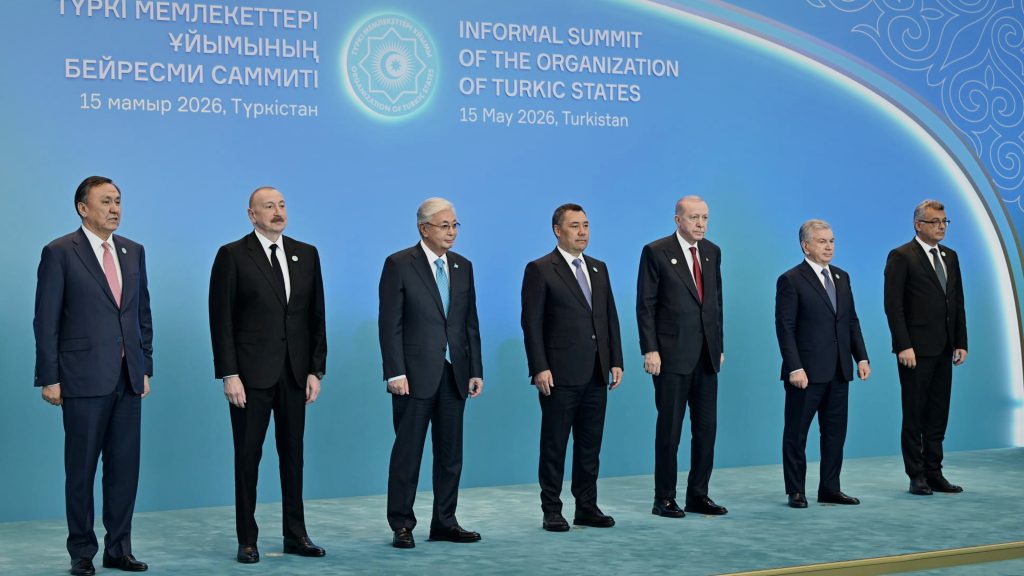 OSINT P02 | Leaders attending the informal Organization of Turkic States summit in Turkistan, 15 May 2026. Source: Organization of Turkic States, official photograph reproduced in an earlier IARI dossier. It documents Turkic multilateral diplomacy; it is not an image of the NATO summit in Ankara. Confidence: high for the event and context.
NATO reiterates its democratic identity but is also an intergovernmental alliance whose cohesion rests on shared security interests. Partners can cooperate with Ankara on deterrence while criticising its domestic human rights record, without either dimension cancelling the other. A recent example is the Canada–Turkey strategic partnership announced on 22 October 2026, which strengthens consultations, trade and cooperation on defence and energy. [S17]
Ankara’s Negotiating Leverage and the Limits of Consensus
NATO ordinarily makes decisions by consensus. This gives every member, including Turkey, the capacity to influence decision-making, as demonstrated during Finland’s and Sweden’s accession processes. Turkey demanded assurances on its national security; some allies interpreted that stance as using consensus rules to secure concessions on bilateral matters. Without a supranational authority, compromise remains indispensable. The proposition that NATO must “control” Ankara is misleading: member states do not generally surrender sovereignty over foreign policy, although they do accept common commitments.
Speculative Hypothesis
Negotiated Autonomy as a Permanent Model of NATO Membership
The working hypothesis is that Turkey is trying to turn multiple disputes into a durable bargaining relationship: remaining in NATO while expanding national defence production, differentiating its relations with Russia and regional partners, and negotiating over procurement, technology transfers and operational priorities. This model does not necessarily imply withdrawal from the Alliance or require Turkey to become an adversary of the West. It does require other members to accept greater strategic diversity and Ankara to recognise that its decisions can impose verifiable costs on partners.
The alternative thesis—that Ankara is preparing to withdraw, perhaps to join an anti-Western bloc—is not supported by comparable evidence as of 26 October 2026. Nor does the Treaty provide a straightforward mechanism for punitive expulsion. The Turkish case is more realistically a problem of Alliance governance. Its sources of friction therefore extend beyond a moral judgment about a state’s reliability and encompass the compatibility of threat perceptions, weapons systems, legal rules and economic incentives.
 Original IARI infographic. Conceptual framework based on 2026 Congressional Research Service reporting, not on operational intelligence.
So What
Best-Case Scenario: Pragmatic Rapprochement
A verifiable agreement on the fate of the S-400 systems, accompanied by a legal pathway for addressing restrictions on the F-35 programme, could put technological cooperation and operational trust on a more stable footing. Naval and air de-escalation mechanisms with Greece, Turkish–Israeli communication channels over Syria and improved NATO–EU coordination would complete the picture. This scenario would strengthen industrial and security prospects without eliminating Turkish autonomy.
Continuity Scenario: A Variable-Geometry Alliance
The outcome most consistent with the available evidence is selective coexistence. Ankara continues participating in collective deterrence, concludes agreements with individual allies and bargains over unresolved disputes. Industrial programmes advance more rapidly than political reconciliation. Disagreements with Greece and Cyprus are managed rather than settled, while cooperation with Moscow varies by sector. This model may persist, but it creates transaction costs, delays and vulnerability to sudden crises.
Worst-Case Scenario: Paralysis and Incidents Between Allies
A serious incident in the Aegean or eastern Mediterranean, an escalation in Syria or a sharp deterioration in US–Turkey relations could undermine cooperation on intelligence, technology and defence planning. The most immediate risk would not necessarily be a formal withdrawal notice. It would be a combination of blocked decisions, restrictions on capability transfers and lower levels of trust during crises. Such an outcome would reduce the collective security of all parties.
Implications for Italy: The Mediterranean, Industry and NATO Credibility
For Italy, the stability of relations with Ankara has consequences for Mediterranean security, maritime routes, crisis management in Libya and Syria, the aerospace industry and coordination with Greece and Cyprus. Rome has an interest in preventing Turkey from drifting into strategic isolation, but cannot dismiss the sovereignty concerns of its EU partners. Italy’s preferred outcome is an integrated and predictable Turkey, supported by regional mediation tools and technical deconfliction arrangements.
Recommended Strategy: Verifiable Reciprocity
For NATO, the most resilient approach is to separate the issues and apply transparent criteria. Sensitive procurement must comply with verifiable technological-security requirements; collective defence must remain credible for every member; and disputes among allies must be contained through dedicated military communications and incident-management procedures. Ankara can strengthen strategic autonomy by demonstrating contractual credibility and clear accountability. For European allies, industrial cooperation need not mean ignoring democratic concerns, but neither should those concerns become a pretext for abandoning dialogue on shared security.
Conclusions
Turkey has not announced a withdrawal from NATO. It is seeking greater capacity to negotiate its role within the Alliance. Its geographic position, armed forces, domestic defence industry and economy linked to Western markets support that ambition. It is nevertheless constrained by technological dependencies and the requirement not to compromise the security of its partners. NATO faces a corresponding responsibility: accommodate legitimate differences without allowing them to turn into operational vulnerabilities.
Asked whether Ankara is an unreliable ally or an ally demanding respect, the evidence-based answer is that Turkey’s behaviour combines legitimate ambitions for autonomy with decisions that can undermine confidence. A member’s independence is not automatically disloyalty; nor does sovereignty justify every arms purchase or threat against another ally. The decisive issue is where national policy remains compatible with collective security.
Variables to Monitor: Short, Medium and Long Term
In the short term—over the next three to six months—the key indicators are official statements on possession or potential transfer of the S-400 systems, White House and congressional steps concerning F-35s, documented incidents in the Mediterranean and implementation of the cooperation announced at the Ankara summit. Over the medium term—six to eighteen months—developments to watch include progress on the KAAN programme, NATO industrial investment, the Canada–Turkey relationship and the character of any Turkish military presence in Syria. Over the longer term—eighteen to thirty-six months—the core question is whether Turkey can increase its autonomy without losing interoperability, and whether the Alliance can establish a durable compromise between national sovereignty and military information security.
Operational conclusion: based on the available sources, the narrative of imminent formal withdrawal is unsupported; Turkey’s continuous renegotiation of its position is, by contrast, an observable political reality. The strategic challenge is not to “control” Ankara, but to turn disagreement into rules and guarantees compatible with collective defence.