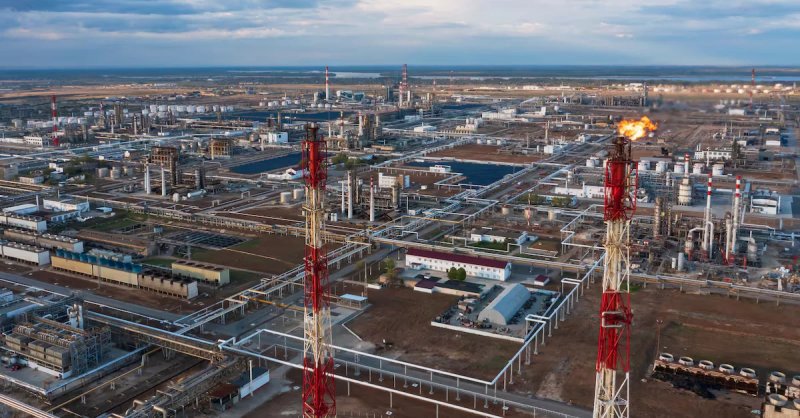
Russian oil refineries increased crude processing by approximately 25% in the second half of October after a series of Ukrainian drone attacks on the country’s energy facilities came to a halt following US-led diplomatic efforts.
Refineries raised processing volumes to around 5 million barrels per day (bpd), compared with levels recorded at the beginning of the month, Reuters reports, citing three industry sources familiar with the situation.
Russian oil refineries had faced repeated Ukrainian drone strikes since mid-March, with attacks occurring almost weekly and causing significant disruptions to fuel production.
The damage contributed to domestic fuel shortages, prompting Russian authorities to impose export restrictions on gasoline, jet fuel and diesel. Moscow also began importing petroleum products by sea to stabilize domestic supplies.
The attacks subsequently declined following Washington’s efforts to revive peace negotiations between Russia and Ukraine and secure an agreement allowing Russian diesel supplies to reach the United States.
On October 11, US President Donald Trump announced what he described as an “energy ceasefire” between Moscow and Kyiv, days after the diesel supply agreement was reached.
Although attacks on energy infrastructure continued on both sides following the announcement, Russian authorities reported that the last strikes against refineries occurred in Ryazan and Surgut in mid-October.
According to the Russian authorities, no further refinery attacks were recorded after October 16.
Russia’s Deputy Prime Minister Alexander Novak said on Tuesday that domestic refineries were rapidly restoring operations at damaged processing units.
He attributed the relatively swift recovery to Russia’s ability to manufacture almost all the oil and gas equipment required for refinery repairs domestically.
Three industry sources, speaking on condition of anonymity, estimated that crude processing had recovered to approximately 5 million barrels per day in the second half of October, representing an increase of roughly 25% from early-month levels.
The recovery followed months of disruptions that had affected Russian fuel production and forced authorities to introduce emergency measures to protect domestic supplies.
The increase in refinery activity comes as Moscow and Washington pursue arrangements for Russian diesel exports, while broader diplomatic efforts continue to address the conflict between Russia and Ukraine.