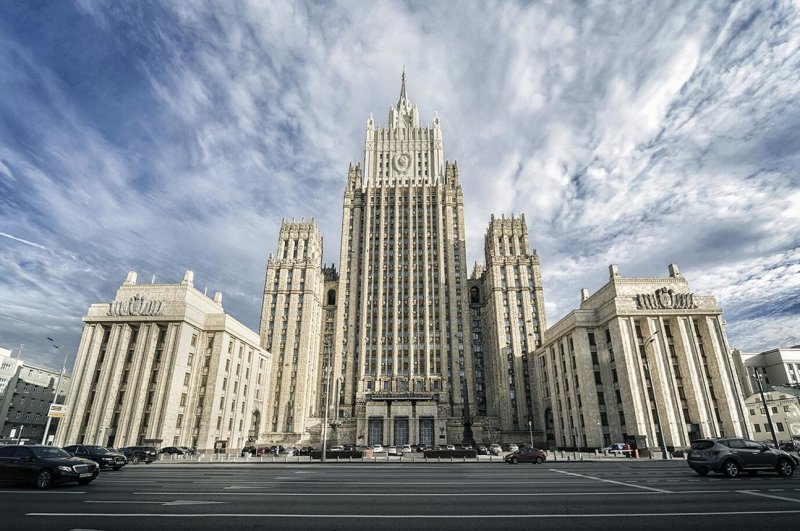
Russia has imposed entry bans on seven senior executives from British defense companies, accusing them of supporting military technologies supplied to Ukraine for operations against Russian targets.
The Russian Foreign Ministry said the individuals were associated with companies involved in providing weapons, military equipment and technologies that Moscow alleges have been used in Ukrainian strikes deep inside Russian territory.
The sanctions affect executives from Rotron Aerospace, Malloy Aeronautics, MGI Engineering, Tekever UK and BAE Systems. Moscow characterized the decision as a response to Britain’s policies toward Russia and warned that further names could be added to its entry ban list. The announcement comes amid continuing disagreements over Western military support for Ukraine.
What prompted Russia to impose entry bans on British defense executives?
Russia introduced the restrictions in response to what its Foreign Ministry described as Britain’s hostile policies and continued military assistance to Ukraine.
Moscow accused British defense companies of contributing weapons and technologies that enable Ukrainian forces to conduct attacks against targets inside Russia.
The ministry specifically raised concerns about missile systems, unmanned aircraft and other military equipment associated with long-range operations.
Russian officials argue that Western military assistance has expanded Ukraine’s operational capabilities and intensified the conflict.
The entry bans form part of Moscow’s broader use of diplomatic and administrative restrictions against individuals associated with governments and industries supporting Kyiv.
However, the Russian statement did not independently establish that every individual named had personally participated in planning or conducting military operations.
Britain maintains that its assistance is intended to help Ukraine defend itself against Russia’s invasion, which began in February 2022.
The opposing positions illustrate the continuing disagreement over the legitimacy and consequences of Western weapons deliveries.
Who are the seven British defense industry figures targeted by Moscow?
The Russian restrictions target seven executives and senior representatives associated with five British defense companies.
Three individuals are connected to Rotron Aerospace: chief executive Alex Edward Head, chief military adviser Kev Oliver and chairman George Zambellas.
The company is involved in advanced aerospace technologies and has been identified by Moscow as participating in the development of the Brakestop long-range missile project.
Another individual is Robert Michael Gascoyne, chief executive of MGI Engineering, which Russia also linked to the Brakestop program.
Neil Appleton, executive director of drone manufacturer Malloy Aeronautics, was included in the restrictions.
The list also names Paul Webb, director and co-founder of Tekever UK, a company associated with unmanned aerial surveillance systems.
Julian Frederick Charles Cracknell, chief technology and information officer at BAE Systems, completes the list.
The restrictions prohibit these individuals from entering Russia.
They do not, by themselves, establish criminal liability or prevent the executives from continuing their professional activities outside Russian jurisdiction.
Why is Britain’s defense industry important to Ukraine’s military capabilities?
Britain’s defense industry contributes to Ukraine’s military capabilities through weapons production, aerospace technology, reconnaissance equipment and support for military systems.
Since Russia launched its full-scale invasion in 2022, the United Kingdom has provided military assistance intended to strengthen Ukraine’s ability to defend its territory.
This support has included missile systems, armored vehicles, air defense equipment, training and other military capabilities.
British defense companies also possess expertise in unmanned aircraft, electronic systems and precision-guided technologies.
Such capabilities have become increasingly important as the conflict has evolved toward extensive use of drones, long-range weapons and sophisticated reconnaissance systems.
Unmanned aircraft can support battlefield surveillance, improve situational awareness and perform tasks that would otherwise expose personnel to additional risks.
Long-range weapons can expand the geographical reach of military operations, making their supply particularly controversial between Russia and Western governments.
Moscow views these capabilities as threats to its security.
London argues that supporting Ukraine’s defense is consistent with its international security commitments and Ukraine’s right to self-defense.
How could Russia’s restrictions affect UK defense companies and bilateral relations?
The immediate practical effect of the restrictions is to prevent the seven named individuals from traveling to Russia.
The measures do not automatically prohibit their companies from operating in Britain or supplying equipment to Ukraine.
However, the announcement carries diplomatic significance because it specifically targets senior figures in the British defense industry.
By identifying individuals associated with military technology production, Moscow is signaling that it considers defense companies and their leadership part of the wider confrontation over Ukraine.
The restrictions could contribute to further deterioration in relations between London and Moscow, which have already been strained by sanctions, diplomatic disputes and the ongoing war.
Britain has imposed extensive economic restrictions on Russian entities, while Russia has introduced its own retaliatory measures.
Such actions can reduce opportunities for diplomatic engagement and reinforce political disagreements.
For the affected businesses, the principal consequences may involve reputational attention, compliance considerations and additional scrutiny of international activities.
There was no confirmed indication that the entry bans would directly interrupt existing British military assistance to Ukraine.
Could Moscow expand its sanctions against Britain as the Ukraine war continues?
Russia has explicitly warned that it may expand its entry ban list in response to further actions by the British government.
The Foreign Ministry said it would continue identifying individuals associated with policies and activities Moscow considers hostile.
Additional restrictions could potentially target other defense industry representatives, government officials or individuals involved in military cooperation with Ukraine.
However, the ministry did not announce specific future targets or provide a timetable for additional measures.
The next developments will partly depend on Britain’s military assistance decisions and the broader course of the Russia-Ukraine conflict.
London’s continuing support for Ukrainian defense capabilities could remain a source of disagreement, particularly where long-range weapons and advanced drone systems are concerned.
At the same time, personal entry bans are distinct from broader economic sanctions and do not necessarily produce significant operational changes.
Diplomatic developments could influence whether the restrictions expand or remain limited.
For now, the seven executives are barred from entering Russia, while Moscow has left open the possibility of further measures against British defense-related individuals.