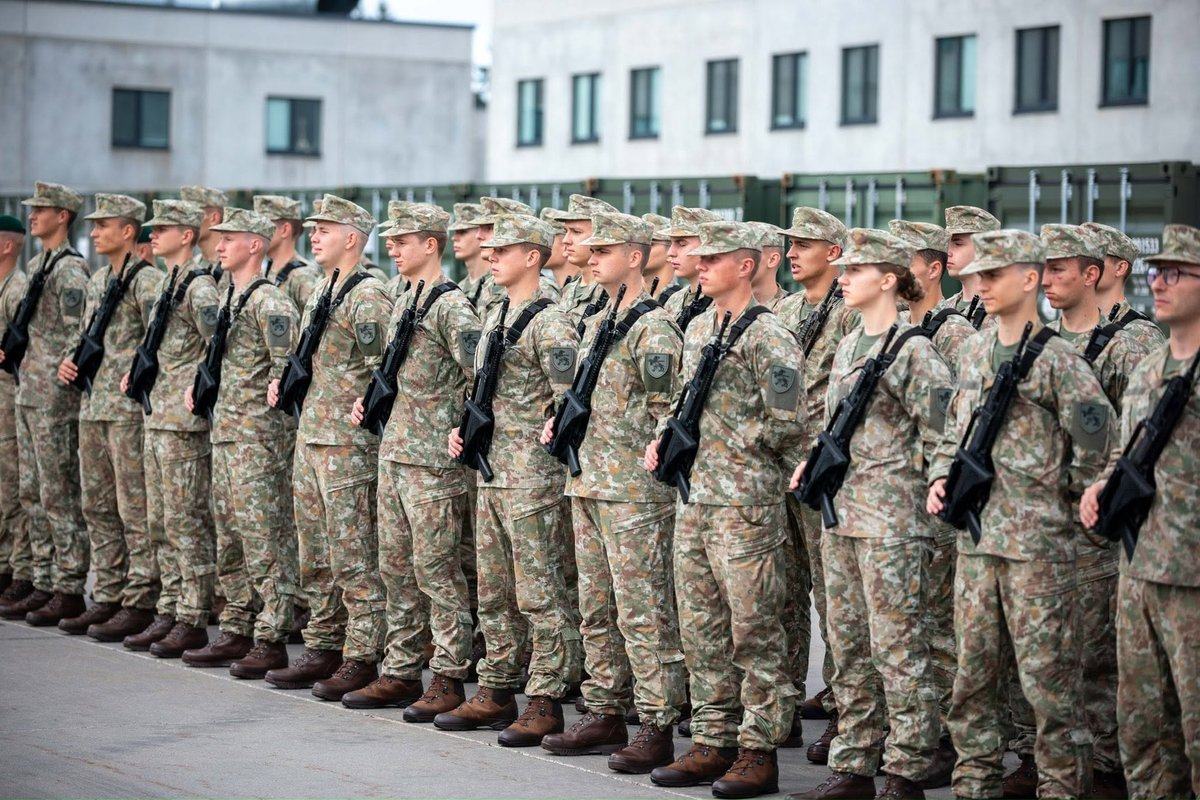
“When we talk about universal conscription, we are, of course, talking about conscription for young men. The principle of voluntary service will be maintained. In other words, women who wish to serve will, of course, also be invited to do so,” Nausėda said at the Presidential Palace on Thursday.
The president said the decision had been made after a comprehensive assessment of the Lithuanian Armed Forces’ current capabilities.
“To ensure that conscripts are trained to a high standard within the nine-month training period, we need to assess all additional financial requirements to create adequate accommodation facilities and train instructors. We will need around 350 additional instructors […], and training an instructor takes three to four years,” Nausėda said.
“Having assessed all these aspects, we made this decision. I believe it is the optimal approach and allows us to focus first and foremost on high-quality training for both conscripts and reservists,” the president stressed.
Meanwhile, women will continue to be able to serve voluntarily, Nausėda said. Compulsory conscription for women could be discussed in the “distant future”.
“Since we consider Russia a long-term threat – something that has finally also been confirmed in NATO documents – we will probably move to this system at a later stage,” the president said.
“Today we are simply taking gradual steps aimed at strengthening our armed forces,” Nausėda stressed.
According to the president, creating the necessary conditions for universal conscription could cost around EUR 120 million.