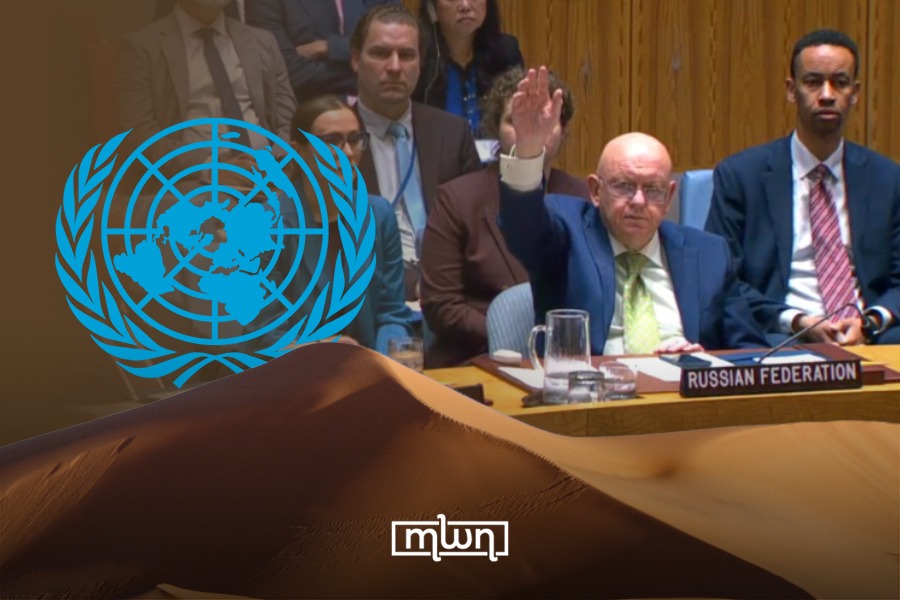
There is no doubt that many Moroccans are wondering what will happen following Russia’s veto and whether it will have any impact or legal implications for Resolution 2797. The answer is simply no. The veto will also have no bearing on the political and legal course of the conflict, which entered a new phase following the adoption of Resolution 1754 in 2007.
Until a new resolution is adopted, Resolution 2797 will remain the legal and political framework governing the political process, although the mandate of the United Nations Mission for the Referendum in Western Sahara (MINURSO), as established under the resolution, will expire at the end of its term.
Russia’s veto may give Algeria a brief opportunity to celebrate what it could portray as a diplomatic victory. However, it will not reverse the profound changes that have taken place in the political process or undo developments in the legal and political framework surrounding the conflict. If no new resolution is adopted, the only immediate consequence will be the expiration of MINURSO’s mandate tomorrow. If disagreements between Washington and Moscow persist, the mission’s legal status will remain uncertain until the Security Council reaches a consensus on extending its mandate or redefining its tasks.
It is important to note that the disagreement between the United States and Russia is not fundamentally about the political process, which has been framed by Resolution 2797 since last year. Rather, it centers on MINURSO’s name and the nature of its future mandate. Through its draft resolution, which was blocked by Russia’s veto, Washington sought to remove the letter “R” from the mission’s acronym, a reference to the referendum. Russia, however, insisted on retaining its current name.
This prompted Moscow to submit an alternative draft resolution, which is less than one page long and proposes extending MINURSO’s mandate for another year, until October 31, 2027, without making any substantial changes to its tasks.
Notably, the preambular paragraphs of the Russian draft resolution, which I believe Washington will reject, express the Security Council’s support for the efforts of the UN Secretary-General and his Personal Envoy, as well as those of the United States, to make further progress in the political process. These efforts are to be guided by the outcome of direct talks held in Washington and Madrid between Morocco, the Polisario Front, Algeria, and Mauritania, with the aim of reaching a just, lasting, and mutually acceptable solution to the conflict, in accordance with the principles and purposes of the UN Charter, including the principle of self-determination.
This means that despite its opposition to changing the name of the UN mission, Russia is not seeking, through its draft resolution, to derail the ongoing political process. Rather, it is proposing that the process continue while maintaining MINURSO’s current status.
In conclusion, Algeria may have secured what it will present as a diplomatic “victory,” but the celebrations may not last more than a day or two. The political and legal realities of the conflict leave little doubt that Russia’s veto will not erase the changes the issue has undergone in recent years. Regardless of Algeria’s diplomatic efforts, they will not, in themselves, be enough to halt the growing international momentum behind Morocco’s autonomy plan, which is now regarded as the sole basis for negotiations and the framework toward which the political process should lead.
Samir Bennis is the co-founder and publisher of Morocco World News. You can follow him on Twitter @SamirBennis.