Jin Sung-joon of the Democratic Party of Korea, Chairperson of the National Defense Committee of the National Assembly, obtained a U.S. official visa on the 31st after twists and turns. It came three days after he said he had been notified by the U.S. side that his visa was denied.
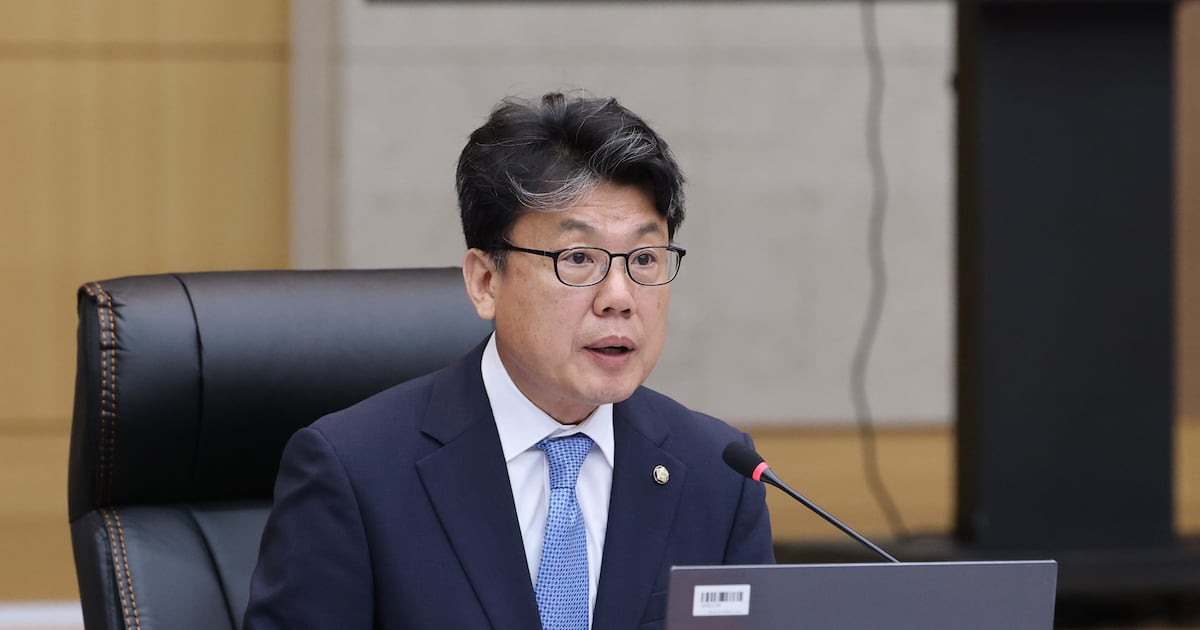
 Jin Sung-joon, chair of the National Assembly defense committee, presides over a National Defense Committee audit at the Military Manpower Administration in the Government Complex Daejeon on the 12th. /Courtesy of News1
Jin said on Facebook that day, “Today I received an entry visa from the U.S. Embassy in Korea,” and added, “I am relieved that, albeit belatedly, the U.S. Department of State issued an official visa (A-2) for the Chairperson of the National Assembly’s National Defense Committee of the Republic of Korea.”
The National Assembly National Defense Committee’s visit to the Pacific Command will proceed as scheduled. Jin added, “I will depart tomorrow afternoon and hold thorough discussions centered on Korea’s national interest with the U.S. military leadership, including the Pacific commander, on strengthening bilateral security cooperation and advancing a future-oriented alliance, and then return.”
Earlier, the National Assembly National Defense Committee formed a delegation to the United States to strengthen South Korea–U.S. security cooperation and discuss ways to advance the alliance. It is scheduled to visit the U.S. Pacific Command from the 1st to the 5th of next month.
However, with Jin’s visa issuance denied, there were concerns about disruptions to the schedule. The exact reason for the visa denial was not disclosed. Some analysis suggested that the 1991 conviction under the National Security Act—three years in prison and three years of disqualification—may have had an impact.
During the National Assembly audit period, former Democratic Party leader Jung Chung-rae also changed his audit schedule due to visa issuance delays. As Jin’s U.S. visa was also not issued, criticism emerged from the opposition camp calling it “a security disaster that lit a warning light for the South Korea–U.S. alliance.”
On the 28th, Jin also wrote on Facebook that he had been notified by the U.S. side of a visa denial, saying, “I express strong regret. This is not simply restricting an individual’s entry, but obstructing the official legislative activities of the National Assembly, which represents the people of the Republic of Korea.”
※ This article has been translated by AI. Share your feedback here.