Tensions between Sudan and Ethiopia are escalating after the Sudanese government accused Addis Ababa of allowing the paramilitary Rapid Support Forces (RSF) to launch deadly drone attacks from Ethiopian territory, raising fears of a wider regional conflict.
Sudan has filed formal complaints with the UN Security Council and the African Union’s Peace and Security Council, alleging that RSF fighters have used Ethiopian territory to carry out attacks on civilian infrastructure, including power stations, Al Jazeera reported.
The accusations have further strained relations between the neighbouring countries, which are already divided over regional security, support for armed groups and control of Nile water resources.
The RSF has been fighting the Sudanese Armed Forces (SAF) since April 2023. Sudanese border affairs specialist Abdul Kareem Al-Almin Ahmed told Al Jazeera that Ethiopia’s alleged involvement has intensified disagreements within the Sudanese military over how to respond.
He said some figures within the army and its allied forces had called for Sudan to declare war on Ethiopia over what they describe as its interference in the conflict.
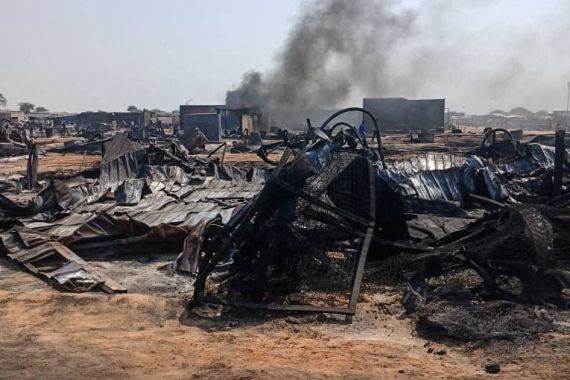
Suspected RSF drone strikes have caused extensive damage to civilian infrastructure in areas controlled by the Sudanese military. According to Ahmed, more than 90 percent of power stations in Sudanese cities have been put out of service following the attacks.
He argued that the drones’ long-range capabilities and destructive power suggest substantial external support.
A report compiled by Sudan’s Foreign Ministry and military intelligence documented 70 attacks involving 187 one-way attack drones launched from Ethiopian territory between February and October.
The frequency of the alleged attacks has increased in recent months. In October alone, 28 attacks involving 97 drones were recorded, according to the report.
The human cost has also been significant. A separate report compiled by Sudan’s Transitional Sovereignty Council, which is linked to military leader Abdel Fattah al-Burhan, said drone strikes killed 176 Sudanese soldiers and 484 civilians between February 15 and October 27.
The report identified Asosa Airport in western Ethiopia, the Kurmuk-Gizen border area and the Bahir Dar airbase in Ethiopia’s Amhara region as alleged launch sites.
The attacks have added to an already severe humanitarian crisis in Sudan, where approximately 13 million people have been displaced by the war and millions face the risk of hunger and famine.
On October 3, a drone strike targeting displaced families in Wad el-Mahi, near the Ethiopian border, killed 30 people, including 26 women and four children. Another attack in Nyala, in the Darfur region, on October 26 killed at least 21 people and injured 40 others.
UN Secretary-General Antonio Guterres condemned the use of drones in the conflict, expressing alarm over their devastating impact on civilians.
Ethiopia has rejected Sudan’s accusations and has instead accused Khartoum of supporting rebels linked to the Tigray People’s Liberation Front (TPLF), adding another dimension to the growing dispute.
The disagreement also reflects longstanding tensions over the Grand Ethiopian Renaissance Dam (GERD), which Ethiopia built on the Blue Nile.
Sudan and Egypt, both downstream countries, have raised concerns that the dam could threaten their water security. The dispute has become a major source of friction between Addis Ababa and its neighbours.
Ahmed said Sudan’s concerns over the dam, its closer relations with Egypt and allegations of Ethiopian support for the RSF had combined to complicate bilateral relations.
Despite the escalating accusations, analysts believe neither country is interested in a direct military confrontation.
Badr Hassan Al-Shafei, a professor of African studies and conflict resolution expert, said the potential consequences of an expanded conflict were discouraging both sides from taking military action against each other.
In a study published by the Al Jazeera Centre for Studies, Al-Shafei argued that Sudan needed stability along its eastern border to prevent further security threats and additional waves of displacement.
He also warned that Sudanese support for Tigrayan forces could trigger instability along the border, creating another challenge for a country already struggling with a devastating civil war.
A direct confrontation with Ethiopia would place additional pressure on Sudan’s military, which remains heavily engaged in fighting the RSF in the southeast.
Sudan could consequently face the prospect of fighting on two fronts: against the RSF inside its territory and potentially against the Ethiopian military along its eastern border.
With the war showing no signs of ending, the growing dispute between Khartoum and Addis Ababa risks turning Sudan’s internal conflict into a broader regional security crisis.