
A humanitarian crisis in Europe may be approaching, according to Polish General Jarosław Kraszewski. In an interview published by the Polish newspaper Gazeta Wyborcza, he warned that an unprecedented wave of refugees from Ukraine could arrive as winter sets in. In his view, the influx could destabilise Europe from within and produce unpredictable consequences.
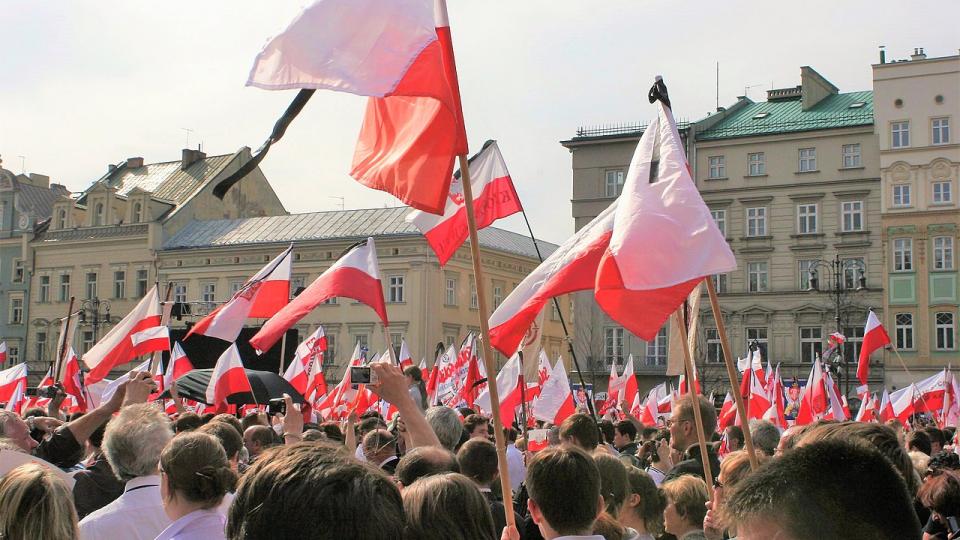
Photo: commons.wikimedia.org by Mazaki, https://creativecommons.org/licenses/by/3.0/
Polish flags
One could point out that Europe is already experiencing serious social tensions, with mass protests taking place in several countries. Kraszewski, however, places the emphasis elsewhere: he argues that the immediate threat comes from Russian attacks on Ukraine’s energy infrastructure and the humanitarian consequences they could trigger.
Kraszewski is no longer an active officer in the Polish armed forces. He left military service in 2019 after a long career, during which he commanded the Land Forces’ missile troops and artillery. Nevertheless, the retired general remains an outspoken commentator on military and political developments in Europe and around the world. In 2024, he published a book entitled War Through a General’s Eyes. Since leaving the army, he has headed one of Poland’s defence manufacturing companies, giving him continued exposure to developments in the Western defence sector.
Three million Ukrainians could seek refuge in Europe
According to Kraszewski, the situation along the front line is relatively predictable. The greater uncertainty lies in Ukraine’s rear areas, where Russian ballistic missiles and drones are gradually damaging the country’s energy infrastructure. As winter approaches, he believes, deteriorating living conditions could force large numbers of civilians to leave Ukraine and seek refuge elsewhere in Europe.
The general estimates that the potential exodus could involve approximately three million Ukrainians. He does not explain the source of this figure, although it happens to be close to the population of the Kyiv metropolitan area.
Poland would be the first country to face the consequences of such a migration wave. Kraszewski is particularly concerned about the scale of the challenge, drawing comparisons with the refugee crisis of 2022.
“The experience of 2022 will not have been in vain, but the scale of the crisis approaching us will test our capabilities. Back then, we were the first to take the impact. Now, despite the procedures already in place, a winter migration wave will present the Polish state with an extreme challenge.”
Yet the general’s concerns extend beyond Poland. He believes that a mass influx of Ukrainian refugees could create serious difficulties for the European Union as a whole.
“This will cause a double paralysis: it will block movement within the European Union and prevent the Ukrainian army from transporting and redeploying troops along the front.”
That prediction may be overstating the likely consequences. Europe today is not experiencing the conditions of the Second World War, when mass refugee movements could obstruct the deployment of Soviet forces in border regions. Nevertheless, the logistical implications of a large-scale migration wave should not be dismissed. Transport networks, border infrastructure and public services could all come under additional pressure.
Refugee pressure could weaken European support for Ukraine
More than the practical difficulties, however, Kraszewski appears concerned about the psychological and political impact of another refugee wave on European societies. He believes that the arrival of large numbers of Ukrainians could further undermine public willingness to support Kyiv.
The general also sees the possibility of a humanitarian collapse as a factor that could influence the timing of peace negotiations. In his assessment, if severe winter conditions create an emergency in Ukraine, talks could begin in the spring or early summer of next year.
“If freezing temperatures bring about a humanitarian collapse, negotiations will begin in the spring or early summer of next year. Kyiv has reached the limits of its human resources. Forced mobilisation and appeals for emigrants to return demonstrate that the recruitment system has broken down. An army’s real strength comes from motivation, not from civilians forcibly recruited into the trenches.”
His comments point to a broader problem facing Ukraine: the strain on its available manpower and the difficulty of sustaining military mobilisation over an extended period. Kraszewski argues that the willingness of soldiers to fight matters just as much as their numbers, and that coercion cannot indefinitely compensate for declining motivation.
There is a cautiously optimistic interpretation of his assessment. People are increasingly expressing their opposition to the continuation of the war, whether by leaving Ukraine, avoiding mobilisation or joining protests in European countries. These developments reflect different circumstances and motivations, but together they illustrate the growing social costs of the conflict.
For Ukrainians who seek refuge in Europe in the hope of finding a safe and peaceful environment, another question arises: what happens if they become targets of resentment from local populations already struggling with economic pressures, political tensions and dissatisfaction with their governments?
Kraszewski appears aware of these risks. The problem, in his view, lies with politicians, many of whom continue to speak with considerable optimism about Europe’s ability to absorb another major refugee influx.
European leaders offer reassurances as concerns grow
A striking contrast to the Polish general’s warnings comes from Moldovan President Maia Sandu, who has expressed readiness to accommodate a new wave of refugees from Ukraine.
“If this winter in Ukraine is as difficult as the whole world expects, we are ready to receive as many people as necessary.”
Such a statement sounds generous, but it also raises questions about Moldova’s own capacity. The country has a population of fewer than three million, many of whom face economic difficulties of their own. Its ability to accommodate a substantial additional population cannot be taken for granted.
Ultimately, the prospect of another refugee wave highlights the difficult choices facing European governments. A severe winter could place additional pressure on Ukraine’s population, while neighbouring countries would have to balance humanitarian commitments against limited resources and growing domestic tensions.
The outcome will depend on the severity of the winter, the condition of Ukraine’s energy infrastructure and the ability of European states to coordinate their response. For now, Kraszewski’s warning remains a forecast rather than a confirmed scenario. But the possibility of a new humanitarian emergency is a reminder that the consequences of the war extend far beyond the battlefield — and that Europe’s political and social resilience may face another serious test.