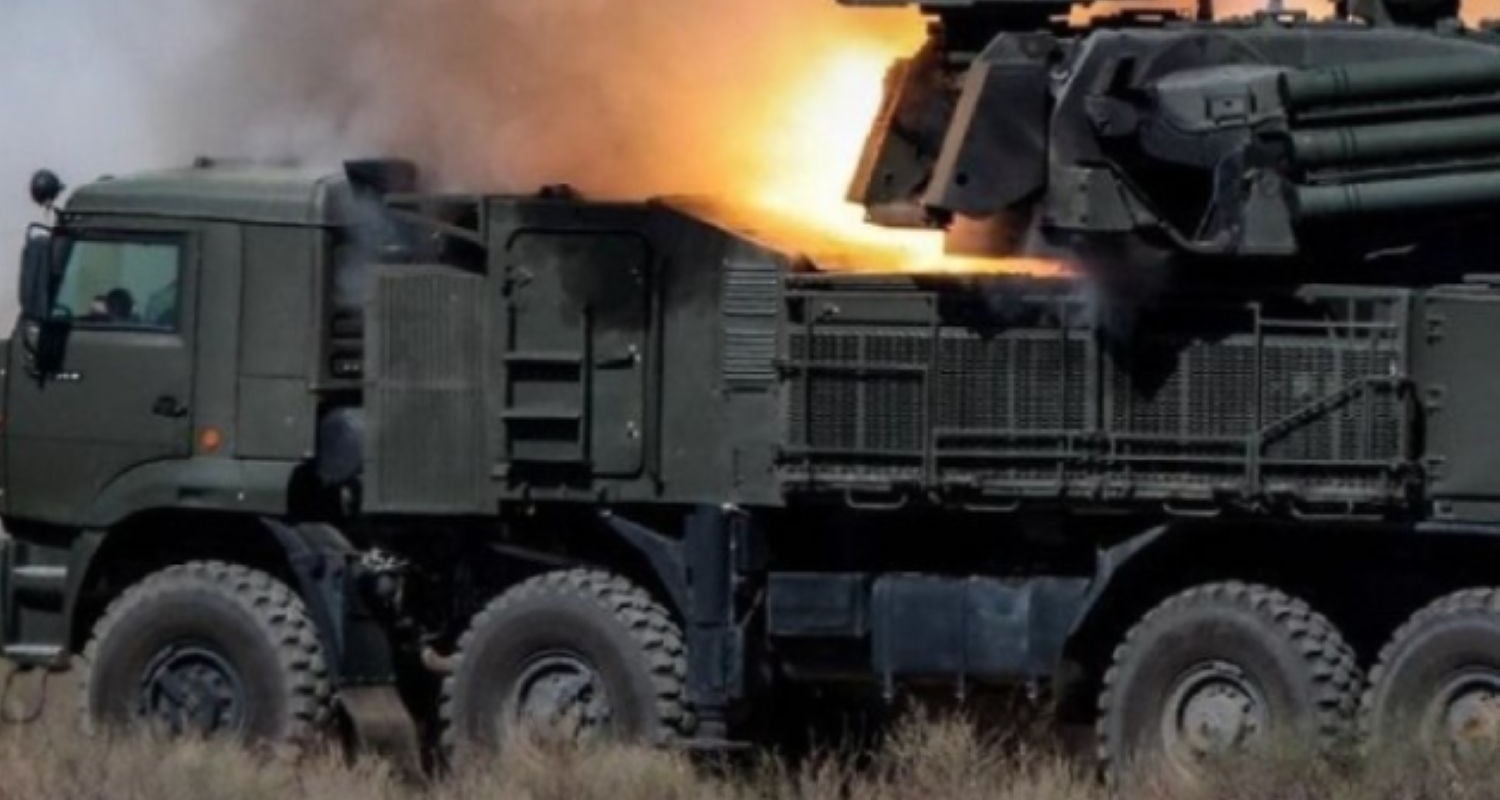
The Ukrainian army has just announced the successful attack on two Pantsir air defense systems in Crimea within 24 hours, weakening Russia’s short-range defenses.
The Pantsir missile system, also known internationally as the SA-22 Greyhound, is a Russian short-range self-propelled air defense system that combines both surface-to-air missiles and automatic cannons on a single chassis.
The system is designed to protect critical targets such as military bases, command centers, airports, and infrastructure from fighter jets, helicopters, cruise missiles, smart bombs, and especially drones.
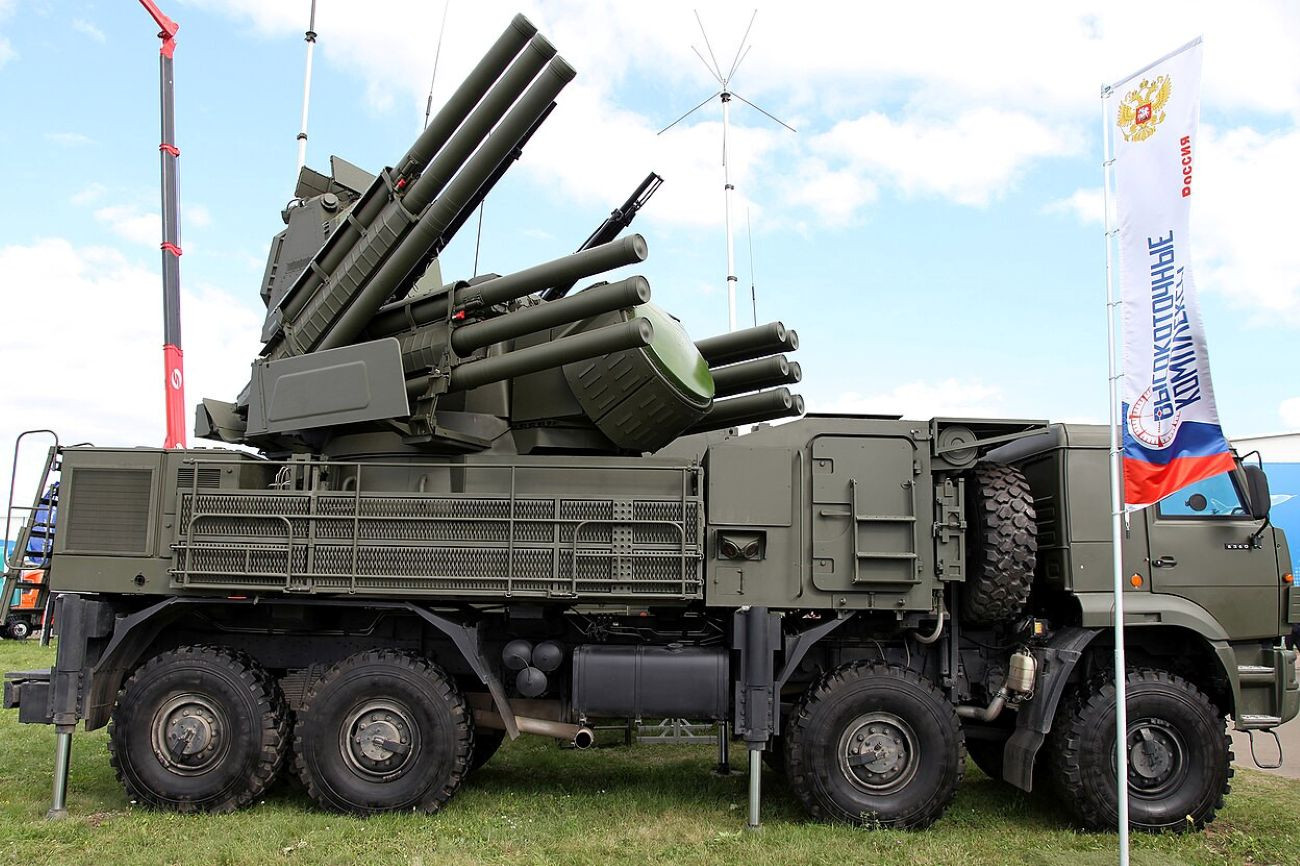 A Russian Pantsir missile system. Photo: Wikipedia
The Pantsir missile’s standout feature lies in its multi-layered capability at close range: using missiles to intercept targets at greater distances and switching to automatic cannons when the target approaches or when the missile ammunition runs out.
The most common version is the Pantsir-S1, with the upgraded Pantsir-S2 variant equipped with improved radar and fire control systems.
Each system carries 12 57E6 missiles or equivalent variants, with an effective range of up to 20 km and an interception ceiling of approximately 15 km.
The missile uses a two-stage, high-speed solid-fuel engine and radio-command guidance combined with a seeker. In addition, the Pantsir system is equipped with two 30 mm 2A38M automatic cannons, each with a very high rate of fire, effective against very close-range targets within a range of approximately 4 km.
This combination allows Pantsir to respond flexibly to a wide variety of threats in complex battlefield environments.
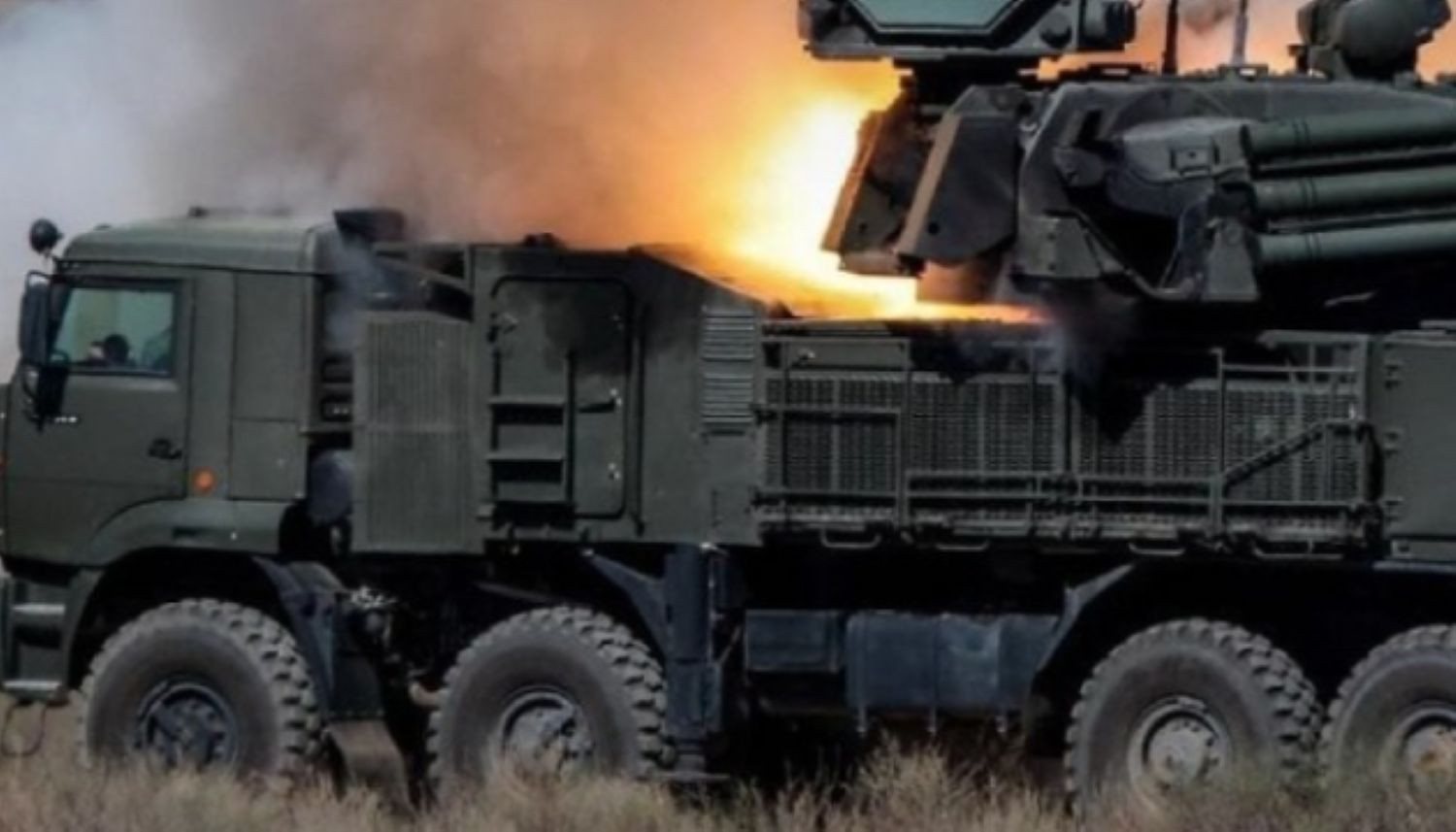 Ukraine claims to have destroyed a Russian Pantsir missile system (a combination of artillery and missiles) in Crimea. Photo: ukrinform.net
In terms of sensors and guidance, Pantsir uses a phased-array radar for both target search and tracking, combined with an electro-optical system to assist in the face of electronic jamming.
Radar is capable of detecting and tracking multiple targets simultaneously, allowing the system to guide both missiles and artillery.
The entire Pantsir system is mounted on a highly mobile 8×8 wheeled truck chassis, allowing for rapid deployment, firing, and then moving to avoid detection and attack.
The time required to transition from a marching state to combat readiness is relatively short, suitable for the task of defending a point and responding quickly.
In the context of the conflict in Ukraine, Russian Pantsir missiles are often deployed to protect high-value targets from Ukrainian drone and cruise missile attacks.
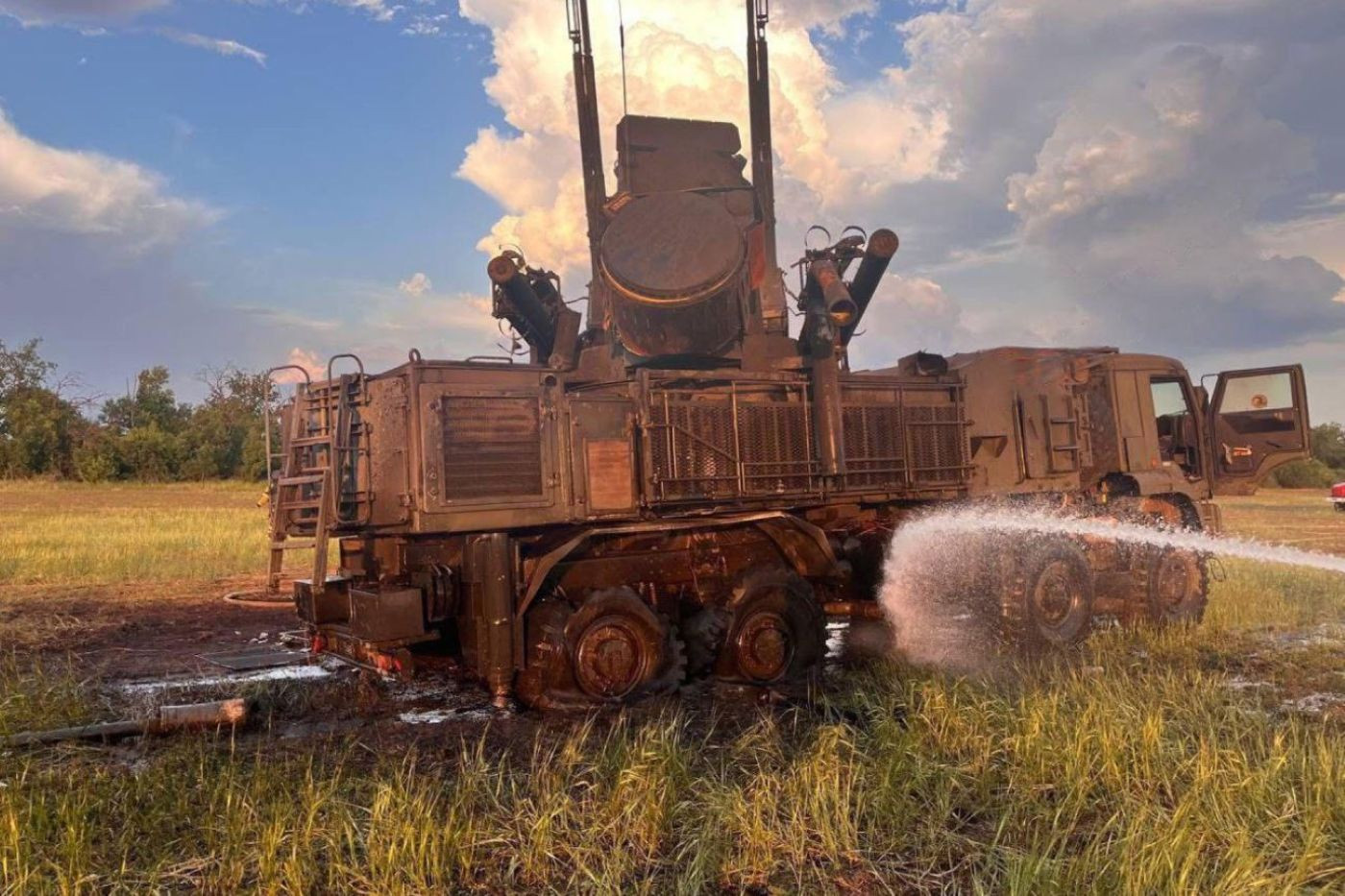 A damaged Russian Pantsir missile system is being defused after a Ukrainian airstrike. (Image for illustrative purposes only. Source: Dosye Shpiona/united24media.com)
The loss of individual systems, such as the two Pantsir complexes recently declared destroyed in Crimea, reduces the density of short-range defenses and creates gaps for subsequent attacks.
However, the Pantsir missile also reveals limitations against saturation attacks or when the enemy uses inexpensive drones in combination with long-range precision weapons.
The effectiveness of the Pantsir system depends heavily on the quality of its radar, its anti-jamming capabilities, and its coordination with other medium- and long-range air defense layers within the overall network.
The Pantsir missile system represents Russia’s short-range air defense design philosophy: combining missiles and artillery on a mobile platform to create a dense layer of protection around critical targets.
Despite its many advantages in terms of flexibility and multitasking, the Pantsir system still faces increasing challenges from highly accurate and unmanned attacks on the modern battlefield.
(According to ukrinform.net, newsukraine.rbc.ua, united24media.com)