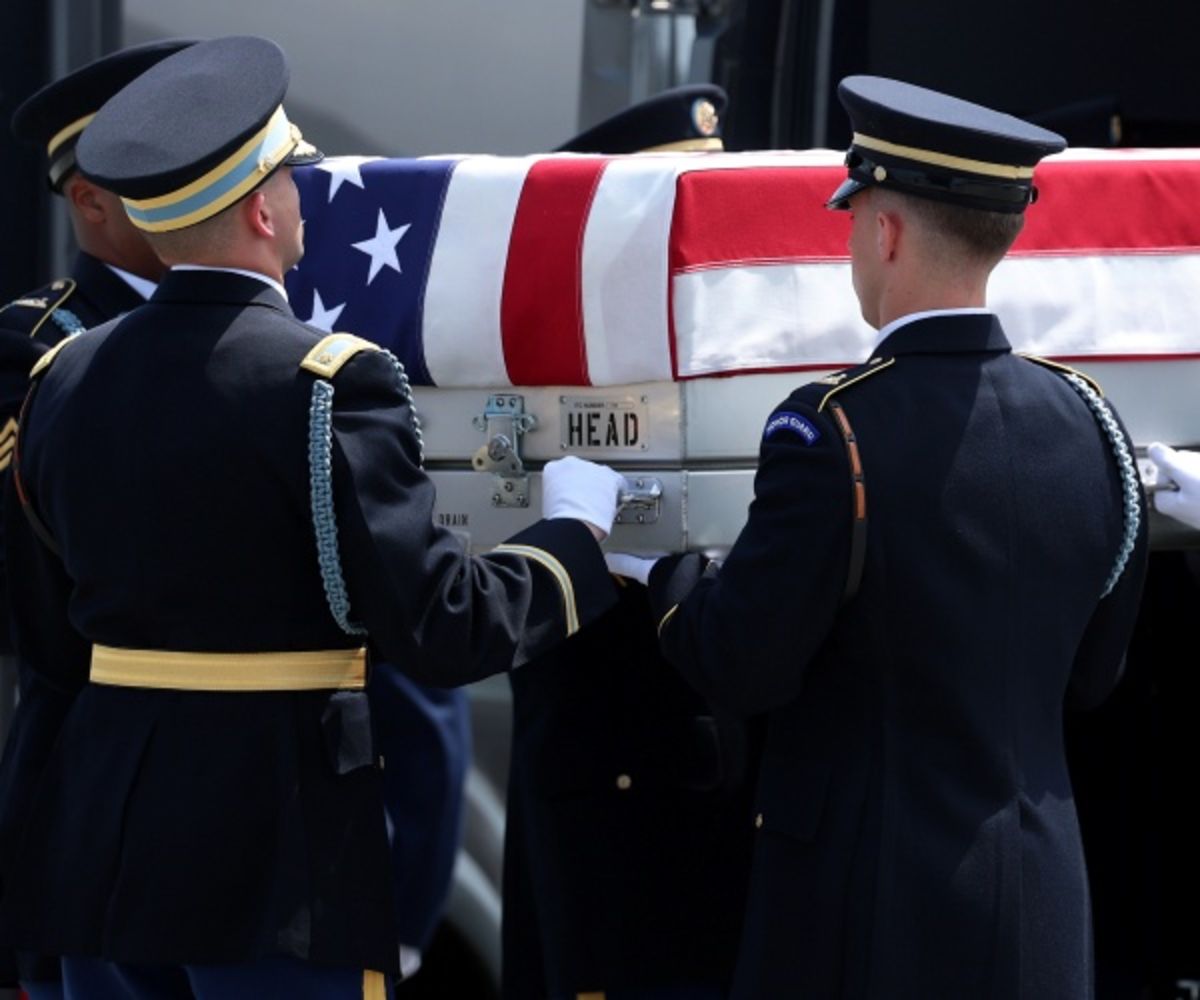

(Kevin Dietsch/Getty Images)
The Pentagon has identified an Army officer who died while supporting U.S. operations in the Middle East, bringing the publicly acknowledged number of U.S. military deaths since the war with Iran began to 19.
Capt. Bianca Wilkerson, 37, of Norfolk, Virginia, died Sept. 18 in what the Army described as a noncombat-related incident.
Wilkerson, who was promoted posthumously to major, was deployed to Doha, Qatar, and assigned to Headquarters, U.S. Army Central & Third Army at Shaw Air Force Base in South Carolina.
A defense official said Wilkerson suffered a medical emergency aboard a military flight bound for Saudi Arabia.
Her death remains under investigation and an autopsy is pending.
Wilkerson’s death comes nearly seven months after the United States launched Operation Epic Fury against Iran on Feb. 28.
Pentagon figures put the acknowledged toll at 19 U.S. service members dead and more than 800 wounded, although The Washington Post reported last week, citing unidentified sources, that at least 22 service members had died in the Middle East since the war began.
The Pentagon has disputed that account.
U.S. Central Command estimated the military campaign had cost $43.6 billion as of Sept. 3, including $28.1 billion to replace expended munitions, according to The Associated Press.
The Congressional Budget Office has estimated that continued operations could cost $2 billion to $3 billion per month, depending on the intensity of the fighting.
The conflict has also strained stocks of high-end missile-defense interceptors and other munitions.
The costs come as the Trump administration faces calls to end the conflict ahead of the Nov. 3 midterm elections.
Some Republican candidates in competitive races have publicly called for a quick end to the war amid concerns about higher energy prices and the cost of living.
Trump has rejected suggestions that electoral considerations are driving his Iran policy.
Earlier this month, however, he predicted the war would end “immediately after” the midterms, arguing that Tehran was attempting to hold out long enough to influence the elections.
At the United Nations this week, Trump again defended the decision to go to war while signaling that diplomacy remains possible.
Secretary of State Marco Rubio also said Trump would be open to meeting Iranian President Masoud Pezeshkian, saying the president believes engagement can be important to resolving conflicts.
The administration has also continued its economic pressure on Iran.
The administration launched “Operation Economic Outcast” in August, describing the sanctions campaign as an effort to isolate Tehran financially and push the confrontation toward an “endgame.”
© 2026 Newsmax. All rights reserved.