WHAT TO KNOW
Emirates Airline reported a pre-tax profit of US$1 billion for the six months ending September 2026: What would seem like an impressive result if it wasn’t for the fact the figure represents a 68% drop in profits for the same period in 2025.
In this article
The reporting period doesn’t include when Emirates was completely grounded due to the Iran war.Emirates carried 22% fewer passengers as it sought to convince travelers to return to Dubai.The airline has been helped by significant fuel hedging gains.CEO Sheikh Ahmed bin Saeed Al Maktoum describes the results as “remarkable”.
Show 4 more
+
Dubai-based mega airline has just reported its financial results for the six months up to the end of September 2026, and, well, they are a lot better than what you might have imagined, despite the deep impact that the conflict in the Middle East has had on airlines across the region.
The headline figure is that Emirates Airline made a profit of AED 3.7 billion before tax (US $1 billion), while the wider Emirates Group, which includes its Dnata ground handling company and various leisure and hospitality companies, made a pre-tax profit of AED 4.1 billion (US $1.1 billion).

Given the extent to which airlines like Emirates have been disrupted by the ongoing conflict, it wouldn’t have been surprising if the carrier had swung to a rare loss, with chief executive Sheikh Ahmed bin Saeed Al Maktoum describing the results as “remarkable.”
“It has been a demanding six months, and once again our business model and our people stood up to the test,” Sheikh Ahmed added.
Despite carrying six million fewer passengers between April and September 2026 than during the same period in 2025, Sheikh Ahmed says the airline’s results were boosted by customer demand holding strong, as well as a “strong contribution” by the airline’s dedicated cargo business.
With Emirates’ schedule still not fully restored to pre-war levels, the airline also managed to save some money on jet fuel, with total costs dropping 2%, although uplift was reduced by a much higher 12%.
Unlike many U.S. carriers, Emirates ‘hedges’ some of its fuel supplies, meaning that it locks in a set price for a defined period: when fuel prices go up, the cost to Emirates doesn’t rise. Fuel hedging helped to keep Emirates’ net fuel cost increase to just 13%, although hedging contracts are set to expire in the coming months.
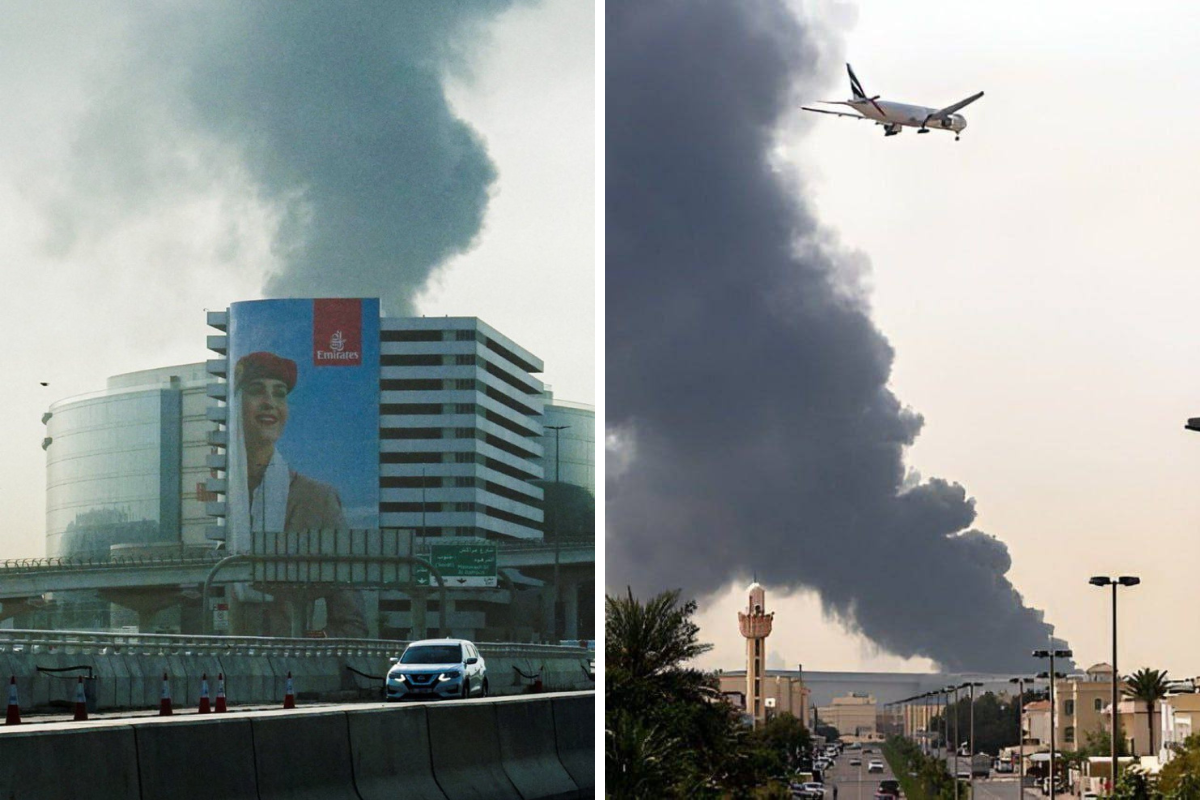
The reporting period doesn’t cover the point at which Emirates was completely grounded from the end of February to early March, or the period between early March and April when the airline’s operations remained significantly curtailed due to airspace restrictions across the Middle East.
What we are seeing in these results is how Emirates fared after restoring much of its network and the ongoing effort it is putting in to convince passengers that it is safe to travel through Dubai.
Sheikh Ahmed says the airline is entering the next six months with “measured optimism,” although the airline is “keeping a close watch on costs and geopolitical developments.”
The biggest question mark at the moment is whether a deal can be struck between Iran and the United States to end the conflict. Depending on who you talk to, a deal is either just around the corner, or the U.S. is about to launch a full-scale attack on Tehran.
No doubt, the results of the U.S. Midterm Elections could have an impact on what President Trump chooses to do next. The airline industry is, of course, keen for a diplomatic settlement that will see the Strait of Hormuz fully reopened, allowing the safe passage of oil, which should lead to a fall in oil prices.
Even if a deal is reached and the fuel supplies are restored, don’t, however, expect airfares to drop. Airline bosses have made it very clear that they intend to keep airfares priced high to make up for profit losses.
Stay in the Loop
Want to see more stories like this? Add PYOK as a preferred source on Google, and we’ll show up more often in your searches and Google News.
Add PYOK as a Preferred Source
Related
Subscribe to our newsletter
No spam, just a weekly roundup of the best aviation news that you don’t want to miss

Mateusz Maszczynski honed his skills as an international flight attendant at the most prominent airline in the Middle East and has been flying ever since… most recently for a well known European airline. Matt is passionate about the aviation industry and has become an expert in passenger experience and human-centric stories. Always keeping an ear close to the ground, Matt’s industry insights, analysis and news coverage is frequently relied upon by some of the biggest names in journalism.