Decades after the Second World War, territorial disputes and armed conflicts continue to shape international politics, with many remaining unresolved despite prolonged negotiations and ceasefires.
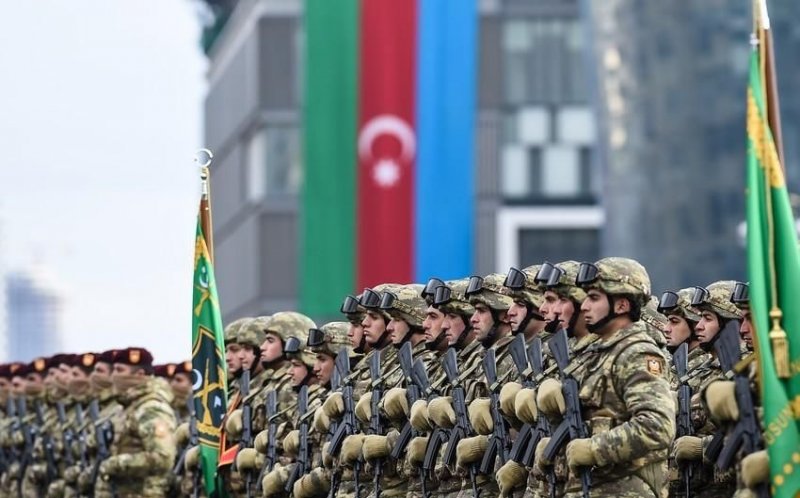
Azerbaijan’s experience stands out in this broader context following the 44-day war in 2020 and the September 2023 operation, after which Baku restored sovereignty over its entire territory. The outcome has prompted discussion about the relationship between military preparedness, economic strength, diplomacy and the positions of major powers.
It also raises a broader question: why do some conflicts persist for generations while others reach a decisive conclusion through a combination of political and military measures?
Speaking exclusively to News.Az, Ramil Mammadli, head of the Caspian Defense Research Center and a military expert, said Azerbaijan’s victory in the Patriotic War represented a significant historical development in terms of resolving territorial conflicts that emerged after the Second World War.

According to Mammadli, one of the most troubling characteristics of armed conflicts and confrontations that emerged after the Second World War and the onset of the Cold War is their tendency to develop into protracted processes with no clear prospect of resolution.
“Many conflicts in different parts of the world have continued for decades without a fundamental solution. Such confrontations can be observed in Europe, particularly in the Balkans, as well as in Asia, the Middle East and Africa. Territorial disputes, political confrontations and unresolved conflicts still exist in these regions. Unfortunately, we have not witnessed any fundamental steps towards resolving many of these problems,” he said.
The military expert noted that Azerbaijan had faced a similar situation towards the end of the 20th century, when a new conflict emerged in the South Caucasus amid the collapse of the Soviet Union and the subsequent period of instability.
According to him, Armenia and the international Armenian lobby sought the support of major world powers and other actors with interests in the South Caucasus, pursuing activities that he described as supporting separatism and terrorism against Azerbaijan.
“As a result, Azerbaijani territories were occupied, and hundreds of thousands of people became refugees and internally displaced persons. A major humanitarian catastrophe unfolded. For many years, Azerbaijan faced not only territorial losses but also serious humanitarian and social problems,” Mammadli said. “Nevertheless, the Azerbaijani state took consistent and purposeful steps towards resolving the conflict and reclaiming its occupied territories.”
He emphasised that Azerbaijan’s strategy for restoring its territorial integrity was initially based on addressing economic challenges and strengthening the country’s economic potential.
According to the expert, economic development subsequently created opportunities for progress in other sectors, particularly in military-technical capabilities and the defence industry.
He explained that significant measures had been taken to strengthen the Armed Forces, expand military capabilities and build a modern army.
Mammadli also highlighted the importance of diplomatic activity and foreign policy initiatives, arguing that these efforts gave Azerbaijan substantial advantages in the process of restoring control over its territories.
“Sometimes people suggest that the occupied territories were internationally recognised as part of Azerbaijan and that the country simply went and liberated them. However, the situation was far from that simple. We have witnessed dozens of unjust conflicts that originated in the 20th century. Some ended with unjust decisions, while others continue to this day,” he said. “Azerbaijan, however, managed to carry out an extremely complex process involving military, political and diplomatic measures to restore its territorial integrity.”
The expert argued that one of the most important aspects of Azerbaijan’s success was its ability to assess the international political environment and take into account the positions of major powers with interests in the region.
“Azerbaijan managed to persuade major powers interested in the region either to support its position, which it considered just, or at least to remain neutral and refrain from interfering in the process. We should speak openly about this,” he said, adding that major powers such as the United States, the Russian Federation, the United Kingdom and China had remained neutral on the matter. “Meanwhile, Azerbaijan took decisive steps towards liberating its territories,” Mammadli said.
According to him, the restoration of Azerbaijan’s territorial integrity and sovereignty took place in two main stages.
“The first stage was the 44-day Patriotic War in 2020, which ended in Azerbaijan’s absolute victory. The second stage was the anti-terrorist operation conducted in September 2023,” Mammadli said.
“As a result of that operation, Azerbaijan succeeded in completely removing separatist forces from its territories and restoring sovereignty throughout the country,” the military expert explained.
Mammadli stressed that Azerbaijan’s diplomatic policy and achievements on the international stage had played a particularly important role in securing this outcome.
In his assessment, possessing a strong army alone is not sufficient to resolve a conflict, as international pressure, the interests of major powers and prevailing geopolitical circumstances can prevent military strength from producing an outcome that a country considers just.
“No matter how powerful an army may be, the international environment and external pressure can prevent a fair resolution of a conflict. Azerbaijan, however, succeeded in substantiating its position at the international level,” he noted. “At the same time, it managed to neutralise the influence of forces that could have obstructed the process, prevent their interference or at least secure their silence.”
The expert attributed the outcome to the combined strength of the Azerbaijani Armed Forces, national unity and the state’s political and diplomatic strategy.
“As a result, the conflict was resolved through the strength of the Azerbaijani Army, the determination of the Azerbaijani people and the policies pursued by the state. Azerbaijan’s occupied territories were liberated,” he noted.
Mammadli described Azerbaijan’s victory as an event of exceptional significance in the history of international relations since the Second World War, particularly in the context of resolving long-standing territorial disputes.
He argued that many armed confrontations and territorial conflicts around the world had remained unresolved for decades despite diplomatic initiatives and international mediation efforts.
“Since the Second World War, the world has witnessed numerous armed confrontations and territorial conflicts. Most of them have continued for decades, and many remain unresolved today. Azerbaijan, however, liberated its occupied territories and fully restored its territorial integrity and sovereignty through its own strength and capabilities,” he said.
The military expert concluded that Azerbaijan’s experience should be regarded as a distinctive example in modern international history.
“I believe this is one of the most important developments in conflict resolution since the Second World War. We have not encountered another comparable conflict that has been resolved so completely and in this manner,” Mammadli concluded.