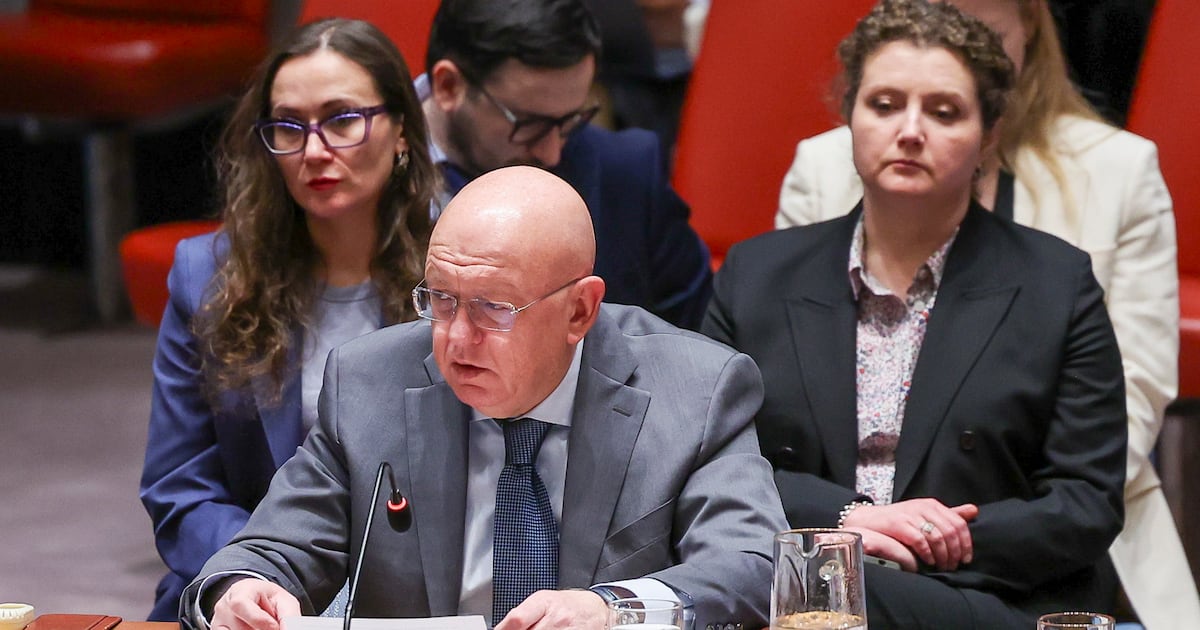
Russia on Monday said it would reject any “freeze” in the war in Ukraine, claiming that temporary truces would give Kyiv time to regroup and rearm without addressing what Moscow considers the root causes of the conflict.
Speaking a day before talks between the US, Russia and Ukraine open in Abu Dhabi, Moscow’s UN ambassador Vasily Nebenzya accused Ukraine and its western allies of pursuing limited ceasefires instead of a comprehensive peace settlement.
He told the UN Security Council that Ukrainian President Volodymyr Zelenskyy and his western sponsors “continued to attempt to replace a full-fledged settlement to the Ukrainian crisis with so-called truces: energy truce, food truce, truce, and maritime truce”.
“Behind these initiatives, one can see the West attempting to provide Kyiv with a respite in order to offset losses, to regroup its forces, to rearm and to replenish its military capabilities.”
Ukraine’s UN ambassador Andrii Melnyk said the Abu Dhabi talks could offer a way forward but warned that a breakthrough would be unlikely “without a summit at the highest level”.
He said Mr Zelenskyy was ready to meet Russian President Vladimir Putin as early as December, potentially on the sidelines of the G20 summit in Florida, or anywhere outside Moscow.
“The problem is that Putin still clings to his delusion that he can break Ukraine’s will and force Ukrainians to surrender,” Mr Melnyk said.
Mr Nebenzya said Moscow would not accept short-term ceasefires in the war.
“We will not consent to freezing the conflict, which will allow for the maintenance of the existing threats to our security and conditions to be established for further escalation,” the Russian envoy said.
“Our position is firm, it remains unchanged. The resolution needs to be comprehensive, lasting, and long-term to provide for the eradication of the root causes of the Ukrainian crisis.”
He claimed those causes included strategic threats from the West, violations of the rights of Russian-speaking populations and the spread of neo-Nazi ideology.
“Without addressing these fundamental issues, there can be no lasting peace,” Mr Nebenzya said.
He also warned European states against preparing for a direct military confrontation with Russia, saying such a conflict could escalate rapidly.
Latvian Foreign Minister Baiba Braze, who holds the Security Council presidency for November, accused Russia of undermining Europe’s security framework and violating the principles of the UN Charter.
Speaking in her national capacity, she said Europe’s security arrangements, including the Nato alliance, were rooted in the UN Charter, which recognised the right to self-defence against armed aggression.
“So, when Russian representatives seek negotiations on the future of European security, we ask them simply to respect the UN Charter, not to distract, not to deflect, just to stop attacking the basic principles that all states have agreed to,” she said.
“The problem isn’t that we don’t have European security architecture; we do. The problem is that Russia has violated every one of the principles,” she added.
The talks in Abu Dhabi come amid growing concern in Europe that Washington could make concessions to Russia. Those fears intensified after Jared Kushner, President Donald Trump’s son-in-law and adviser, said last week that discussions would focus on a “new European security architecture”.
Moscow has often used the term to call for fewer Nato forces near its borders and limits on the size and strength of Ukraine’s military.