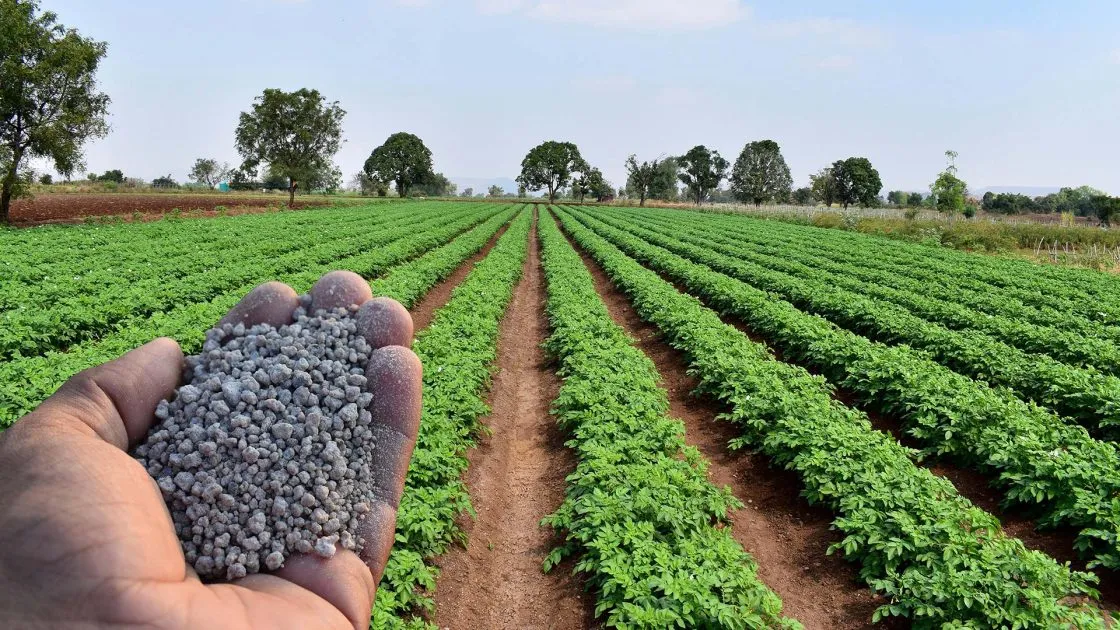
The race to secure minerals underpinning global food production is gaining momentum, with the European Union (EU) moving to strengthen its fertiliser supply chain.
Amid growing concerns over geopolitical instability, import dependence, and agricultural security, the European Commission launched its EU fertiliser value chain partnership on 9 November.
The partnership aims to ensure the availability and affordability of homegrown fertilisers for EU farmers, as well as improving predictability for fertiliser producers and users. It also aims to support the decarbonisation of the EU fertiliser industry and the sustainable management of nutrients on farms.
Through the partnership, the commission will provide a structured space to promote cooperation and mutual voluntary commitments among partnership members to contribute to the objectives.
In regular policy dialogue sessions, participants will exchange views on key issues affecting the fertiliser value chain. They will work together to identify remaining barriers and explore possible policy responses on the basis of the Fertiliser Action Plan’s key initiatives.
While the initiative is focused on strengthening Europe’s fertiliser industry, its implications extend well beyond agriculture, placing renewed attention on the mining sector.
Advancing phosphate opportunities
Phosphate is a fundamental ingredient in agricultural fertilisers, supporting crop growth and global food production.
Yet Europe’s reliance on imported phosphatic fertilisers highlights the vulnerability of a supply chain increasingly exposed to geopolitical disruption and international market volatility.
Against this backdrop, companies such as Aguia Resources (ASX:AGR) and Nevada Organic Phosphate (CSE:NOP) are advancing phosphate opportunities that speak to the growing importance of diversifying supply and securing alternative sources of agricultural nutrients.
Aguia’s Três Estradas Phosphate Project is located in Rio Grande do Sul in southern Brazil. It contains a resource of 105 million tonnes (Mt) of phosphate.
In June 2026, the Pampafós deposit began production, with the first sales generating $600,000 in revenue.
The company recently stockpiled around 22,680 tonnes of pre-processed phosphate ore, with a gross market value of $5 million.
At current production rates of 4,000 tonnes per month, Aguia says inventory is expected to support sales for six months.
Earlier this year, Aguia also announced its plans to reassess its Lucena Phosphate Project in northeast Brazil, while awaiting licence extensions from the National Mining Agency.
Lucena sits approximately 40km south of João Pessoa in Paraíba state, covering part of a broader project area first identified by the Brazilian Geological Survey in the 1970s. The project has road access, water, and power, and is close to sugarcane plantations, and fertiliser blenders. Cabedelo port is accessible via 65km of paved roads.
Brazil is considered an agricultural powerhouse, providing food for about 217 million people. At the same time, the nation is still able to export around 49% of its agricultural produce.
Building a phosphate position in Nevada
Meanwhile in Nevada, explorer and developer Nevada Organic Phosphate is aiming to own the largest organic rock phosphate property in North America.
The company’s Murdock Mountain Project contains an exploration target of 10–46Mt grading between 3–15% phosphorus pentoxide.
In October, Nevada Organic extended the confirmed strike of its target phosphate zone beyond 3.5km.
CEO Robin Dow says the latest intersection added support to the company’s geological model.
“This extends our confirmed strike length of phosphate mineralisation to over 3.5km, marking continued and meaningful progress derisking our geological model,” Dow says.
In November, Nevada Organic reported further visual indications of its target phosphate horizon from step-out drilling at Murdock Mountain.
Dow noted that the consistency of the stratigraphy supports the company’s geological interpretation.
“The predictable continuation of the stratigraphy encountered to date represents meaningful progress in reducing geological uncertainty and advancing the project toward future technical studies,” the CEO says.
Ultimately, the EU’s latest initiative highlights how fertiliser security is intertwined with resource security, placing phosphate producers and developers in an important position.
As governments look to reduce import dependence and build more resilient agricultural supply chains, companies such as Aguia Resources and Nevada Organic Phosphate demonstrate how the mining sector can help diversify supply.
Write to Aaliyah Rogan at Mining.com.au
Main image: Nevada Organic Phosphate

Add to Watch List:Aguia ResourcesEuropean CommissionNevada Organic PhosphatePhosphate