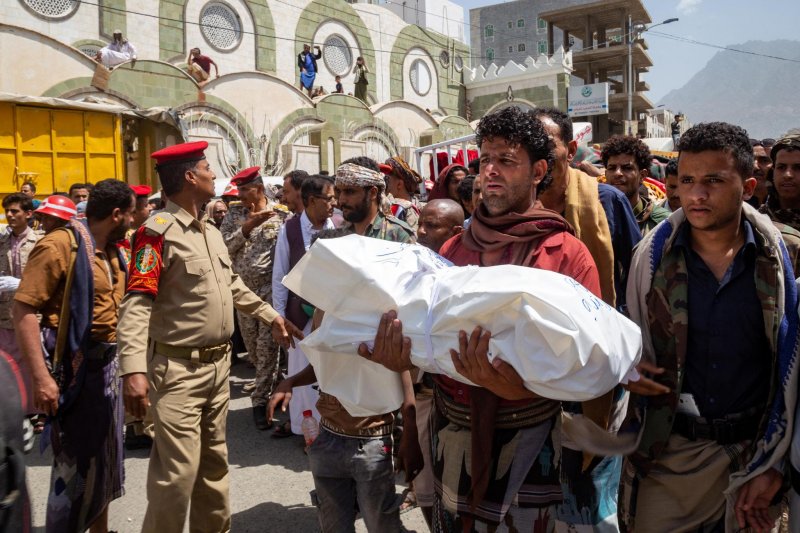
Yemen’s internationally recognized government and the Houthi movement have exchanged heavy attacks, with government forces claiming that approximately 190 Houthi fighters and commanders were killed or wounded across several provinces.
The latest clashes are part of Operation Dawn of Yemen, a government counteroffensive aimed at recovering territory seized by the Iran-aligned Houthi movement, also known as Ansar Allah. Saudi-backed forces have intensified their military campaign across northern, central and southern Yemen, while the Houthis have retaliated with attacks against government positions and Saudi infrastructure.
The fighting comes amid heightened Middle Eastern tensions associated with the US-Israeli war against Iran, increasing fears that Yemen could become another major front in the regional confrontation.
What happened during the latest fighting between Yemen’s government forces and the Houthis?
Yemen’s government forces announced on November 10 that they had conducted extensive military operations against Houthi positions across Lahij, Taiz, Marib, al-Jawf, Hajjah and al-Bayda governorates.
Military spokesman Majed Abdullah al-Nuzaili said the operations involved at least 29 airstrikes, 39 drone attacks, 62 rocket strikes and 744 artillery attacks, targeting Houthi fortifications, troop concentrations and military equipment.
According to preliminary military assessments, approximately 190 Houthi commanders and fighters were killed or wounded. Government forces also claimed to have destroyed or damaged as many as 130 vehicles and pieces of military equipment.
These figures have not been independently verified, making it difficult to establish the precise scale of the reported battlefield losses.
The government described the operations as part of its broader counteroffensive to regain territory under Houthi control.
Fighting has continued across multiple fronts, particularly in strategically important areas connecting northern and southern Yemen.
The simultaneous use of aircraft, drones and artillery indicates a sustained and coordinated military campaign rather than isolated border skirmishes.
How have the Houthis responded to government attacks and Saudi-led military operations?
The Houthi movement has responded with its own military operations, claiming to have inflicted significant casualties on government-aligned forces and launched missiles toward Saudi Arabia.
Houthi military spokesman Yahya Saree said on November 10 that Saudi-backed forces had carried out 109 airstrikes and missile attacks against Houthi-controlled areas, including the capital, Sanaa, and positions in al-Jawf, Saada, Taiz, Lahij and Marib.
Saree alleged that the attacks caused numerous civilian casualties, including women and children. These claims have not been independently confirmed.
He also reported Houthi attacks against government positions in al-Madaribah and Ras al-Ara in Lahij governorate, as well as operations in al-Jawf.
The Houthis claimed that dozens of government soldiers had been killed or wounded during these engagements.
Beyond Yemen, the movement announced attacks targeting Riyadh and Saudi Aramco facilities in Abqaiq.
The Saudi-led coalition subsequently reported intercepting three missiles, including two directed toward the capital and another toward the kingdom’s southern region.
These exchanges demonstrate how Yemen’s internal conflict increasingly threatens neighboring countries and critical regional infrastructure.
Why has Operation Dawn of Yemen intensified the conflict, and what role does Saudi Arabia play?
Operation Dawn of Yemen is a counteroffensive launched by forces loyal to Yemen’s internationally recognized government to recover territory captured by the Houthis during earlier fighting.
The campaign began in October 2026 after Houthi territorial gains in September, marking a renewed attempt to change the military balance after years of fragmented control.
Saudi Arabia, which has supported Yemen’s internationally recognized government since intervening in the conflict in 2015, has provided military assistance through a coalition conducting air operations against Houthi positions.
The coalition’s involvement gives government forces additional airpower and logistical capabilities, strengthening their ability to conduct sustained operations across multiple fronts.
However, Saudi support also exposes the kingdom to retaliatory attacks, particularly against airports, oil facilities and other strategically important infrastructure.
The Houthis have repeatedly demonstrated their ability to launch missiles and drones across Yemen’s borders.
The latest escalation is particularly dangerous because regional tensions involving Iran, Saudi Arabia, Israel and the United States could complicate attempts to contain the fighting.
A prolonged campaign risks deepening Yemen’s territorial fragmentation and further undermining diplomatic efforts.
What humanitarian consequences has the renewed fighting caused across Yemen?
The renewed conflict has significantly worsened Yemen’s humanitarian emergency, placing additional pressure on civilians already affected by more than a decade of warfare.
According to the World Health Organization, at least 1,771 people have been killed in hostilities since August 2026, while another 7,959 have been wounded.
More than 300,000 people have reportedly been displaced, highlighting the growing number of families forced to abandon their homes as military operations expand.
Continuing airstrikes, artillery bombardments and ground battles threaten civilian communities, particularly in areas close to contested front lines.
Displacement also increases demand for emergency accommodation, healthcare, food assistance and clean drinking water.
Yemen’s healthcare system remains vulnerable because years of conflict have damaged medical facilities, disrupted supply chains and reduced access to essential treatment.
Humanitarian organizations face additional difficulties reaching communities where active fighting restricts transportation and humanitarian access.
The competing accusations of civilian casualties underline the importance of independent monitoring and compliance with international humanitarian law.
Without a reduction in hostilities, the humanitarian burden could continue growing rapidly.
Could the latest clashes trigger a wider regional war, and what are the prospects for peace?
The latest military escalation raises concerns that Yemen’s conflict could become increasingly connected to broader confrontations across the Middle East.
The Houthis maintain close ties with Iran, while Yemen’s internationally recognized government receives support from Saudi Arabia. This alignment makes developments in Yemen particularly sensitive to regional tensions.
The US-Israeli war against Iran has further complicated the situation, increasing the possibility that attacks against Saudi territory or energy infrastructure could provoke additional military responses.
Missile launches toward Riyadh and threats against oil facilities demonstrate the potential for Yemen’s fighting to disrupt regional security and international energy markets.
However, a broader war is not inevitable. Much will depend on whether the parties expand their military objectives or pursue diplomatic efforts to contain the violence.
A sustainable settlement would require negotiations addressing territorial control, political representation, security guarantees and the future of armed groups.
The immediate priorities remain protecting civilians, securing humanitarian access and preventing further cross-border escalation.
Without meaningful negotiations, repeated offensives and retaliatory strikes risk prolonging Yemen’s conflict and undermining prospects for lasting peace.