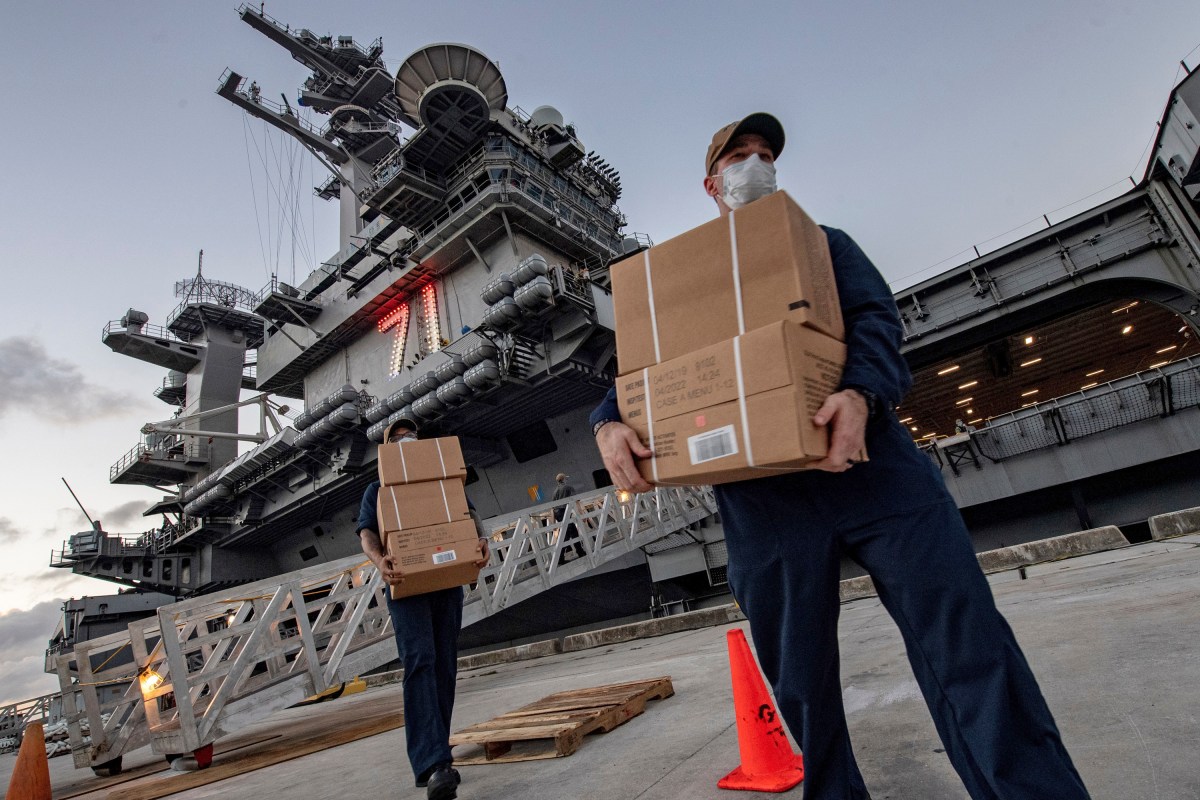
In March 2020, COVID-19 interrupted the USS Theodore Roosevelt’s deployment and prompted the Navy to move nearly 4,000 sailors ashore in Guam. The aircraft carrier returned to sea in May after cleaning and medical precautions. American firepower depended upon something its weapons could not supply: a healthy crew.
Hampton Roads should use that experience to examine overseas disease outbreaks. Ships, shipyards and commercial terminals depend upon specialized workers and dependable medical care. A disease outbreak can disrupt those relationships without becoming another global pandemic. Protecting them belongs within national defense planning.
By Oct. 18, Kenyan authorities had confirmed eight Ebola cases linked to the larger outbreak in the Democratic Republic of Congo. The Centers for Disease Control and Prevention’s latest posted assessment described the risk to the American public as low and reported no associated U.S. cases. Ebola spreads through infected bodily fluids and contaminated materials rather than the airborne route that helped COVID-19 spread.
These distinctions determine which precautions work. Officials must assess exposure, severity and transmission before deciding how to protect personnel and maintain operations. A response designed for a respiratory infection will not answer every question a different pathogen presents. Preparation should equip institutions to recognize differences and respond accordingly.
Conflict obstructs disease control when violence keeps health workers from patients and prevents communities from obtaining reliable care. The CDC identifies attacks on healthcare workers and limited medical infrastructure as obstacles to controlling Ebola in Congo. Infections then burden communities struggling to maintain essential services. American support for trustworthy laboratories and local health workers can help interrupt that cycle.
The World Health Organization confirmed containment of this year’s hantavirus outbreak associated with the cruise ship Hondius after authorities completed contact monitoring across 33 countries and territories. Effective protection followed exposed people across jurisdictions rather than ending at a national boundary. The response required authorities to share information and assign responsibility for people who had dispersed worldwide.
Hampton Roads needs comparable clarity about responsibilities. Naval commanders, the Virginia Department of Health, hospitals and port operators should exercise a scenario involving a sick traveler: who evaluates the patient, who arranges testing and safe transport, and who protects essential operations while clinicians establish the diagnosis.
Those exercises should measure elapsed time and reveal dependencies. Can hospitals maintain staffing while caring for exposed personnel? Can suppliers deliver protective equipment when demand spikes elsewhere? Who resolves conflicting instructions? Leaders should assign each unresolved problem to an accountable official, with a corrective action and a deadline.
Federal preparation remains unfinished. In August, Department of Health and Human Services officials told the Government Accountability Office they expected to provide a National Response Testing Framework in December. GAO still lists its recommendation for a national diagnostic testing strategy as open. Congress should examine whether the framework gives laboratories and clinicians responsibilities they can execute.
Publishing that document will begin the next performance test. Hospitals and laboratories need to know who authorizes testing, who supplies materials and how results reach officials responsible for protecting patients and essential workers. Exercises should test whether those arrangements work when several communities need assistance at once.
Public confidence requires similar discipline. Officials should distinguish confirmed findings from unresolved reports, explain the evidence behind restrictions and establish review criteria. Protecting health must preserve lawful government and essential services; fear cannot substitute for a reasoned assessment.
Hampton Roads helps sustain American power through the people who operate warships, repair vessels and move commerce. Their health concerns national security because their absence can disrupt missions and deliveries others depend on. We should equip their institutions to detect infection, protect personnel, and sustain their work. The next outbreak need not resemble COVID-19 to expose a neglected responsibility.
Douglas P. Harden of Annandale is a national security professional with more than 21 years of experience. He holds degrees from the University of Georgia and the University of North Georgia.