
Nato.int
NATO announced Starlift on Tuesday at its NATO Edge 26 technology conference in Izmir, Türkiye, opening a launch service that helps allied militaries secure slots on commercial rockets, with ten allies and South Korea committed to pay for it through the NATO Support and Procurement Agency (NSPA), according to a Bloomberg report relayed by Bytes Europe.
The catch for anyone expecting a rapid-response rocket fleet is that Starlift cannot yet launch a satellite on demand. An unnamed NATO official told UK Defence Journal the program “does not mean immediate on-demand launch is available today,” and the participating countries have set no fixed date for initial operational capability.
The pitch is resilience. According to Vedomosti, citing Bloomberg, commercial space infrastructure would make satellite systems for communications, navigation, reconnaissance and missile defense more resilient against cyberattacks and jamming. Whether pooled funding turns into faster launches depends on rockets, spaceports and clearance procedures that NATO’s announcement does not yet name.
Starlift Pools Launch Demand Through NSPA, Which Runs on Customer Funding at No Profit
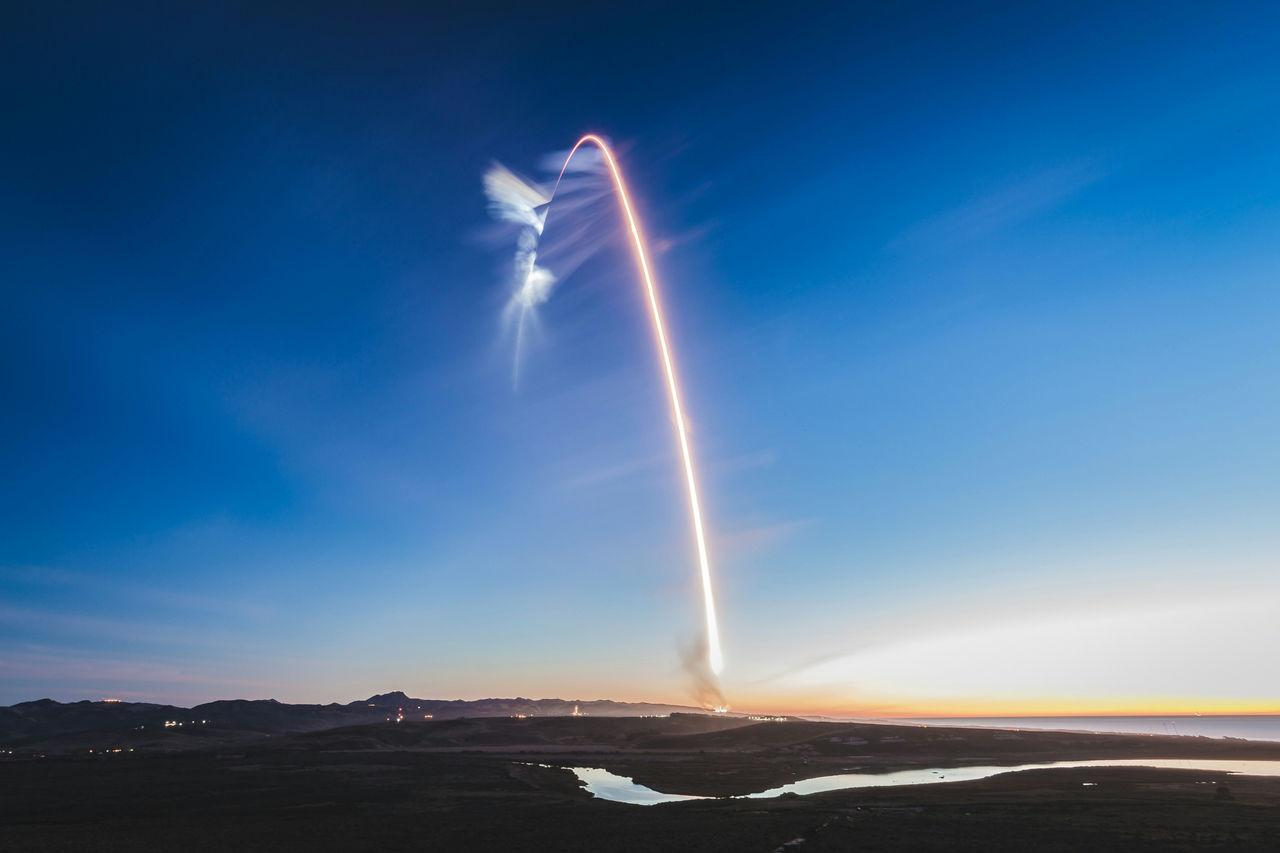
NATO describes Starlift as a launch service that builds on a network of spaceports across the Alliance and South Korea. It pools demand and coordinates requirements to improve access to commercial launch services and to encourage industry investment.
The money flows through NSPA. According to NSPA’s own description, the agency is funded by its customers, operates on a no-profit, no-loss basis, and leads multinational acquisition by consolidating nations’ requirements. The participating countries have set up the Starlift structure and funded a program office, according to UK Defence Journal.
NATO has said it does not intend to build its own independent launch capability, so the pooled model depends on commercial providers outside the alliance structure. A study from the Joint Air Power Competence Centre sketches what a responsive-launch partnership could look like: satellites stored near payload processing facilities in the UK, Germany and Italy, pad integration within 24 hours, and 24 to 48 hours for integration and launch of the combined system. That is an illustrative scenario, not Starlift’s published design, and the study says procedures for joint responsive operations do not yet exist.
For readers tracking defense space spending, the practical consequence is that the early cost appears as funding commitments and a program office, not as launches. NATO’s release gives no budget figure.
Why Is On-Demand Launch Not Available Today?
The official quoted by UK Defence Journal named launch capacity as a critical bottleneck, particularly in Europe, and argued that spaceports should be treated as strategic infrastructure with protection and redundancy, much like military air bases. Allies will decide jointly when Starlift reaches initial operational capability.
What Starlift offers instead is a forum to test responsive launches, including urgent satellite launches, plus testing of air and maritime traffic management for safe routine and short-notice launches. NATO’s release announces no launch dates.
The U.S. shows what a fast response can look like. Rocket Lab said it launched a U.S. Space Force responsive-launch mission from New Zealand on June 19, 16 hours and 42 minutes after receiving the Notice to Launch, beating the previous record by more than 10 hours. The mission flew Rocket Lab’s own Pioneer spacecraft, so it is a benchmark for demonstrated notice-to-launch time, not a forecast of what Starlift will deliver.
Isar’s Orbital Success Gives Starlift One Proven European Rocket, but NATO Names No Providers
Isar Aerospace’s Spectrum rocket reached orbit from Andøya, Norway, in a September 5 civilian commercial launch, the first orbital flight by a private European space company, rather than a NATO operation.
A partner and a senior associate at the NATO Innovation Fund argued in a Fortune commentary on Isar that the second Spectrum flight gives Starlift its first proven, sovereign European vehicle to call on. The authors work for NATO’s venture fund, which reaffirmed its backing of Isar in a €270 million (approximately $297 million USD) round in June.
NATO’s Starlift release names no individual spaceports and no launch providers. A separate July announcement at the Ankara Defence Industry Forum said Isar signed a contract with Maritime Launch Services for launch pad capacity, but NATO did not describe that deal as part of Starlift.
Nine of 14 Original Starlift Nations Fund It: France, Hungary, Luxembourg, Spain and U.S. Not Listed
When NATO launched the concept in October 2024, 14 nations joined the initiative: Belgium, Finland, France, Germany, Hungary, Italy, Luxembourg, the Netherlands, Norway, Spain, Sweden, Türkiye, the United Kingdom and the United States.
The funders named this week are Belgium, Canada, Finland, Germany, Italy, the Netherlands, Norway, Sweden, Türkiye and the United Kingdom, plus non-member South Korea. The commitments were signed on October 29 on the margins of a meeting of NATO’s National Armaments Directors. Canada was not on the 2024 list; NATO said in July that Canada had become the 15th member of the initiative.
That leaves France, Hungary, Luxembourg, Spain and the United States from the original 14 without a listed funding commitment. NATO’s release does not say who is excluded or whether those five remain participants. In May, Asia Economy relayed a Nikkei report on Indo-Pacific partners saying NATO had asked South Korea, Japan, Australia and New Zealand to join. Of those four, only South Korea appears among the funders.
NCIA Says Funded Industry Contracts Will Cover Space, Cloud, AI and Cyber Within Two Years
A procurement message accompanied the announcement. NATO Communications and Information Agency (NCIA) General Manager Dylan Browne said on Monday the agency plans to offer about €2.7 billion (approximately $2.97 billion USD) in contracts over the next two years, according to the Bloomberg report via Bytes Europe. The same rendering also cites a figure above $3 billion that it does not attribute to Browne, which is more than the euro amount converts to at current rates.
Defence Turkey reports the categories as cloud computing, artificial intelligence, cybersecurity, command and control, space technologies and the networks connecting them, with a goal of cutting delivery times from years to months. A cyber procurement platform already covers 98 suppliers from 22 countries, with potential business of up to €500 million (approximately $550 million USD). NATO Edge 26 runs through November 19 with 284 technology companies, 30 of them Turkish.
Browne’s own career is in commercial space. NCIA’s announcement of his appointment on December 12, 2025 describes a career spanning Amazon, OneWeb, Airbus Defence and Space and the European Space Agency. Public reporting does not break down how much of the €2.7 billion (approximately $2.97 billion USD) will go to space work versus cloud, AI and cyber. Deputy Secretary General Radmila Shekerinska, a graduate of Skopje’s electrical engineering faculty, told the conference that cyber resilience must cover the entire defense industrial supply chain.
For scale, NCIA signed a roughly €200 million contract (approximately $220 million USD) with Accenture in July for a seven-year Protected Business Network serving about 29,000 users.
Budget, Spaceports, Providers and First Rehearsal Date Remain Undisclosed
NATO’s release gives no pooled budget, no list of spaceports or providers, and no date for a first short-notice launch rehearsal. Starlift also covers getting satellites into orbit, not satellite communications, which fall under a separate NSPA framework.
For allied planners and launch companies, the decision framework is plain. Ten allies and South Korea have committed money, NSPA supplies the buying machinery, and one European rocket has now reached orbit. But NATO owns no launch capability, sets no date for urgent launches, and lists no spaceports, so the booking process shortens contracting before it shortens any countdown.
Exchange rate as of Nov. 17, 2026; conversions are approximate.
Frequently Asked QuestionsWhat is NATO Starlift?
Starlift is a multinational space initiative that began in October 2024 with 14 nations, aiming at short-notice launch, maneuvering a pre-positioned spare spacecraft and buying commercial data, according to NATO’s 2024 announcement. It has now moved to funded implementation.
Which countries are funding NATO Starlift?
Belgium, Canada, Finland, Germany, Italy, the Netherlands, Norway, Sweden, Türkiye and the United Kingdom, plus South Korea, per NATO’s November announcement.
Why does NSPA fund Starlift?
NSPA is NATO’s lead organization for multinational acquisition, and nations use it to consolidate their requirements and buy together on a customer-funded, no-profit, no-loss basis.
Can NATO launch a satellite on demand today?
No. An unnamed official told UK Defence Journal that on-demand launch is not available today, and allies have set no fixed date for initial operational capability.
Does Starlift give NATO its own rockets?
No. NATO has said it does not intend to develop its own independent constellation or launch capability, so Starlift relies on commercial launch providers and allied spaceports.