Security risks in the Strait of Hormuz have prompted Iraq to seek alternative oil export routes, accelerating efforts to revive pipelines to Syria’s Mediterranean coast and Türkiye’s Ceyhan port.
Iraq faces significant economic risks from prolonged shipping disruptions in the Persian Gulf, as the country relies heavily on oil revenues to fund its public budget, pay wages and maintain foreign exchange reserves.
Iraqi Oil Minister Basim Mohammed Khudair said crude shipments had resumed through the Kirkuk-Ceyhan pipeline to Türkiye, with a target of gradually increasing flows to 500,000 barrels per day.
Baghdad also aims to expand its total oil export capacity from 3 million barrels per day in September to 5 million barrels per day through new pipelines.
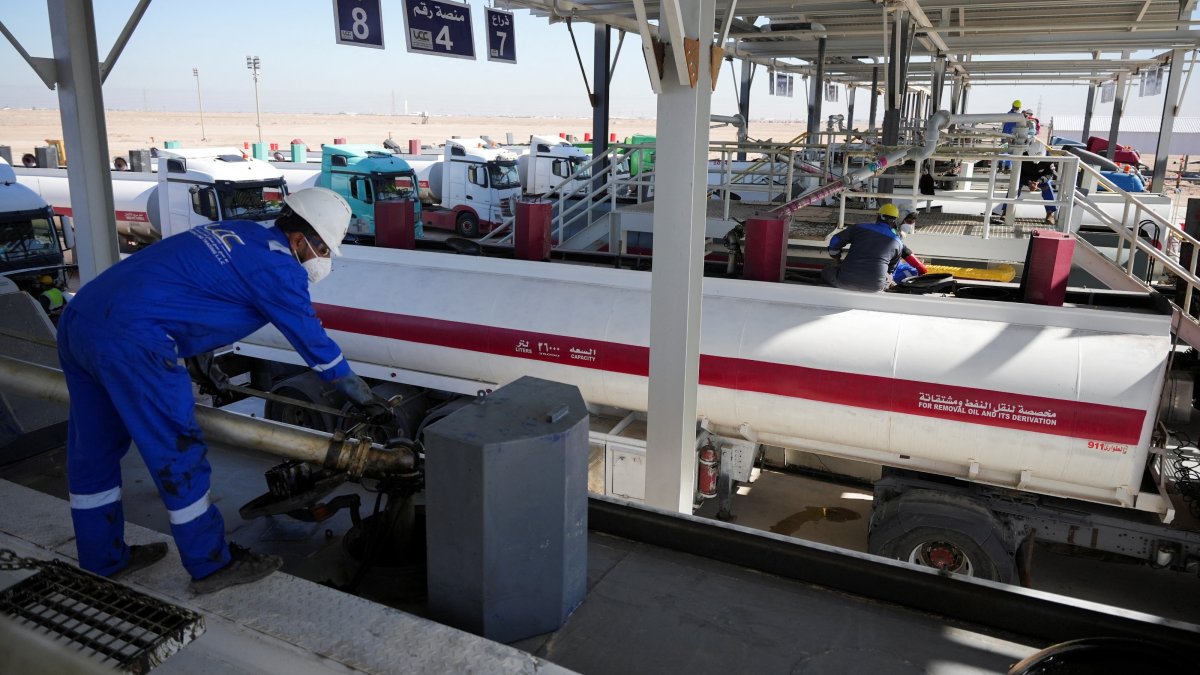
Qatari energy firm UCC Holding is transporting 120,000 to 150,000 barrels of Iraqi crude per day to Syria under an agreement with Iraq’s State Oil Marketing Organization (SOMO).
Around 1.6 million barrels have been shipped since operations began Oct. 26.
UCC Holding plans to expand its tanker fleet from 6,000 to 10,000 vehicles, although trucking capacity and logistical constraints are expected to limit near-term growth along the overland route.
Iraq and Syria signed an agreement in Washington on July 17 to reconstruct the pipeline linking Haditha in western Iraq to Baniyas on Syria’s Mediterranean coast.
The project is expected to involve U.S. energy giant Chevron and have an initial capacity of 2 million barrels per day.
Iraqi Prime Minister Ali al-Zaidi and Syrian President Ahmed al-Sharaa discussed crude exports through the Baniyas pipeline during a meeting in Damascus on Oct. 28.
Beyond oil pipelines, Iraq is also advancing its Development Road project, a planned network of highways and railways connecting Basra’s Al-Faw Port to Türkiye.
The project aims to link the Persian Gulf with Europe and position Iraq as a regional freight transit hub.
Ali Naji, president of the Eco-Iraq Observatory, said shifting to alternative export corridors would strengthen Iraq’s export security and stabilize national revenues.
Naji said the proposed New Damascus Route would transport crude from Basra to the Haditha hub in western Iraq before branching toward Türkiye’s Ceyhan, Syria’s Baniyas and Jordan’s Aqaba ports.
He added that integrating pipelines with road, rail and trade corridors would capitalize on Iraq’s strategic location, deepen economic integration, strengthen resilience against geopolitical shocks and position the country as a regional energy and trade hub.
Iraqi energy expert Ahmed Sabah said diversifying export routes represented a strategic shift and a matter of national sovereignty, helping Iraq reduce its dependence on oil shipments through the Persian Gulf.
However, he warned that the plan would raise export costs due to pipeline construction, operating expenses and transit fees.
Sabah added that the alternative routes could increase Iraq’s distance from key South and East Asian markets, where many emerging economies are concentrated, while also requiring Baghdad to commit to minimum export volumes.

The Daily Sabah Newsletter
Keep up to date with what’s happening in Turkey,
it’s region and the world.
SIGN ME UP
You can unsubscribe at any time. By signing up you are agreeing to our Terms of Use and Privacy Policy.
This site is protected by reCAPTCHA and the Google Privacy Policy and Terms of Service apply.